The Moon has long served as a quiet witness to the history of the Solar System, preserving the marks of countless natural collisions across billions of years. Occasionally, however, an object created by human hands joins that cosmic story. In early August 2026, astronomers around the world are preparing to observe the predicted impact of a Falcon 9 upper stage with the lunar surface, an event expected to provide valuable scientific data rather than pose any threat to Earth.
According to orbital analyses, the spent Falcon 9 upper stage has been traveling through space after completing its original mission. Over time, the combined influence of gravity from Earth, the Moon, and the Sun gradually altered its trajectory. Researchers now estimate that the object is on course to collide with the Moon during the first days of August 2026, although the exact impact time and location may continue to be refined as additional observations become available.
Scientists emphasize that the event is expected to be relatively small on a planetary scale. The impact will create a new crater, but one that is tiny compared with the countless natural impact features already scattered across the lunar surface. Because the Moon has no dense atmosphere, the rocket stage will not burn up before reaching the ground, allowing the collision to occur at high speed.
Astronomers are interested in the event because it offers a rare opportunity to study impact physics under known conditions. By estimating the mass, speed, and angle of the incoming object, researchers can compare observational data with computer models that simulate crater formation and the movement of lunar material following an impact.
Observatories on Earth, together with spacecraft orbiting the Moon, may attempt to detect the collision or identify the newly formed crater afterward. High-resolution images collected before and after the impact could help scientists determine the exact location and measure changes to the surrounding terrain. Such observations contribute to a broader understanding of how impacts shape airless planetary bodies.
The predicted collision has also renewed discussions about long-term tracking of human-made objects beyond Earth orbit. While most attention is often directed toward space debris in low Earth orbit, objects sent into deep space can continue traveling for years before eventually encountering another celestial body. Improving tracking capabilities helps researchers better understand the future paths of these objects.
Experts note that the event does not represent a danger to Earth or to ongoing lunar exploration missions. Instead, it highlights the increasing complexity of human activity in space as more spacecraft, launch vehicles, and scientific missions travel beyond Earth's immediate surroundings. Accurate monitoring and transparent reporting remain important components of responsible space operations.
Astronomers will continue refining trajectory calculations as the predicted impact date approaches. If the collision occurs as expected, the observations may provide valuable scientific information about lunar geology, impact dynamics, and the long-term behavior of spacecraft hardware in deep space, adding another carefully documented chapter to humanity's exploration of the Solar System.
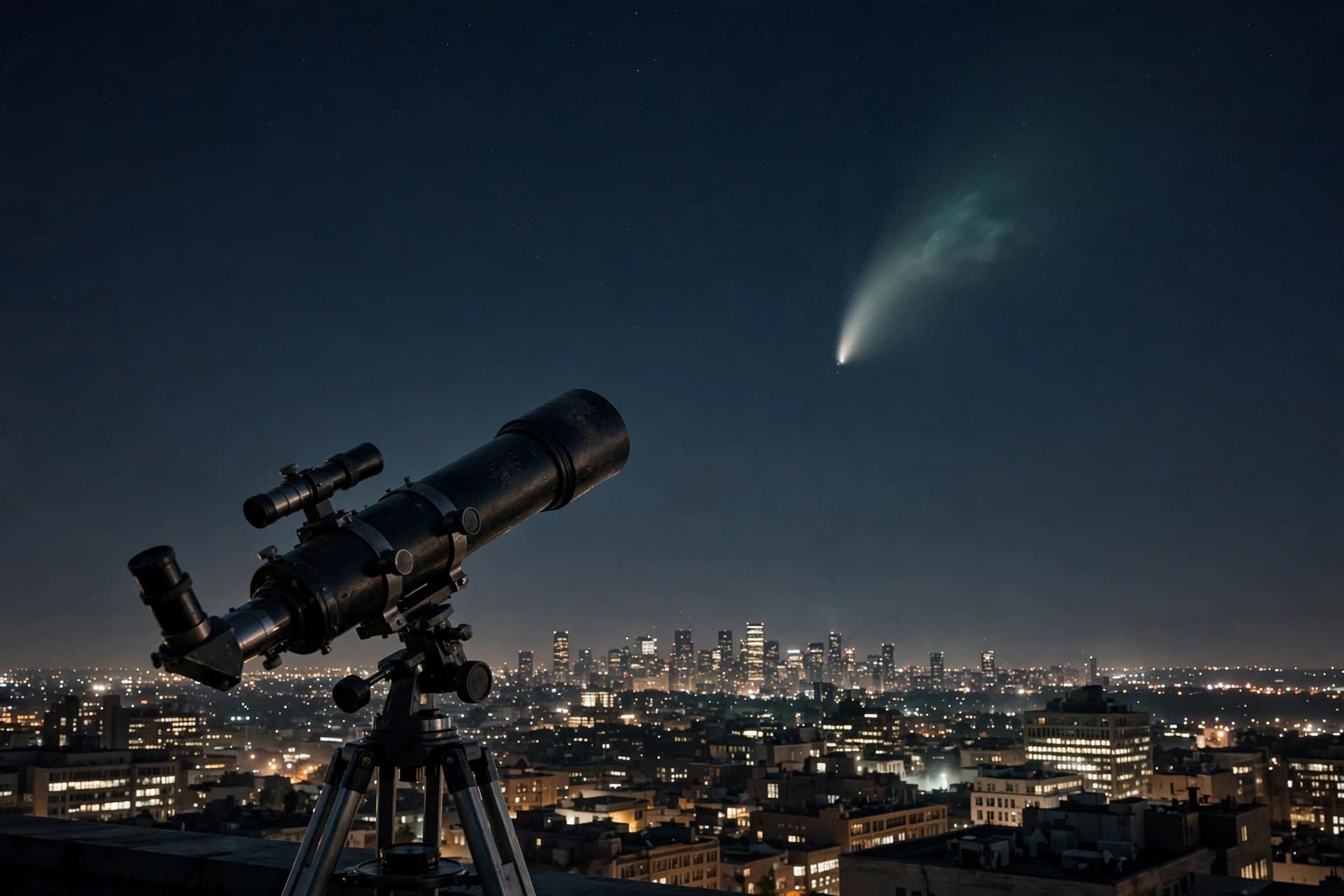
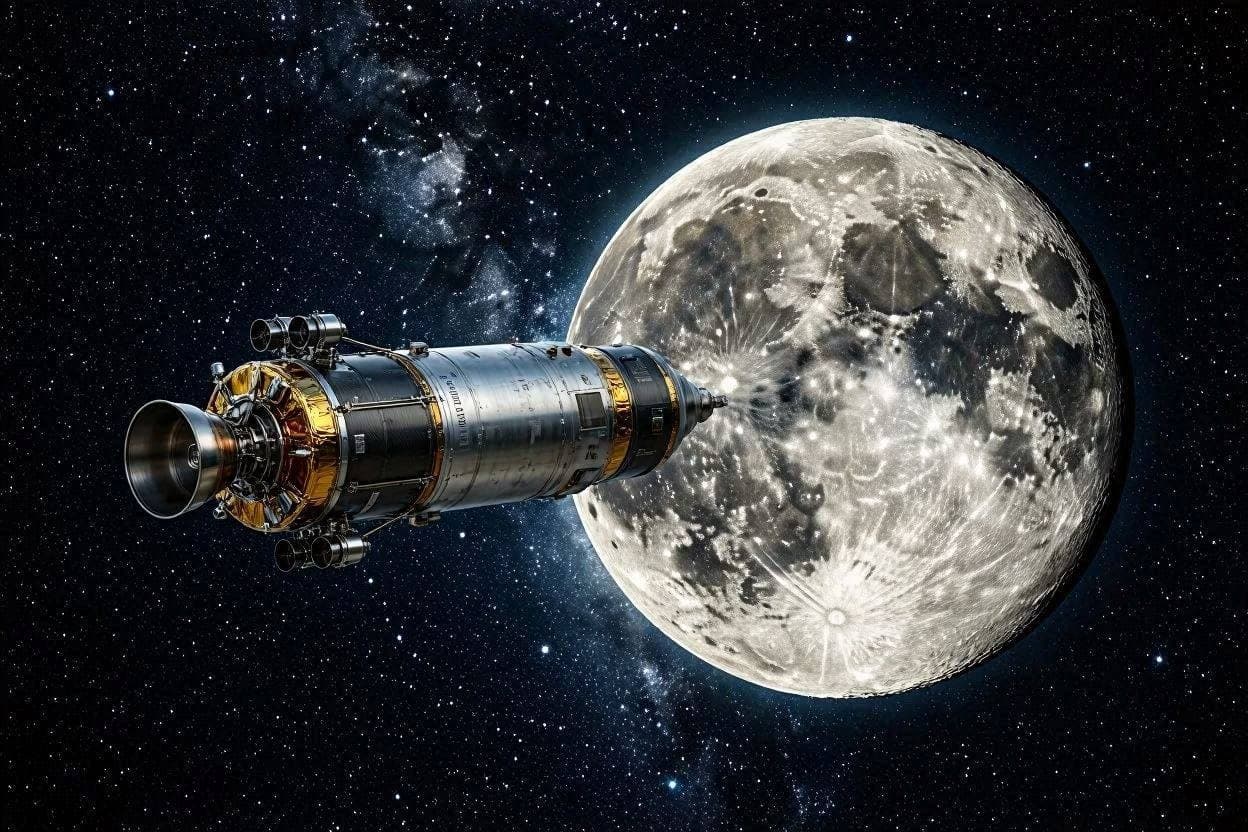
AI Image Disclaimer: The accompanying illustrations are AI-generated visual interpretations created to represent the predicted lunar impact and are not actual images of the event.
Sources: arXiv; SpaceNews; Space.com; The Planetary Society
Published by Banx Network. This article is part of the Banx decentralized media programme, powered by the BXE token on the XRP Ledger.