
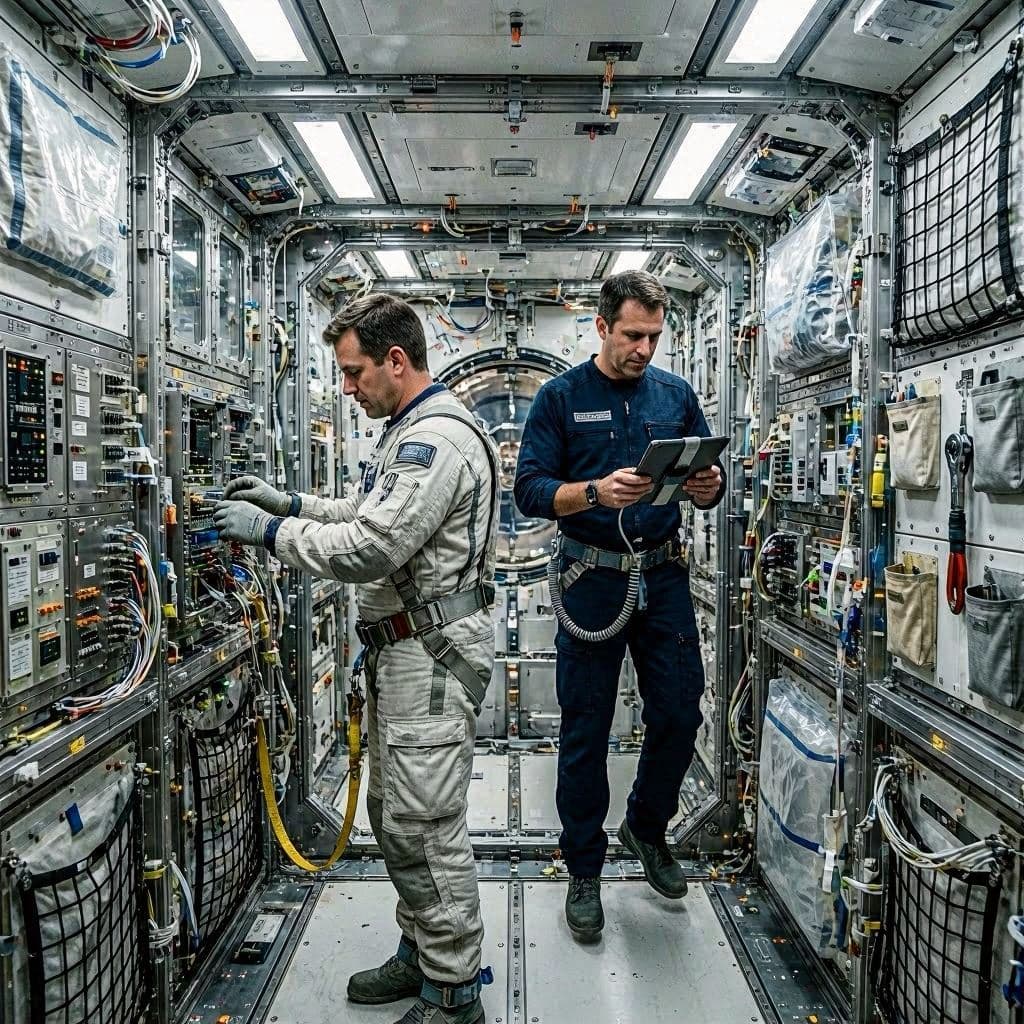
Space often evokes images of boundless silence and endless possibility. Yet even within humanity's most remarkable engineering achievements, fragility quietly accompanies exploration. Recent developments aboard the International Space Station served as a reminder that life in orbit depends upon constant vigilance.
NASA confirmed that astronauts aboard the International Space Station were temporarily placed on alert as engineers assessed concerns related to an ongoing air leak within a Russian segment of the orbital laboratory. The precautionary measure was implemented while specialists evaluated updated data from the station.
According to NASA and international partners, the leak has been monitored for several years. Engineers have repeatedly conducted inspections, repairs, and pressure analyses to understand its source and behavior.
The latest review prompted mission controllers to increase safety precautions. Crew members were instructed to prepare contingency procedures, including the possibility of relocating to spacecraft docked at the station if necessary.
Officials emphasized that astronauts were never in immediate danger. Operations aboard the ISS continued while teams on Earth examined telemetry and structural measurements.
The International Space Station, continuously inhabited since 2000, remains one of the most ambitious examples of international cooperation in scientific research. Maintaining such a complex facility in low-Earth orbit requires continuous maintenance and rapid response capabilities.
NASA and its international partners, including Roscosmos, continue to collaborate closely to address technical challenges. Engineers are expected to conduct additional analyses and implement further mitigation measures if required.
The incident highlights both the challenges and resilience of long-duration human spaceflight. Despite occasional technical issues, the ISS continues to support scientific research that benefits life on Earth and future exploration missions.
AI-generated image disclaimer: Images used alongside this report are AI-generated representations created to illustrate the subject matter.
Source Verification Check Sources verified from: NASA, Reuters, Associated Press, Roscosmos, GV Wire
Published by Banx Network. This article is part of the Banx decentralized media programme, powered by the BXE token on the XRP Ledger.



