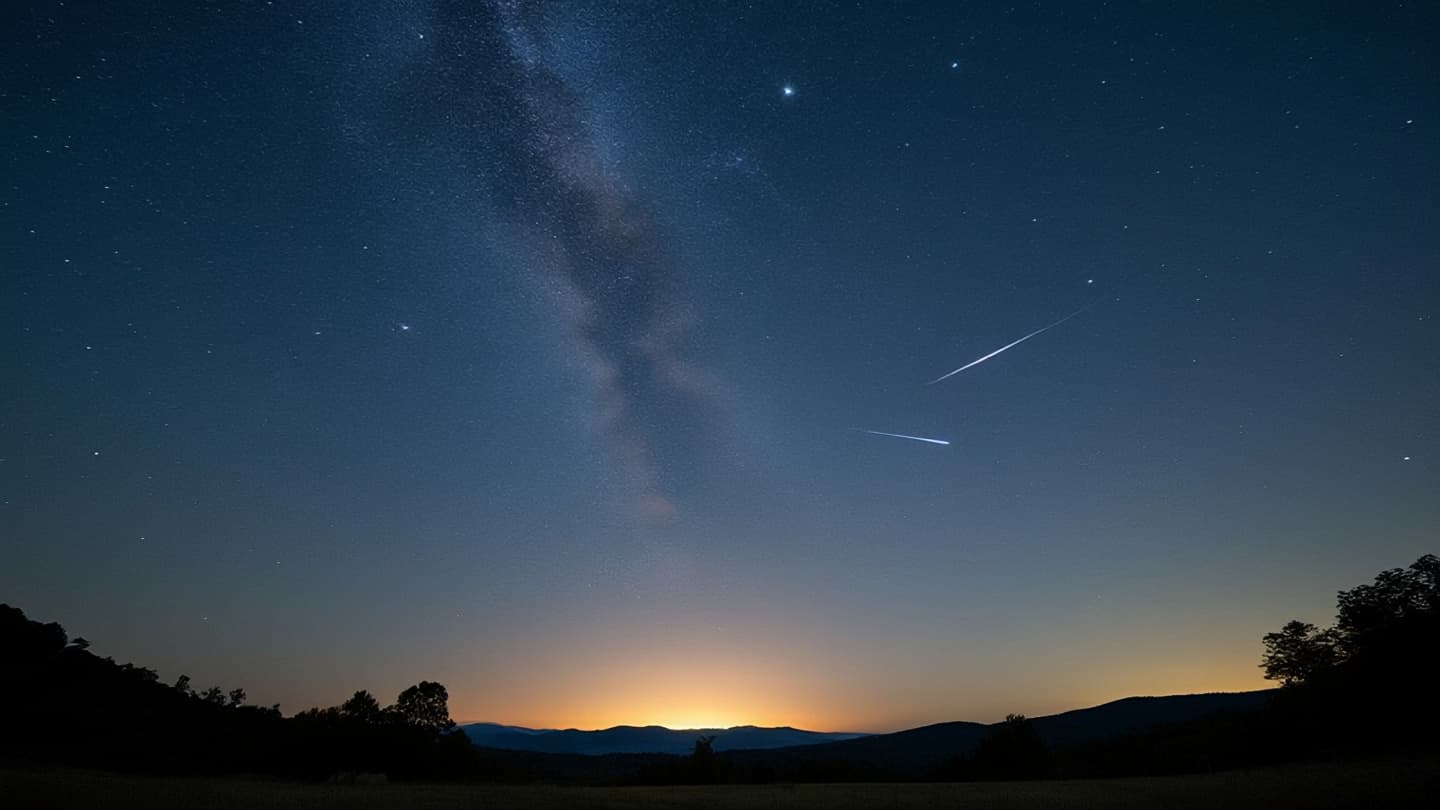
Each year, as Earth moves along its orbit, it passes through streams of cosmic debris left behind by comets. These moments, often marked by meteor showers, offer a quiet reminder of the solar system’s ongoing motion. Yet even such events, predictable in their timing, are shaped by conditions closer to home—particularly the presence of the Moon.
The Eta Aquarid meteor shower, associated with debris from Halley’s Comet, is one such event. Known for producing swift and bright meteors, it is typically visible in the early morning hours, especially in regions closer to the equator. Under ideal conditions, observers may see dozens of meteors per hour.
This year, however, a bright Moon is expected to reduce visibility. Moonlight can illuminate the night sky to a degree that makes fainter meteors difficult to detect. While the meteor shower itself continues unaffected, the ability to observe it from Earth becomes more limited.
Astronomers note that brighter meteors may still be visible despite the lunar glow. Observers are often advised to position themselves away from direct moonlight and allow time for their eyes to adjust to darker areas of the sky. Even under less favorable conditions, some activity can still be observed.
The Eta Aquarids are particularly valued for their speed, entering Earth’s atmosphere at high velocities. This creates streaks of light that can appear brief but vivid. Their origin, tied to one of the most well-known comets, adds a historical dimension to the event.
Halley’s Comet, which orbits the Sun approximately every 76 years, leaves behind trails of particles that intersect Earth’s path. These particles, though small, produce visible effects when they encounter the atmosphere, creating the meteor showers observed from the ground.
The interaction between celestial events and observational conditions highlights the layered nature of astronomy. While the mechanics of the meteor shower remain consistent, local factors such as weather and moonlight influence the experience of those watching.
For many, the act of observing a meteor shower is less about quantity and more about presence—spending time under the night sky and witnessing moments that connect Earth to its broader environment.
Despite reduced visibility this year, the Eta Aquarid meteor shower continues its passage, offering glimpses of cosmic motion to those who look upward in the early hours.
AI Image Disclaimer: The images included are AI-generated visual interpretations of meteor showers and are not actual astronomical photographs.
Sources: NASA American Meteor Society Space.com BBC Sky at Night
Published by Banx Network. This article is part of the Banx decentralized media programme, powered by the BXE token on the XRP Ledger.