
Key Highlights
- European leaders express strong support for Greenland's autonomy amid U.S. claims.
- Greenland's Prime Minister calls U.S. rhetoric 'unacceptable'.
- The situation highlights the importance of diplomacy in Arctic security.
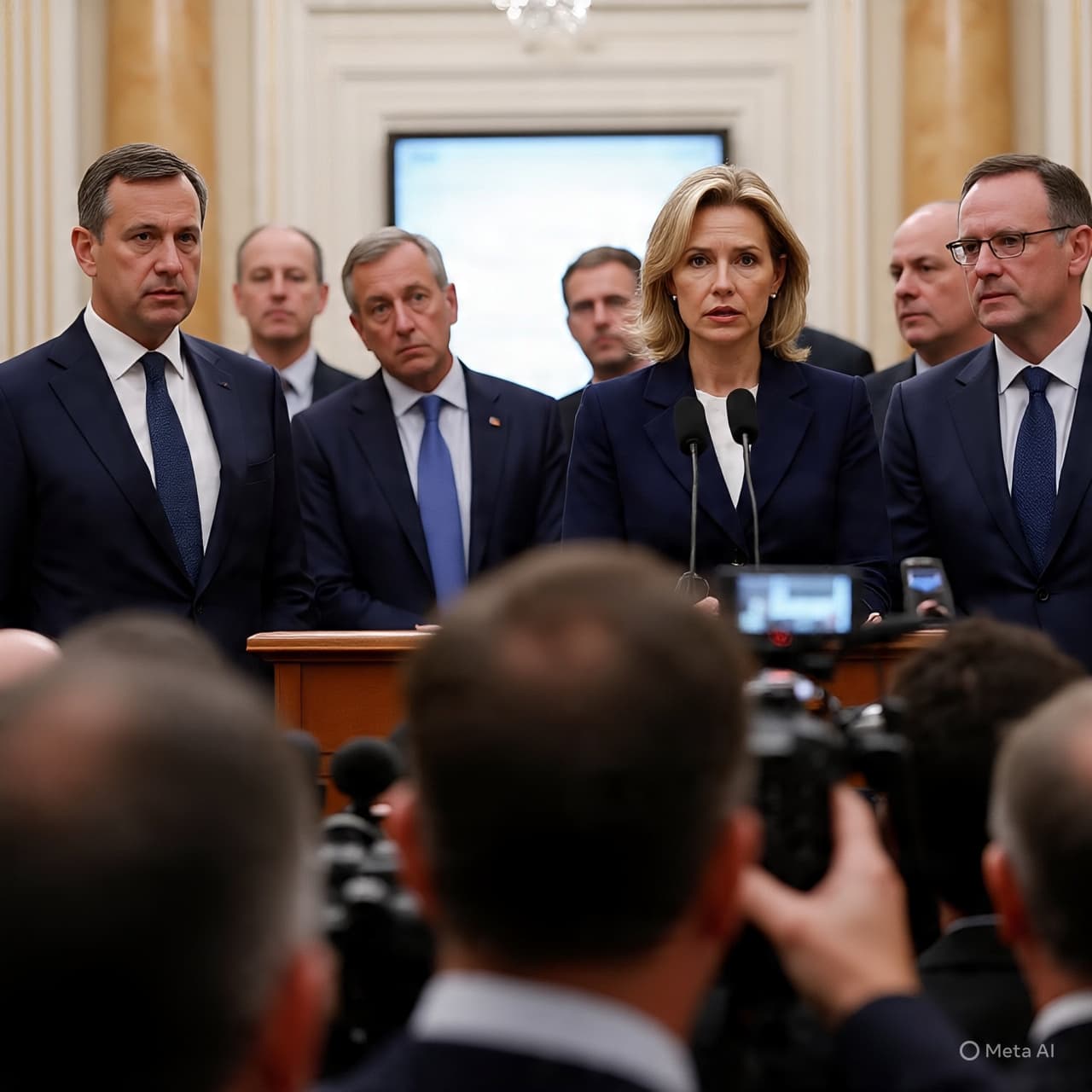
European leaders have recently rallied in support of Greenland, emphasizing the territory's sovereignty in light of provocative statements from U.S. officials. This political solidarity comes after senior adviser Stephen Miller suggested that the United States should assert control over Greenland, a move that has been met with widespread condemnation from European nations. The situation has sparked a renewed focus on the geopolitical significance of Greenland, a territory that has long been viewed through the lens of strategic military and economic interests.
Greenland's Prime Minister, Mette Frederiksen, firmly rejected the U.S. rhetoric, labeling it as 'unacceptable' and underscoring that the future of Greenland is a matter for its people and Denmark to decide. Denmark's Prime Minister, Mette Frederiksen, echoed this sentiment, warning that any attempt to undermine Greenland's autonomy would threaten the very foundations of NATO, which is built on mutual respect and cooperation among allies. Leaders from the UK, France, Germany, Italy, Spain, and Poland have also voiced their support, reinforcing the message that decisions regarding Greenland's future must be made by its inhabitants.
The U.S. interest in Greenland is not a new phenomenon; its strategic location in the Arctic has made it a focal point for military and economic considerations. However, the recent tone of U.S. statements has raised alarms among European allies, with analysts suggesting that such rhetoric could destabilize existing alliances. The implications of this situation extend beyond mere territorial claims; they touch on the principles of sovereignty and self-determination that are central to international relations.
As climate change continues to reshape the Arctic landscape, Greenland's role becomes increasingly significant. The melting ice is opening new shipping routes and exposing untapped natural resources, making the region a hotbed for geopolitical competition. European leaders have emphasized the need for collaborative approaches to Arctic security, advocating for dialogue and respect rather than unilateral assertions of control. This perspective reflects a broader commitment to maintaining stability in a region that is becoming more strategically important.
In the face of external pressures, the people of Greenland have demonstrated resilience and determination. Their steadfastness serves as a reminder that even in the most remote corners of the world, the voices of local populations must be heard and respected. As Europe stands united in support of Greenland, the unfolding narrative highlights the complexities of international politics and the importance of safeguarding the rights of autonomous territories.
The Arctic horizon, both a literal and metaphorical landscape, symbolizes the intersection of endurance, sovereignty, and international vigilance. Greenland's situation underscores the reality that global politics can reach even the most isolated regions, yet it also affirms the principle that the destiny of such territories lies in the hands of their people.
Published by Banx Network. This article is part of the Banx decentralized media programme, powered by the BXE token on the XRP Ledger.



