
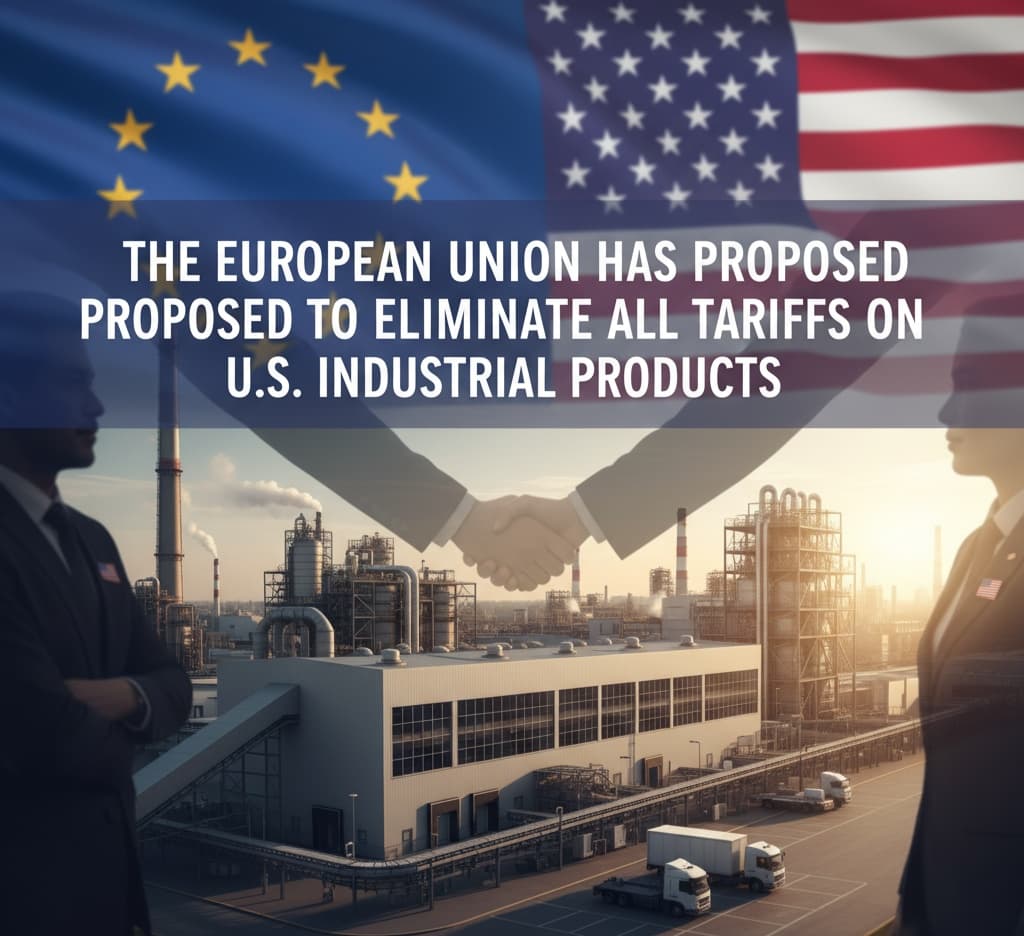
Key Highlights
- EU Proposal:The European Union has proposed eliminating all tariffs on U.S. industrial goods.
- Economic Impact:This move could benefit American exporters while posing challenges for European manufacturers.
- Internal Divisions:The decision may deepen existing fractures within the EU as member states have differing interests.
The European Union’s recent proposal to eliminate all tariffs on U.S. industrial goods appears, at first glance, to be a gesture of goodwill towards the United States. However, a closer examination reveals a more complex and unsettling reality: the EU may be yielding to the immense pressure exerted by American power, particularly under the leadership of President Donald Trump. This proposal is not merely a minor adjustment in trade policy; it represents a significant political concession that could set a troubling precedent for future negotiations.
Historically, the EU has positioned itself as a staunch advocate for rules-based trade, emphasizing the importance of multilateralism and adherence to World Trade Organization guidelines. Yet, the threat of tariffs on European exports, particularly in the automotive and steel sectors, has compelled Brussels to make an offer that resembles capitulation rather than negotiation. The stakes are high, and the implications of this decision could reverberate throughout the continent.
Trump’s approach to trade has often resembled that of a high-stakes gambler, using threats and ultimatums as bargaining chips. The EU, with its complex political landscape and reliance on exports, has often found itself at a disadvantage in these negotiations. By proposing to eliminate tariffs on industrial goods, the EU may be attempting to call Trump’s bluff, but it risks appearing as though it is simply folding under pressure. The question remains: what does Europe truly gain from this proposal? Access to markets that were already relatively open, or merely a temporary reprieve from escalating trade tensions?
While consumers may welcome the prospect of cheaper goods flowing across the Atlantic, the implications for European producers are far less optimistic. High energy costs, rigid labor markets, and stringent regulations in Europe could hinder the ability of local manufacturers to compete effectively with their American counterparts. Industries such as German machinery, French steel, and Italian manufacturing may find themselves at a significant disadvantage in a newly competitive landscape.
Moreover, the loss of tariffs represents more than just an economic shift; it signifies a relinquishment of sovereignty. Tariffs serve as vital tools for negotiation and protection of domestic industries. Surrendering these tools could weaken Europe’s bargaining position in future trade discussions. Once lost, these instruments are not easily reclaimed, potentially leaving the EU vulnerable to further concessions.
It is also crucial to recognize that the EU is not a monolithic entity. Member states have diverse interests and priorities. For instance, Germany, as a leading exporter, may see advantages in smoother trade relations, while France, with its protectionist tendencies, may fear the consequences of increased American competition. Eastern European nations, still developing their industrial bases, might view the removal of tariffs as a direct threat to their economic stability. This decision could exacerbate existing divisions within the EU, raising questions about its unity and resilience in the face of external pressures.
The broader narrative surrounding this trade proposal reflects a significant shift in the dynamics of globalization. For years, the EU has prided itself on being a key player in shaping global trade norms. However, the current situation suggests that Europe is now reacting to the dictates of Washington rather than leading the charge. The language of the proposal, which explicitly states it is designed to meet Trump’s demands, underscores this shift from leadership to reaction.
In understanding this moment, it is essential to consider Trump’s unique approach to international relations. He thrives on creating asymmetry and leveraging points of pressure to achieve his goals. While traditional leaders often seek compromise, Trump’s confrontational style prioritizes dominance. The EU’s proposal, therefore, may be less about economic strategy and more about appeasing a volatile leader, reflecting a desperate attempt to navigate a complex and unpredictable political landscape.
Published by Banx Network. This article is part of the Banx decentralized media programme, powered by the BXE token on the XRP Ledger.



