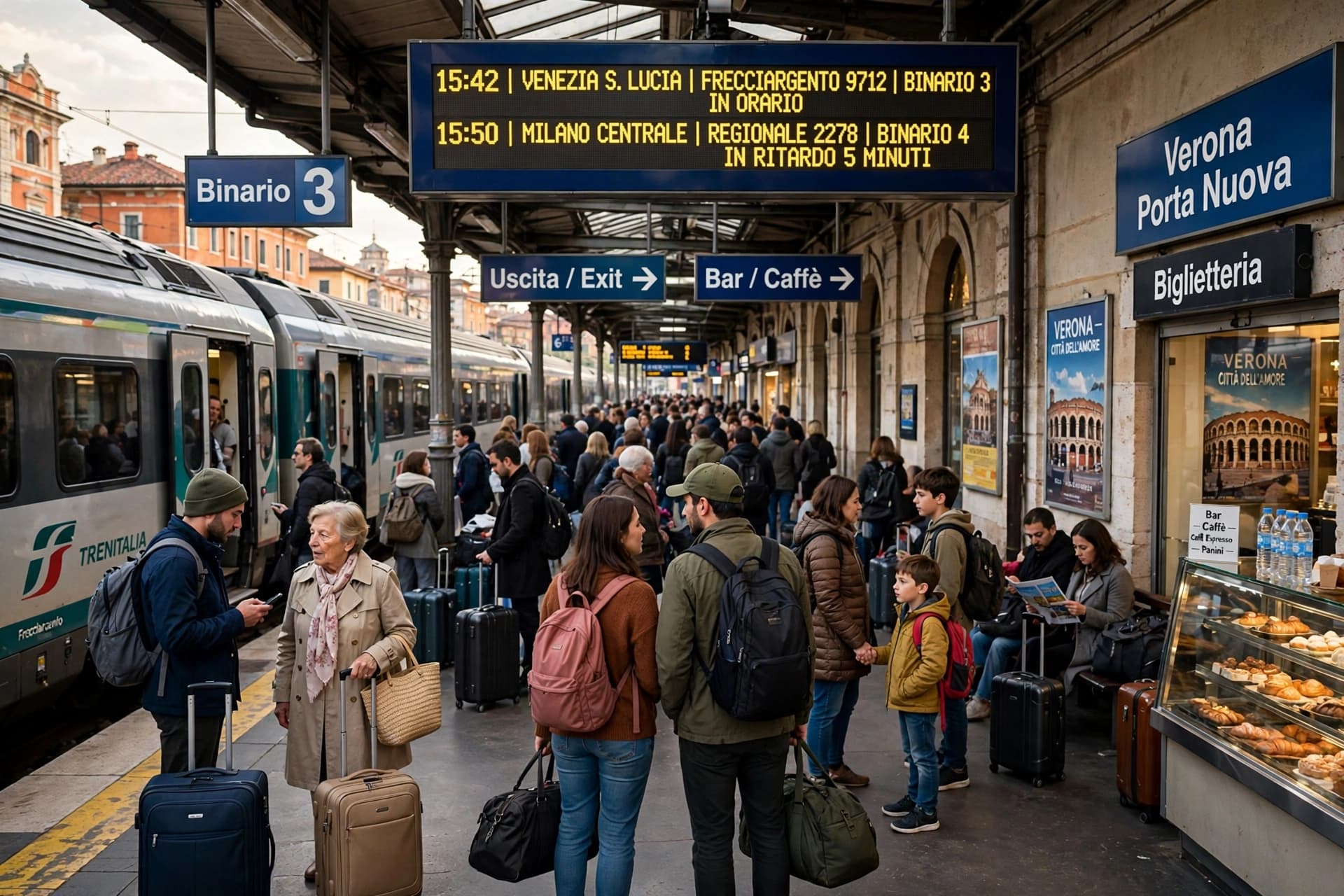
There was a time, not so long ago, when the phrase “shoulder season” carried a quiet promise: the crowds would thin, the prices would ease, and the continent would reveal itself in a gentler light. Travelers planned accordingly, booking flights for late September or early October, believing they had found the secret to seeing Europe without the crush of summer. That secret, it seems, has been discovered by everyone. The shoulder season, as it was once understood, no longer exists.
The reasons are layered. The first is climate. Europe’s summer of 2026 was punishing—Orani in Sardinia reached 48 degrees Celsius, less than one degree shy of the continent’s all-time record. Paris saw 40.9 degrees; London hit 38.1. Italy placed all 27 of its major cities on red alert in early August due to health risks from prolonged extreme heat . Travelers, understandably, began to reconsider their plans. Who wants to stand in a queue at the Vatican in 40-degree heat?
The second reason is the response to that heat. As summer becomes less bearable, the months that were once quiet have absorbed the overflow. September and October are now crowded and expensive, their prices driven up by demand that has shifted rather than diminished . The concept of the “coolcation”—a holiday to a cooler climate—has moved from niche to mainstream. Northern regions like southern Finland, Vestland in Norway, and Galicia in Spain are seeing growing demand, while traditional hotspots like Tuscany and Andalusia still attract visitors but increasingly in different seasons .
The data tells the story. Enchanting Travels, a luxury tour operator, found that the share of its affluent American guests traveling to Europe during peak season fell from 47 percent in 2023 to 40 percent in 2025—a seven-point decline in just two years. Globally, peak-season travel actually increased over the same period, rising from 54 to 57 percent. Europe is the outlier, the region where travelers are actively moving away from the busiest months . A separate survey cited by Nation Thailand found that half of tourists are willing to shift their holidays to September and October specifically to avoid heat and overcrowding .
What this means for the traveler is that the old rules no longer apply. There is no longer a single window of mild weather and manageable crowds. The window has fragmented. For those willing to accept unpredictable weather, late October and early November offer fewer crowds but shorter days and a higher chance of rain. April brings the promise of spring but the reality of a puffer jacket one day and a t-shirt the next . The sweet spots, according to one observer, are May to mid-June and mid-September through late October—periods that are still shoulder seasons in name, but no longer bargains in price .
The broader shift is toward what some are calling “intentional seasonality”—choosing when and where to travel not by default but by design, accepting that the trade-offs have changed . The best time to visit Europe may no longer exist in the singular. It exists in plural: a set of windows, each with its own weather and its own crowds, waiting for travelers willing to plan around them rather than chase a memory of what used to be.
AI Image Disclaimer: The visuals in this article were created using artificial intelligence for illustrative purposes only and do not depict the actual locations or conditions described.
Sources: WAtoday, Brisbane Times, Euronews, Luxury Travel Advisor, Vietnam.vn
Published by Banx Network. This article is part of the Banx decentralized media programme, powered by the BXE token on the XRP Ledger.