
Key Highlights
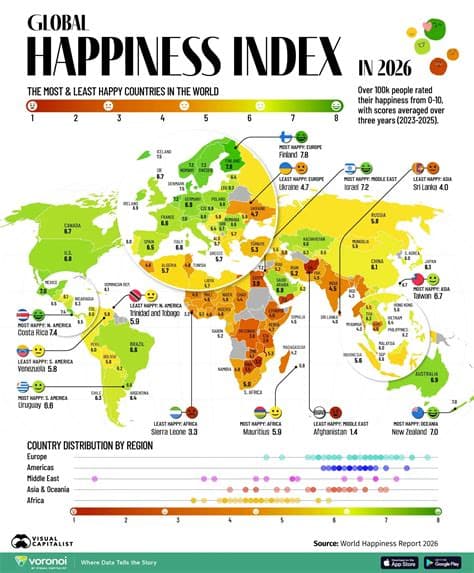
- Europe dominates the 2026 World Happiness Report with 19 countries in the top 30.
- Finland, Iceland, and Denmark rank as the top three happiest nations.
- The report includes a mix of European and non-European countries in the top rankings.
The 2026 World Happiness Report has been released, showcasing Europe as the clear leader in global happiness rankings. A total of 19 European nations have secured positions within the top 30, with Finland, Iceland, and Denmark taking the top three spots. This report, which evaluates various factors contributing to happiness, highlights the continued prominence of these Nordic countries in fostering well-being among their citizens.
Finland retains its title as the happiest country in the world, a position it has held for several consecutive years. Following closely are Iceland and Denmark, both of which have consistently ranked high due to their strong social support systems, high levels of trust in government, and overall quality of life. The rankings reflect a comprehensive analysis of factors such as income, social support, healthy life expectancy, freedom to make life choices, generosity, and perceptions of corruption.
In addition to the top three, several other European countries have made significant strides in the rankings. Sweden ranks fifth, followed by Norway in sixth place, and the Netherlands in seventh. Luxembourg and Switzerland also feature prominently, securing the ninth and tenth spots, respectively. This strong European presence in the top tier of the rankings underscores the region's commitment to social welfare and community well-being.
The report also includes notable non-European countries within the top 30. Costa Rica ranks fourth, showcasing its unique approach to happiness through a focus on environmental sustainability and community engagement. Israel and New Zealand follow in eighth and eleventh places, respectively, while Mexico and Australia round out the top fifteen. The United States, despite its economic power, ranks lower at twenty-third, highlighting disparities in happiness levels compared to its European counterparts.
The findings of the 2026 World Happiness Report not only reflect the current state of happiness across nations but also serve as a call to action for governments worldwide. As countries strive to improve the well-being of their citizens, the report emphasizes the importance of policies that promote social equity, mental health, and community support. The data collected for this report is crucial for understanding the factors that contribute to happiness and can guide future initiatives aimed at enhancing quality of life.
As the world continues to navigate challenges such as economic uncertainty and social unrest, the insights from the World Happiness Report can provide valuable lessons on fostering resilience and happiness in societies. The emphasis on European countries in this year's report may inspire other nations to adopt similar strategies that prioritize the well-being of their citizens.
Published by Banx Network. This article is part of the Banx decentralized media programme, powered by the BXE token on the XRP Ledger.



