
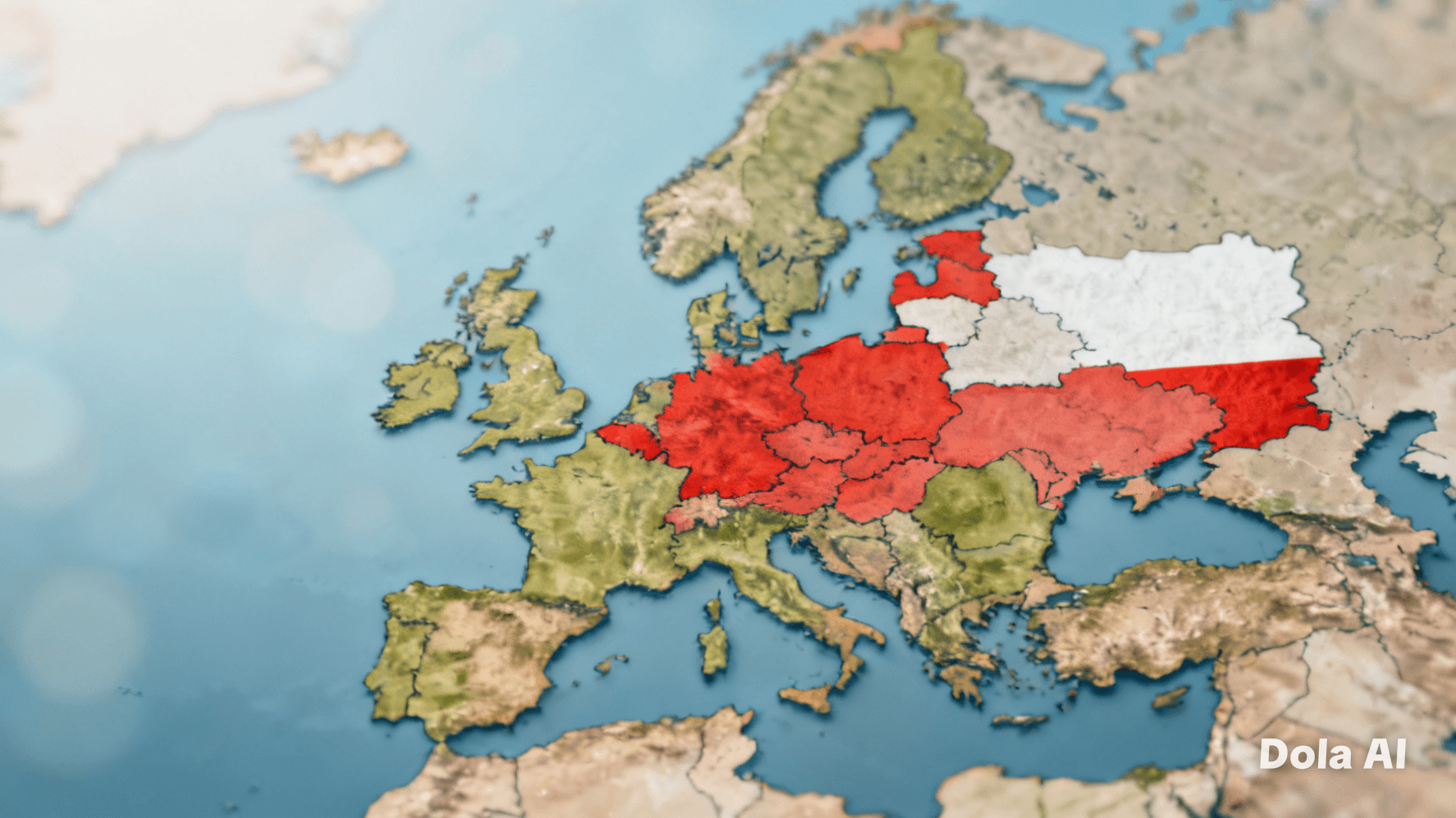
Key Highlights
- Europe faces a leadership vacuum following Brexit.
- Germany and France are traditional powerhouses but face challenges.
- Poland emerges as a rising influence in Central Europe.
The political landscape of Europe is undergoing a significant transformation, particularly in the wake of the United Kingdom's departure from the European Union (EU). This shift has left a leadership vacuum that raises critical questions about who will emerge as the continent's next hegemon. Historically, Europe has been shaped by powerful nations that have dominated through military, economic, and political influence. Today, the dynamics are shifting, and the future of European leadership is uncertain.
For decades, Germany and France have been at the forefront of EU politics. Germany, recognized for its robust economy, has often been viewed as the driving force behind EU policy. Meanwhile, France has leveraged its diplomatic history and military capabilities to assert its influence, particularly in matters of security and defense. Together, these nations have navigated the complexities of EU expansion and economic integration. However, the geopolitical landscape is evolving, and both countries face significant challenges that could impact their leadership roles.
Germany, while still the largest economy in Europe, is grappling with an aging population and energy crises that threaten its economic stability. Additionally, its reliance on external trade, particularly with China, raises concerns about its long-term economic independence. Critics argue that Germany's cautious approach to leadership has frustrated other EU member states, who are eager for more decisive action on pressing issues such as climate change and defense policy.
In contrast, France, under President Emmanuel Macron, is actively seeking to redefine its role in European leadership. Macron's vision includes advocating for a European army and greater strategic autonomy from the United States, particularly in defense matters. His push for reforms within the EU, especially regarding migration and economic governance, reflects a desire to position France as a leading voice in shaping the future of Europe. However, Macron's ambitions are tempered by domestic challenges, including social unrest and economic disparities, which could hinder his ability to unify support for his vision.
Amidst this backdrop, Poland has emerged as a significant player in the European political arena. The country has taken a strong stance against Russian aggression, particularly following the invasion of Ukraine, positioning itself as a key advocate for Ukrainian sovereignty. Poland's assertive foreign policy and growing economic influence have garnered attention, especially in Eastern Europe. However, its leadership style, characterized by populism, often clashes with the EU's traditional values of compromise and collective decision-making.
The question of who will lead Europe is further complicated by the need for a new leadership structure. Will the EU revert to a dual leadership model dominated by Germany and France, or will Macron's vision for a more autonomous Europe gain traction? Alternatively, could Poland's rise challenge the established order and introduce a new geopolitical configuration within the EU?
In this increasingly multipolar world, the concept of hegemony in Europe may evolve into a model of collective leadership. Rather than one nation asserting dominance, the future may see a more distributed form of influence where power is shared among several key players. The EU's foundational principles of cooperation and consensus could facilitate this shift, allowing for a more collaborative approach to leadership.
Ultimately, the future of European leadership will depend on how these nations navigate their internal challenges and external pressures. As the geopolitical landscape continues to shift, the question remains: who will claim the mantle of leadership in Europe, and how will that leadership be defined in the years to come?
Published by Banx Network. This article is part of the Banx decentralized media programme, powered by the BXE token on the XRP Ledger.



