In the complex architecture of international diplomacy, unity is often a mosaic rather than a monolith, composed of distinct national interests that must be carefully aligned to form a coherent whole. The European Union’s latest decision to impose further sanctions on Russia reflects this delicate balancing act, where the collective desire for security and accountability meets the specific economic realities of its member states. It is a process that requires patience, negotiation, and a willingness to accommodate the unique vulnerabilities of each nation within the bloc.
The recent agreement highlights not just the resolve of Europe to respond to geopolitical tensions, but also the pragmatic flexibility required to maintain solidarity. As the union moves forward, it does so with an understanding that energy security remains a cornerstone of stability, and that exceptions, while controversial, may be necessary to preserve the integrity of the broader alliance.
Body: The European Union has formally adopted a new package of sanctions against Russia, marking another step in its ongoing effort to limit Moscow’s capacity to fund its military operations. These measures target various sectors, including technology, finance, and energy, aiming to increase the economic pressure on the Russian state. The agreement was reached after intense discussions among member states, reflecting the high stakes involved in maintaining a unified front amidst evolving global dynamics.
A significant aspect of this latest package is the exemption secured by Greece regarding liquefied natural gas (LNG). Athens argued that a blanket ban on Russian LNG would disproportionately impact its energy infrastructure and economic stability, given its role as a key transit hub for gas entering Southeastern Europe. The exemption allows Greece to continue importing Russian LNG under specific conditions, ensuring that its domestic energy needs and regional commitments are met without violating the spirit of the sanctions regime.
This concession underscores the diverse energy landscapes within the EU. While some nations have successfully diversified their supply chains away from Russian fossil fuels, others remain more dependent due to geographic and infrastructural constraints. The Greek exemption is a testament to the EU’s ability to tailor its policies to accommodate these differences, preventing fragmentation and ensuring that all member states can participate in the sanctions framework without undue hardship.
Critics of the exemption argue that it creates a loophole that could undermine the effectiveness of the sanctions, allowing revenue to still flow to Russia. However, proponents contend that the alternative—disunity or economic distress in a member state—would be far more damaging to the EU’s long-term strategic goals. The decision reflects a calculated risk, prioritizing political cohesion and energy security over absolute uniformity.
The sanctions also include measures to close loopholes related to the transshipment of goods and the use of third-country intermediaries. By tightening controls on dual-use technologies and financial transactions, the EU aims to prevent the circumvention of existing restrictions. These technical adjustments are crucial for ensuring that the sanctions bite where intended, rather than leaking through gaps in enforcement.
Diplomatic sources indicate that the negotiations were challenging, with several countries raising concerns about the economic impact on their industries. The final agreement represents a compromise that balances moral imperatives with practical necessities. It demonstrates that while the EU speaks with one voice on the principle of opposing aggression, the implementation of that stance requires nuanced and context-sensitive approaches.
Closing: As the new sanctions come into effect, the focus shifts to their implementation and monitoring. The Greek exemption serves as a reminder that international policy is rarely black and white, but rather a spectrum of gray areas where compromise is essential. The EU continues to navigate this complex terrain, striving to uphold its values while protecting the well-being of its citizens.
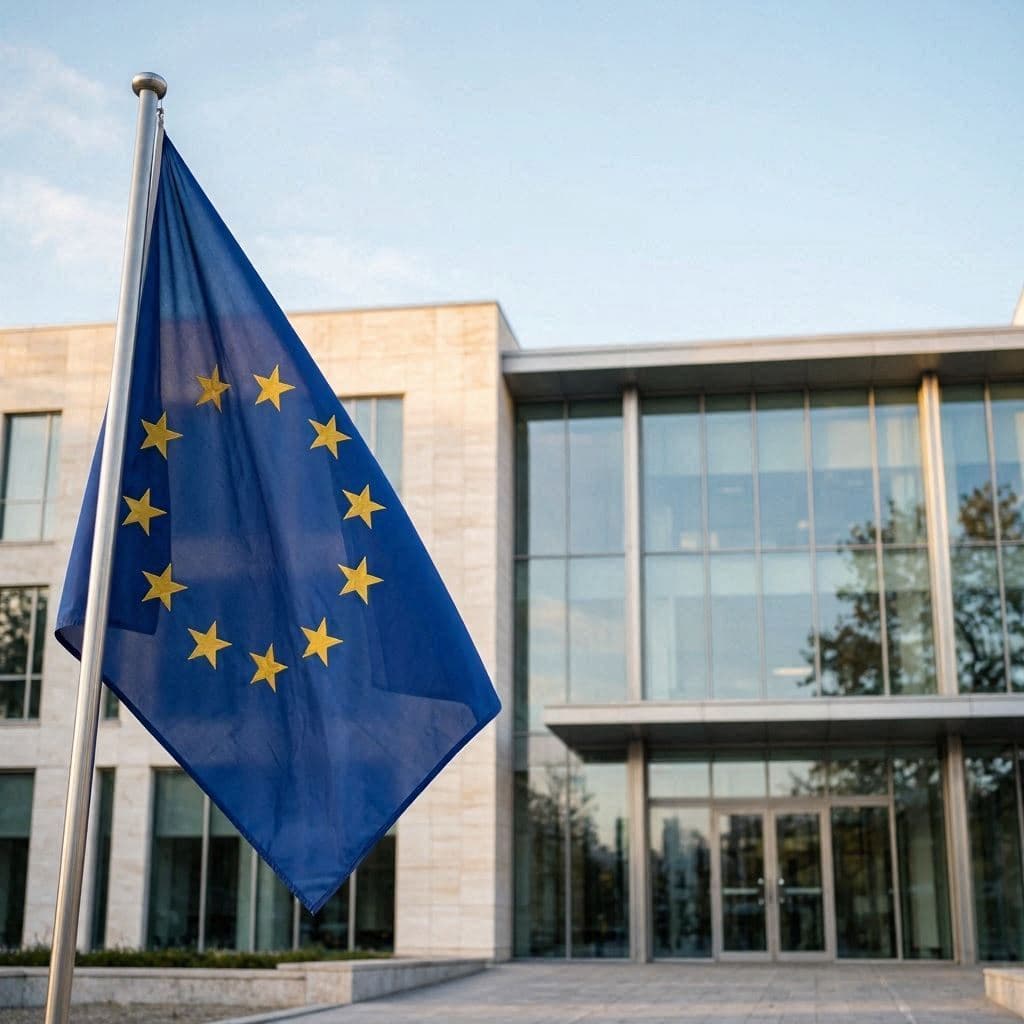
AI Image Disclaimer: Please note that any visual illustrations accompanying this text are AI-generated interpretations designed to evoke the thematic context of European diplomacy and energy policy, and do not depict actual meetings or specific political figures.
Sources: Reuters Politico Europe Euractiv Bloomberg
Published by Banx Network. This article is part of the Banx decentralized media programme, powered by the BXE token on the XRP Ledger.