
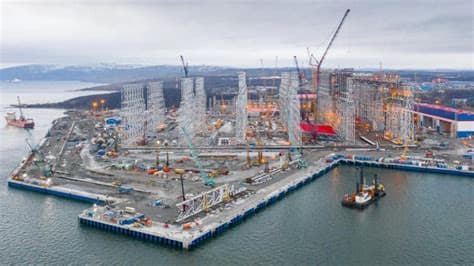
Key Highlights
- Record Imports:EU imports of Russian Arctic LNG have surged to $4.4 billion.
- Sanctions Context:This increase occurs despite stringent sanctions against Russia.
- Energy Dependence:The EU's reliance on Russian energy complicates future policy decisions.
In a surprising turn of events, EU imports of Russian Arctic liquefied natural gas (LNG) have skyrocketed to $4.4 billion, marking an all-time high. This development occurs against the backdrop of stringent sanctions imposed on Russia due to its geopolitical actions. The increase is attributed to both lucrative pricing and renewed demand within Europe as countries seek to diversify their energy sources while still relying on established suppliers.
Price variations in the global energy market have played a significant role in making Russian LNG more competitive. As energy prices fluctuate, many EU nations find themselves in a position where they must weigh the benefits of lower-cost Russian LNG against the political ramifications of continuing to import from a sanctioned nation. The ongoing conflict in Ukraine and the resulting sanctions have created a complex landscape where energy remains a critical need for many EU countries, which find it challenging to source alternative supplies quickly.
Geopolitical dynamics further complicate the situation. Despite the sanctions, energy remains a critical need for many EU nations, which find it challenging to source alternative supplies quickly. The EU's energy security is at stake, and the reliance on Russian LNG highlights the difficulties in transitioning to alternative energy sources in the short term. Enhanced logistical capabilities, including shipping routes and port facilities, have facilitated increased imports from Arctic regions, allowing for a more streamlined supply chain.
Industry analysts suggest that while this record figure demonstrates a persistent economic relationship, it also reflects a broader reliance on Russian energy, complicating the EU's position regarding sanctions and future energy policies. The implications of these developments are profound as they shape not only energy markets but also future diplomatic relations between the EU and Russia. Such dependencies may hinder effective responses to future geopolitical challenges, perpetuating a cycle of reliance that persists despite broader strategic objectives.
As the energy landscape continues to evolve, all eyes will be on how the EU manages its relationship with Russia and whether it can make meaningful strides towards energy independence in the long term. The ongoing reliance on Russian LNG raises questions about the EU's commitment to its energy transition goals and the potential for future conflicts between economic needs and political ideals.
Published by Banx Network. This article is part of the Banx decentralized media programme, powered by the BXE token on the XRP Ledger.



