
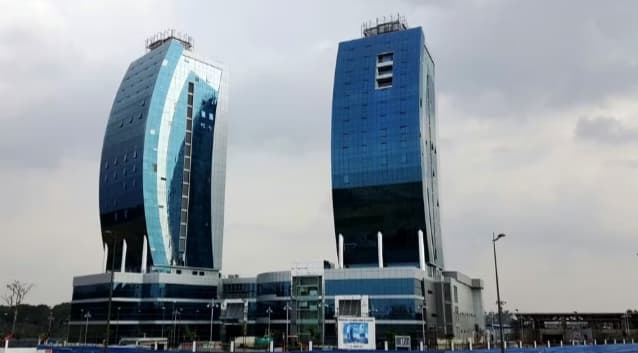
Key Highlights
- Capital Relocation:Equatorial Guinea has moved its capital from Malabo to Ciudad de la Paz.
- Strategic Development:The new capital aims to improve governmental operations and urban development.
- Economic Redistribution:The move is expected to promote more even economic growth across the nation.
Equatorial Guinea has made a significant political and administrative shift by relocating its capital from Malabo to Ciudad de la Paz. This decision, finalized by President Teodoro Obiang Nguema Mbasogo, is intended to improve governmental operations and stimulate urban development in the new capital. The relocation marks a pivotal moment in the nation’s history as it seeks to redefine its administrative landscape.
Ciudad de la Paz, which has been under construction for several years, is strategically designed to accommodate government functions more effectively. Situated on the mainland, the new capital is expected to facilitate easier access for both citizens and officials compared to Malabo, which is located on the island of Bioko. This geographical shift is anticipated to enhance connectivity and operational efficiency for government services.
The transition to Ciudad de la Paz is part of a broader initiative to modernize the country’s infrastructure and enhance public services. Officials believe that this relocation will also help redistribute economic growth more evenly throughout the nation, which has been heavily centered in other regions. By moving the capital inland, the government aims to foster development in areas that have historically been underserved.
In a statement, President Obiang highlighted the importance of the move in promoting national unity and fostering a modern administrative landscape. The government aims to invest in the new capital’s infrastructure, creating housing, offices, and public spaces to support its residents and institutions. This investment is seen as crucial for establishing Ciudad de la Paz as a vibrant hub for governance and civic life.
While the move has been met with optimism by some, critics have raised concerns about potential disruptions during the transition. Ensuring a smooth transfer of government functions and resources will be crucial in maintaining public services and governance during this period. The government has acknowledged these concerns and is working to mitigate any negative impacts during the transition.
As Ciudad de la Paz evolves into the central hub of governance, the world will be watching to see how this transition unfolds and its impact on the nation’s trajectory. The relocation not only signifies a change in geography but also reflects Equatorial Guinea's aspirations for modernization and improved governance in the years to come.
Published by Banx Network. This article is part of the Banx decentralized media programme, powered by the BXE token on the XRP Ledger.



