

Key Highlights
- New Policy:The U.S. State Department has announced a controversial policy targeting DEI, hate speech regulations, and transgender healthcare.
- Political Shift:This marks a significant shift in U.S. foreign policy priorities under the Trump administration.
- Global Reaction:The policy is expected to provoke mixed reactions from international allies and human rights organizations.
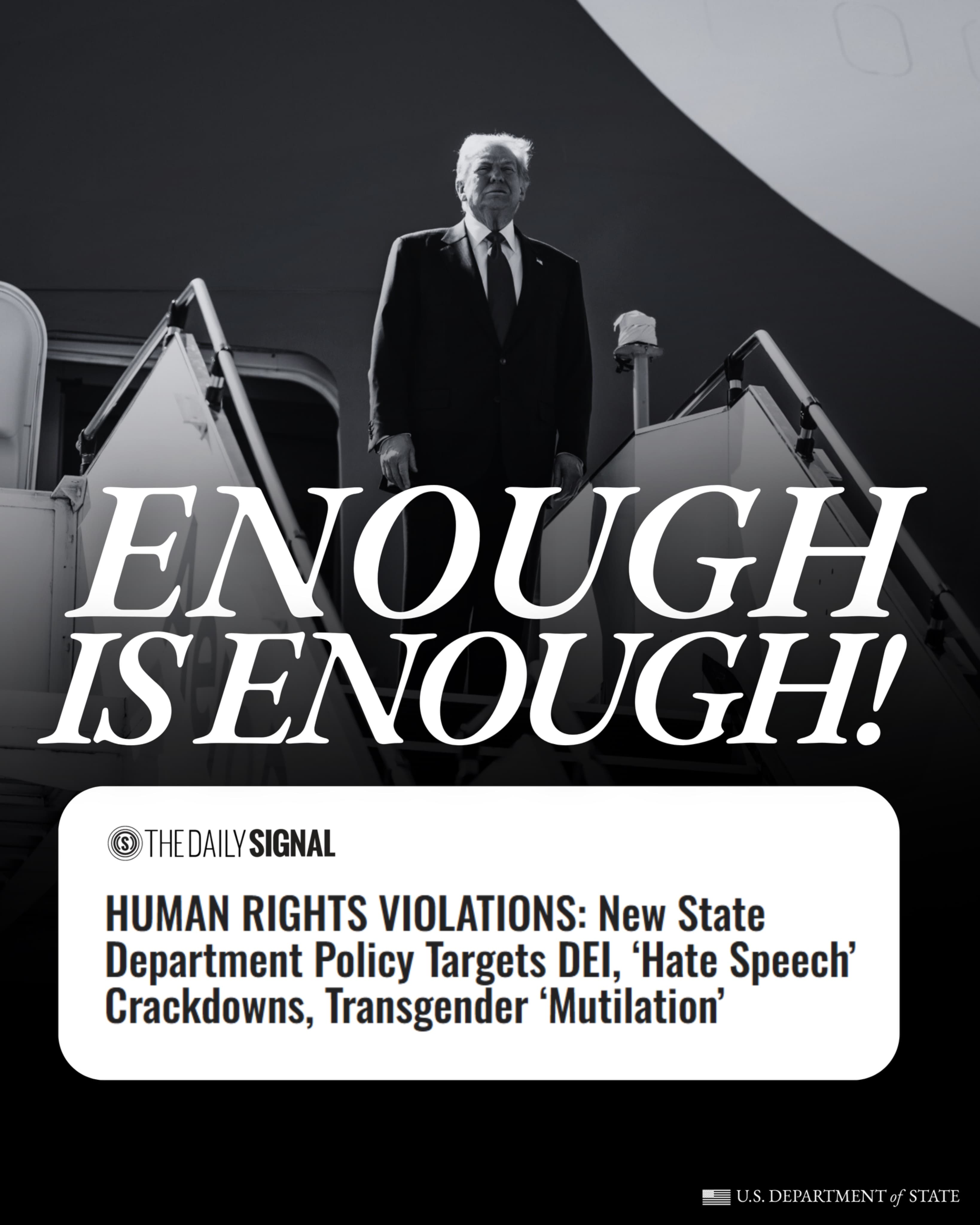
The U.S. State Department has unveiled a new policy under the headline “ENOUGH IS ENOUGH!” that signifies a dramatic shift in American foreign policy. This announcement, which prominently features an image of former President Donald Trump, indicates a move away from progressive social initiatives toward a more hardline stance on what the administration describes as “human rights violations.”
The policy explicitly targets three key areas: Diversity, Equity, and Inclusion (DEI), labeling these programs as divisive and contrary to universal human rights principles. It also addresses international efforts to regulate speech, framing them as threats to free expression and fundamental liberties. Perhaps most controversially, the policy refers to gender-affirming medical care for minors as “mutilation,” positioning it as a significant human rights abuse that the U.S. will combat globally.
The imagery accompanying the announcement is deliberate, featuring Trump, a figure synonymous with populist and anti-establishment rhetoric. This visual choice sends a clear message that the current administration is not continuing the policies of the Biden administration but rather returning to an “America First” foreign policy. The phrase “ENOUGH IS ENOUGH!” echoes Trump’s campaign rhetoric, signaling a rejection of what his supporters perceive as years of progressive overreach.
This policy announcement, while framed as a human rights initiative, serves as a political statement. It arrives at a time when the 2024 election results have reshaped Washington’s power dynamics, and the incoming administration is keen to signal its priorities to both domestic audiences and international partners. By targeting DEI, speech regulations, and transgender healthcare, the State Department aligns itself with conservative values and prepares to leverage diplomatic channels to influence global norms.
The international community is likely to respond with alarm. Allies who have embraced DEI and LGBTQ+ rights may view this policy as a betrayal of shared values. Human rights organizations are expected to condemn the language used, particularly the term “mutilation,” which they argue is medically inaccurate and stigmatizing. Conversely, conservative governments and movements worldwide may welcome the policy as a validation of their own positions.
For the Trump administration, this policy serves as a powerful tool to energize its base, framing the administration as a movement fighting against a global “woke” agenda. For Democrats and progressive allies, it represents a dangerous escalation of culture wars onto the international stage, potentially undermining America’s moral authority and diplomatic relationships.
This policy raises fundamental questions about what constitutes a human right. The State Department appears to be redefining human rights to exclude protections for marginalized groups based on identity, instead focusing on perceived threats to traditional values and free speech. This redefinition could have far-reaching consequences, influencing everything from foreign aid to diplomatic relations and setting a precedent for how the U.S. engages with the world in the coming years.
As the world grapples with this seismic shift, one thing is clear: the era of progressive globalism is being challenged head-on. The message from Washington is unmistakable: “ENOUGH IS ENOUGH!” and the world must now decide whether to comply or resist.
Published by Banx Network. This article is part of the Banx decentralized media programme, powered by the BXE token on the XRP Ledger.




