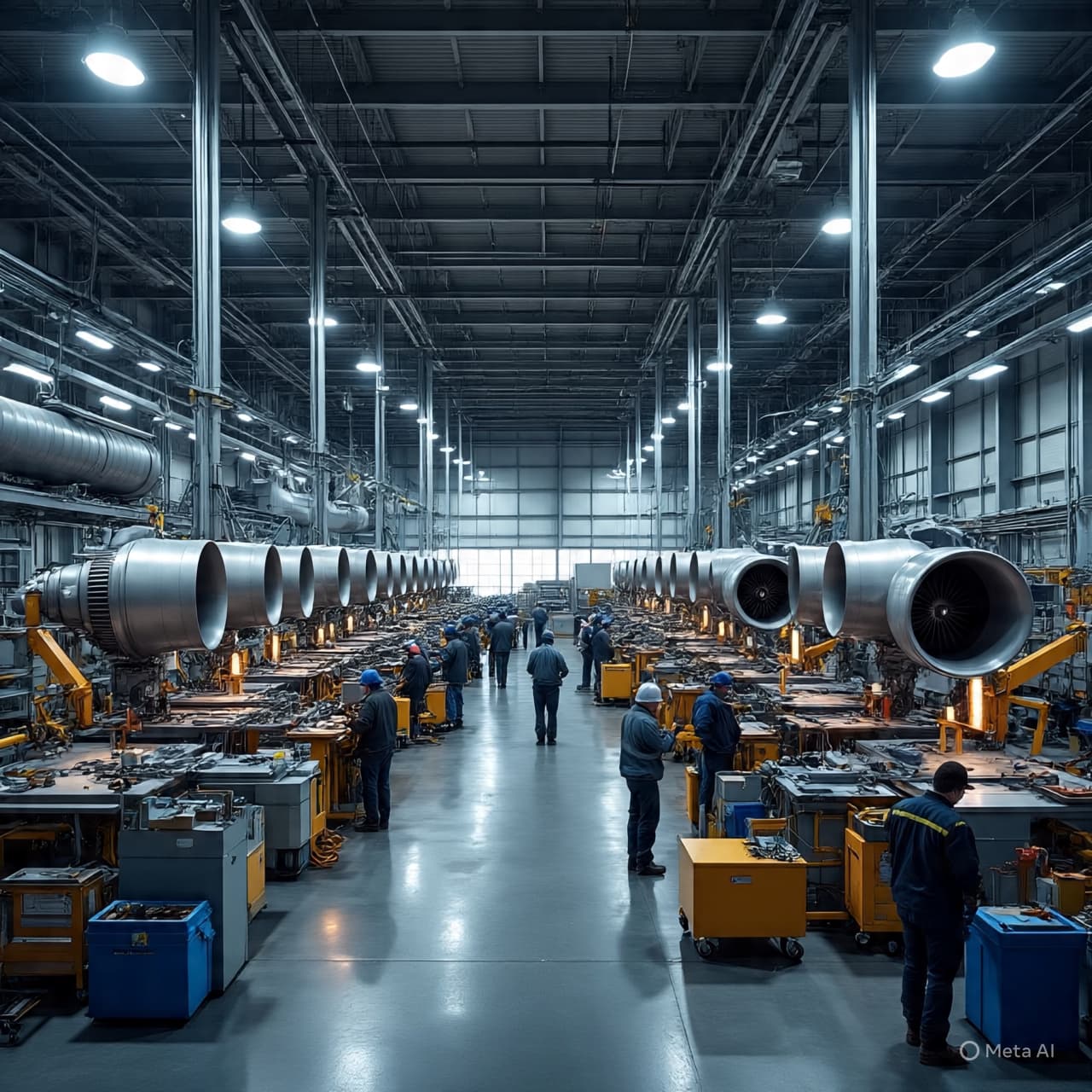
In Derby, where factory roofs stretch beneath a changeable English sky, the hum of precision engineering has long carried more than mechanical purpose. It has been a symbol—of continuity, of technical mastery, of Britain’s industrial identity. Now, that hum is accompanied by a question directed toward Westminster.
Rolls-Royce Holdings is urging the UK government to commit to subsidies for a £3 billion engine project, according to a report by the Financial Times. The appeal reflects not only the scale of the investment but also the strategic stakes involved in developing next-generation propulsion systems.
Large aerospace programs unfold over years, sometimes decades. They demand sustained research, intricate supply chains, and a global customer base. For companies like Rolls-Royce, whose engines power commercial aircraft and defense platforms, long-term projects are as much about national industrial capacity as they are about corporate growth.
The reported £3 billion initiative is understood to center on advanced engine development, a field increasingly shaped by environmental targets and efficiency standards. Airlines face mounting pressure to reduce emissions, and manufacturers are racing to design engines that burn less fuel while delivering greater performance. Government backing can ease the burden of upfront costs and signal confidence to international partners.
Britain has historically supported strategic industries through a combination of direct funding, tax incentives, and collaborative research programs. In the aerospace sector, public-private cooperation has often been framed as essential to maintaining competitiveness against global rivals. Without clear commitments, industry leaders argue, companies risk losing ground in a market where state support is common practice elsewhere.
The government has not announced a final decision regarding subsidies for the project. Any commitment would need to balance fiscal constraints with industrial priorities, particularly at a time when public finances are under scrutiny and competing demands remain high.
For Rolls-Royce, the request underscores the scale of ambition involved. A £3 billion engine program represents not only technological aspiration but thousands of skilled jobs across the supply chain. From engineers designing turbine blades to technicians calibrating test rigs, the project would ripple outward into regional economies.
In practical terms, the company is seeking clarity—whether the government will commit financial backing to help advance the development. The Financial Times reports that discussions are ongoing, with the firm emphasizing the strategic importance of the project.
The outcome will shape more than a balance sheet. It will help determine how Britain positions itself in the next era of aerospace innovation—whether the sound rising from its factories continues to mark leadership in engine technology, or whether that momentum shifts elsewhere.
For now, the turbines wait, suspended between blueprint and policy
Published by Banx Network. This article is part of the Banx decentralized media programme, powered by the BXE token on the XRP Ledger.