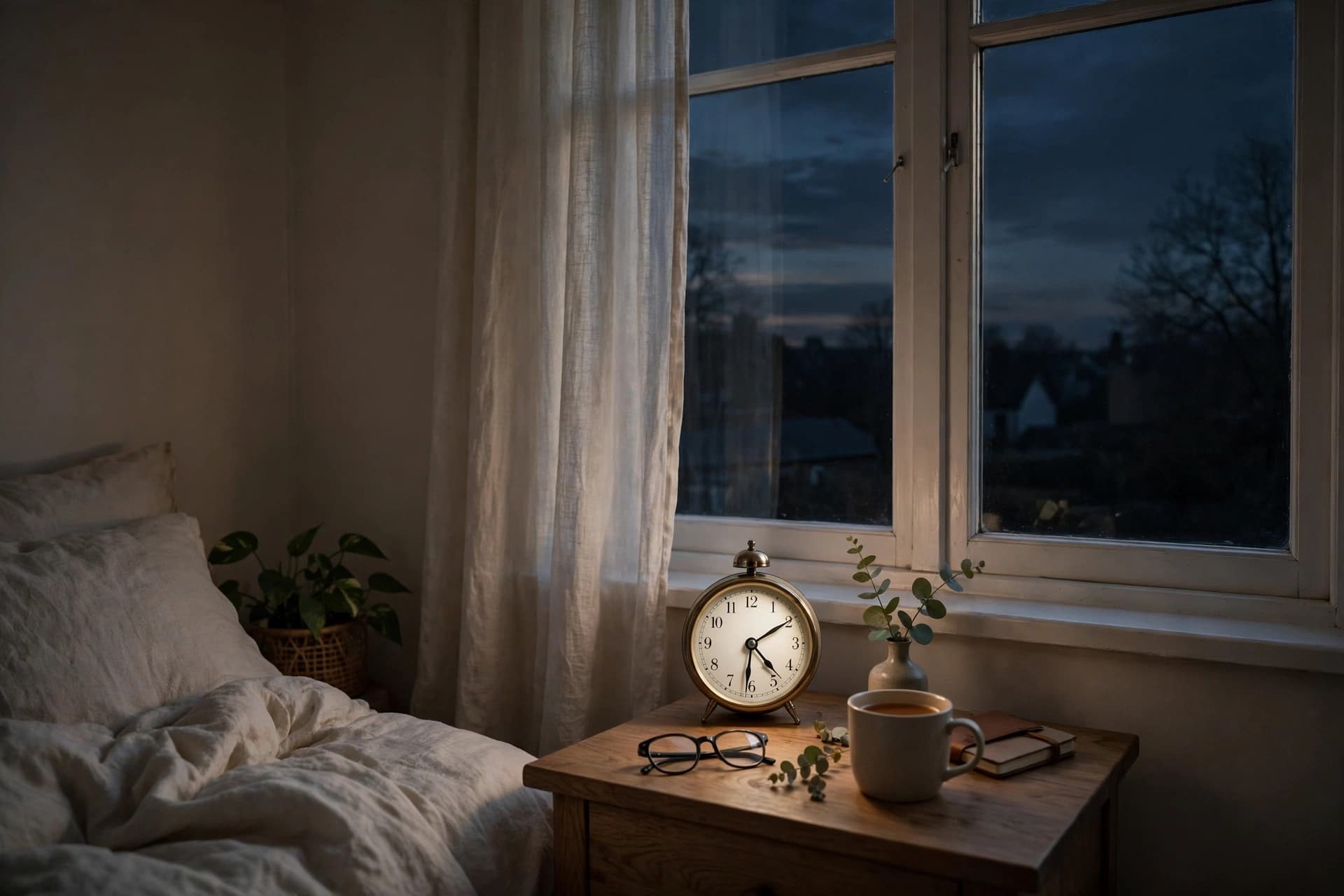
Twice a year, Canadians perform a small ritual that has become so ordinary it is rarely questioned. They move their clocks forward in spring and back in autumn, adjusting their lives to a convention that dates back to another era. But a growing number of provinces have decided the ritual is no longer worth keeping. The question that remains is not whether to stop changing the clocks, but which time to keep—and the answer, sleep scientists say, matters more than most people realize.
Most of British Columbia, as well as Alberta, Manitoba, and the Northwest Territories, are no longer changing their clocks twice a year. They join Yukon and most of Saskatchewan. Most of Ontario, Quebec, and the Atlantic provinces will still turn their clocks back on November 1. For Quebec, this could be the last time; Premier Paul St-Pierre Plamondon announced this week that his government is moving to end the twice-yearly change but has not yet decided which time the province will keep .
The distinction between permanent daylight time and permanent standard time is not a technicality. Research suggests that permanent standard time—the time we return to in the fall—is more closely aligned with the body's internal clock. Permanent daylight time, which several provinces have chosen, pushes winter sunrises later, creating a mismatch between what the body wants to do and what work or school requires.
Joseph De Koninck, an emeritus professor of psychology at the University of Ottawa who has studied sleep for decades, explained that the springtime change is the most problematic because people lose an hour of sleep, creating a mismatch between the body's biological clock and solar time. The body uses light to synchronize itself, and as daylight changes with the seasons, circadian rhythms adjust gradually. "We are able to adapt, but it's not optimal for our health," he said .
Michael Antle, head of the University of Calgary's psychology department, was more direct. Permanent standard time would have been better for Alberta, he said. Because of the province's northern latitude, it already has late winter sunrises; permanent daylight time will push them forward another hour. Edmonton will see winter sunrises as late as 10 a.m. under Alberta's new system. "It's not the choice I would have made," Antle said of the province's decision .
Antle pointed to population studies that found people exposed to later sunsets slept less and had higher rates of obesity, diabetes, and heart disease. Night owls who work regular daytime jobs may struggle the most, because they already find it difficult to wake up early. The mismatch between biological time and social time is not merely an inconvenience; it is a chronic stress on the body that accumulates over years.
The research on time changes is not uniformly alarmist. A systematic review of 157 studies found that the messaging of transitions and daylight time being uniformly detrimental is not supported. The spring transition appears associated with increased acute myocardial infarction and fatal traffic accidents, but also with decreased crimes involving physical harm. Living with daylight time, compared to standard time, appears associated with decreased all-cause mortality and traffic accidents in summer . The evidence is heterogeneous, and the certainties are fewer than the headlines suggest.
What the science does support is a distinction between the disruption of changing the clocks and the effects of living on the wrong time year-round. Ending the change is good, most researchers agree. But choosing permanent daylight time extends the mismatch through the darkest months of the year, when morning light is already scarce. For provinces that have made that choice, the winter ahead will be a test of whether the convenience of later evenings is worth the cost of darker mornings.
Canada's emerging patchwork of time systems will give researchers an opportunity to study neighboring populations living under different regimes. Antle said he would have preferred a year's notice to collect baseline data before Alberta made its change. He suggested examining mental health, vehicle and pedestrian collisions, school performance and attendance, and workplace attendance and tardiness . The data will come, but the people living through the transition will form their own judgments before the studies are published.
For now, millions of Canadians will turn their clocks back this weekend, and millions of others will not. The divide is not merely administrative. It is a natural experiment in how light, time, and the human body interact, conducted at a scale no laboratory could replicate. The results will not be known for years, but the question is already here: what does it mean to live on the wrong time, and how long can we do it before the body notices?
Image note: The visual content in this article was generated using artificial intelligence and does not depict actual individuals or events.
Sources: CBC News, Radio-Canada, University of Oxford (Sleep Research), PubMed (Sleep Medicine Reviews)
Published by Banx Network. This article is part of the Banx decentralized media programme, powered by the BXE token on the XRP Ledger.