

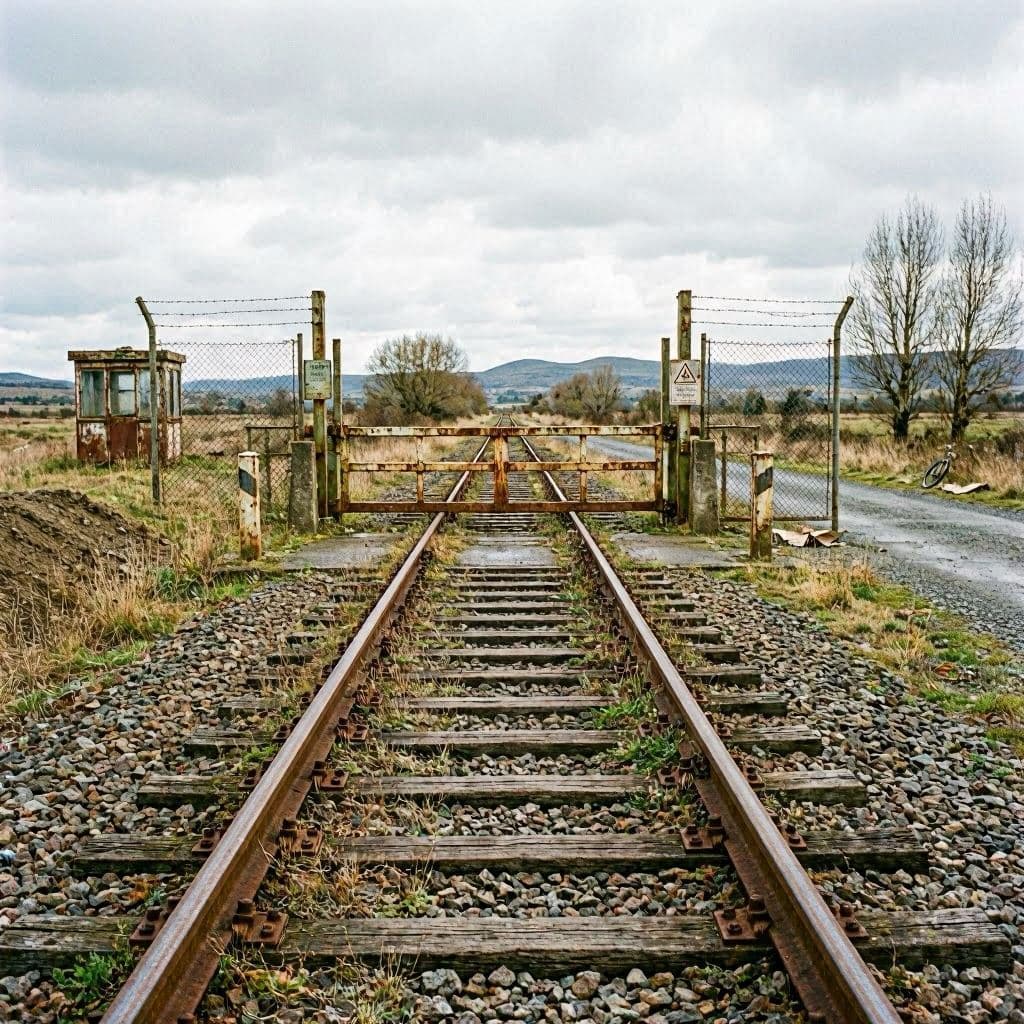
Key Highlights
- Closure of railway border crossings with Finland, Estonia, and Latvia announced by Russia.
- Significant disruption to trade and travel for affected nations.
- Increased geopolitical tensions and regional security implications.
Russia has officially announced the closure of railway border crossings with Finland, Estonia, and Latvia, a move that further isolates the country from the West. This decision marks a significant escalation in geopolitical tensions, severing long-standing physical links that have facilitated trade and interaction for decades. The closure is seen as a retaliatory measure against sanctions imposed by Western nations and reflects the deteriorating relationship between Moscow and its Baltic neighbors since the onset of the Ukraine conflict.
The closure affects key freight and passenger routes, disrupting supply chains and travel options for citizens in the affected countries. For Finland, which shares a long border with Russia, the shutdown of railway connections is both a symbolic and practical break. This follows earlier closures of road border points and underscores the growing rift between Helsinki and Moscow. The Finnish government has expressed concern over the implications for local economies and cross-border relations.
Estonia and Latvia, both members of the European Union and NATO, have also seen their rail links severed. These countries have been vocal critics of Russian policies and have actively supported Ukraine throughout the conflict. The closure of railway crossings further limits Russia’s ability to export goods to these markets, reducing the flow of people and goods. This strategic decoupling aligns with broader efforts by Western nations to reduce dependence on Russian energy and trade, reinforcing the isolation of Russia in the region.
Local communities near the borders are already feeling the impact of these closures, with reduced economic activity and limited mobility. Families separated by the border face greater difficulties in visiting each other, and businesses that relied on cross-border trade must now seek alternative routes or markets. The human cost of these political decisions is significant, as daily life is disrupted by high-level strategies that prioritize national security over personal connections.
The decision also has implications for regional security. With physical borders closed, the focus shifts to monitoring and defense. NATO allies in the region are strengthening their military presence and coordination to ensure stability. The closure of railway lines simplifies border management but also increases the sense of division and mistrust among neighboring countries. Analysts suggest that this move may lead to a more militarized border, as nations prepare for potential hybrid threats.
International reactions have been largely predictable, with Western governments viewing the closure as another step in Russia’s self-isolation. Rather than seeing it as a leverage point, many analysts interpret it as a sign of Russia’s diminishing influence in Europe. The country appears to be turning inward, focusing on relationships with non-Western partners while cutting ties with its traditional European neighbors. This shift is reshaping the geopolitical landscape of the continent.
Despite the closures, some humanitarian and diplomatic channels remain open, albeit heavily restricted. Diplomats hope that these minimal connections can be preserved to facilitate dialogue and prevent complete estrangement. However, the trend is clearly toward separation, with both sides preparing for a long-term state of limited engagement. The shutting of railway border crossings serves as a poignant symbol of the current era, representing the breakdown of cooperation and the rise of confrontation.
As trains stop running across these borders, the silence serves as a reminder of the distance that has grown between nations. The path to reconciliation, if it ever comes, will require rebuilding not just tracks, but trust among nations that once shared common interests and goals.
Published by Banx Network. This article is part of the Banx decentralized media programme, powered by the BXE token on the XRP Ledger.




