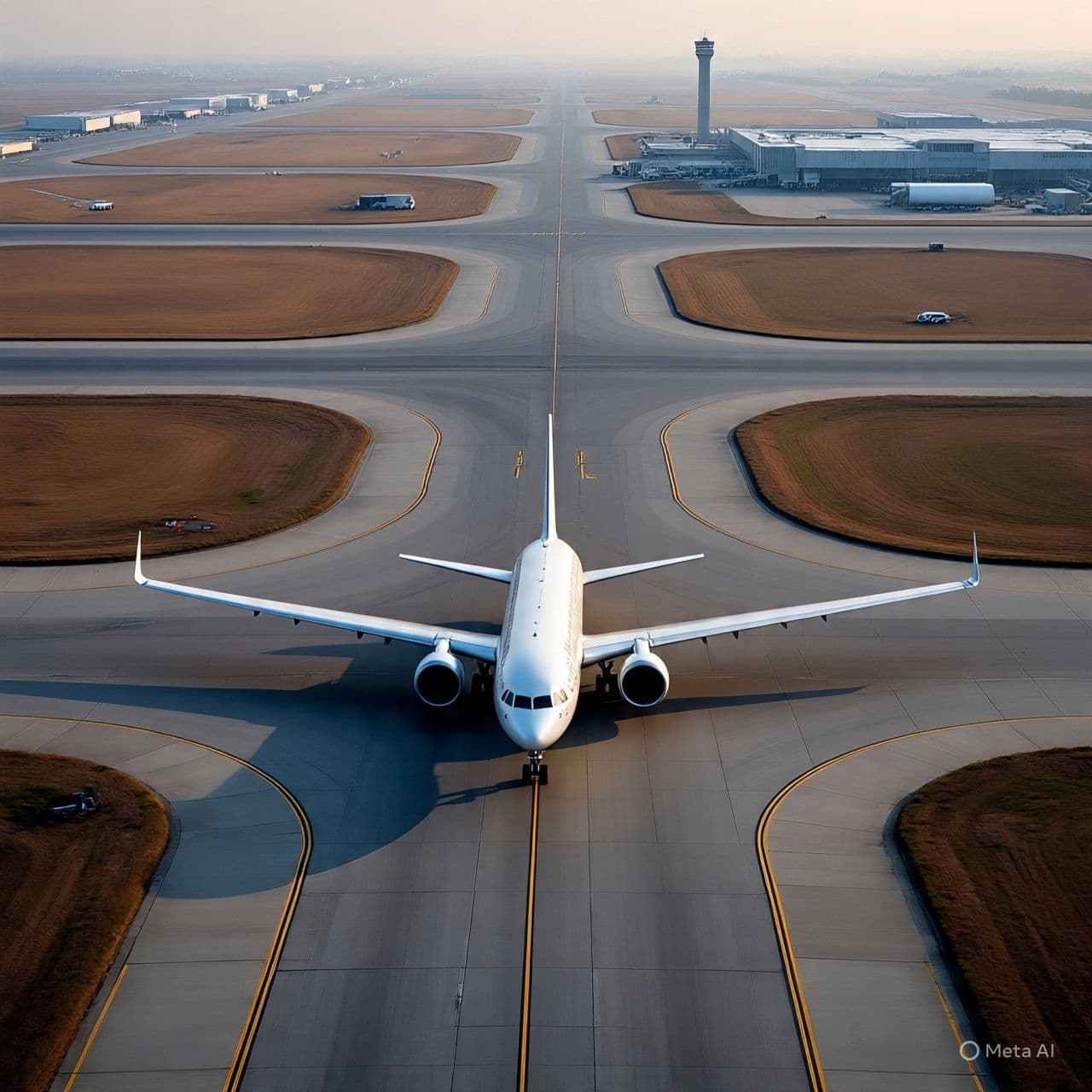
It is strange, sometimes, how power reveals itself. Not in statements, not in loud debates on cable news, but in silence — in the quiet absence of aircraft that normally carve white noise across American skies.
Because of the U.S. government shutdown, airlines have been told to reduce flights by 10% at forty of the country’s biggest airports.
It is the kind of number that at first looks technical, almost bureaucratic. But inside the aviation economy, a 10% cut is not a small trim. The skies above JFK, LAX, O’Hare, Atlanta, Phoenix — all of them — will carry noticeably fewer aluminum bodies.
At first glance it looks like a defensive maneuver: the FAA simply does not have enough active personnel while thousands of government workers are furloughed. Fewer controllers. Fewer safety managers. Fewer people manning the invisible network that keeps a Boeing or Airbus from merely being a winged tube in the wrong grid.
So the solution is to make fewer takeoffs.
In aviation, less volume is a safety system.
It is also a harsh mirror to the fragility of the American model. The airport is not just an airport. It is a real-time proof that the U.S. economy is just-in-time — flights carry business meetings, medical specialists, semiconductor engineers, Hollywood productions, and the human threads of interstate life.
Cutting 10% is not only cutting planes.
It is slowing the bloodstream.
And somewhere, in the next few days, a traveler will stand near a gate at LaGuardia or Denver or Dallas and the board will show: delayed, delayed, delayed — operational issues due to federal staffing.
There is no politics in that moment.
There is only one quiet question: how long can a world-class aviation nation afford to borrow silence from the future?
Published by Banx Network. This article is part of the Banx decentralized media programme, powered by the BXE token on the XRP Ledger.