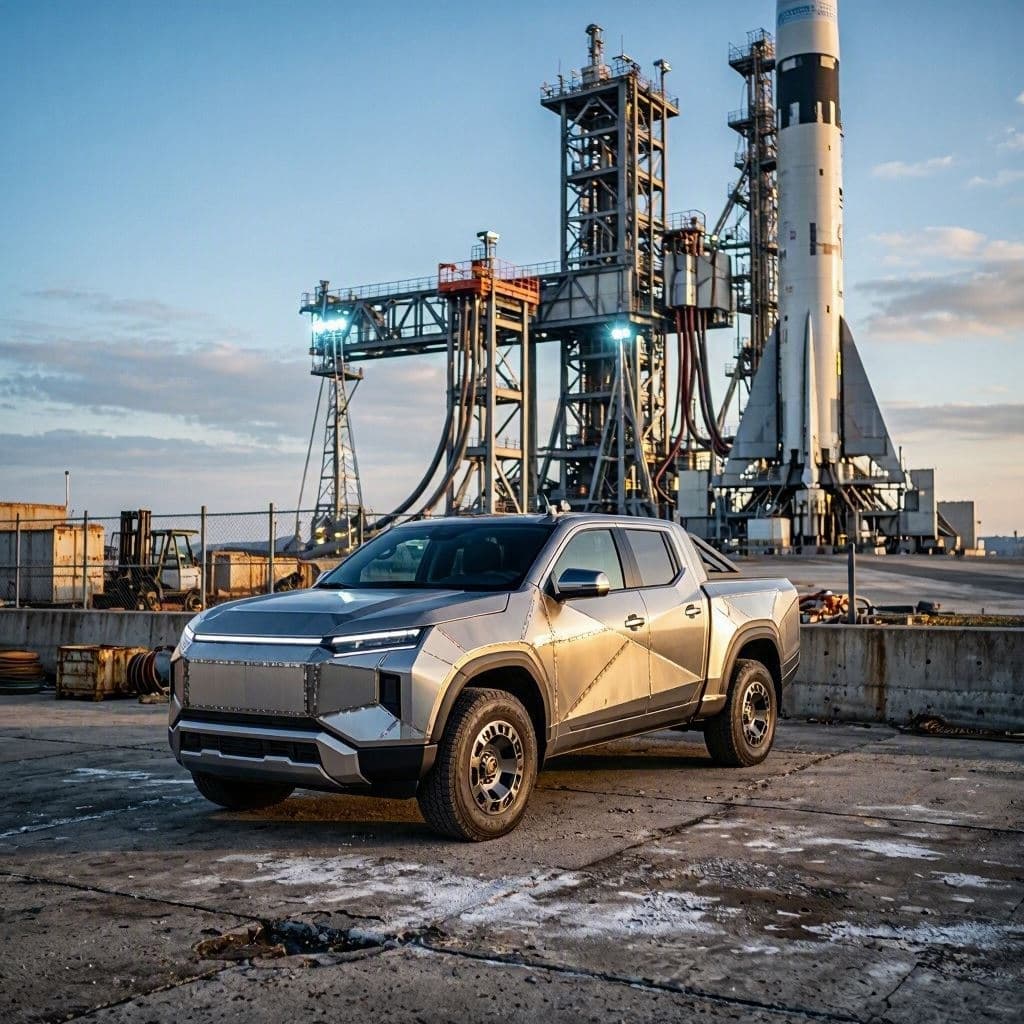
In the high-stakes world of space exploration, contingency planning is as crucial as the launch itself. For decades, NASA relied on specialized vehicles for emergency evacuations from the launchpad. Now, in a surprising twist of industrial synergy, SpaceX is turning to its most polarizing consumer product: the Cybertruck. The electric pickup, with its angular stainless-steel exoskeleton, is being adapted to serve as an emergency escape vehicle for astronauts, blending automotive innovation with aerospace safety protocols.
The decision stems from the need for a robust, rapid-response vehicle capable of withstanding extreme conditions. In the event of a launch abort or pad emergency, astronauts must be evacuated quickly and safely from the vicinity of the rocket. The Cybertruck’s durable build and electric powertrain offer unique advantages, including instant torque for rapid acceleration and a battery system that eliminates the risk of fuel fires. Its unconventional design, once mocked for its futuristic aesthetic, is now praised for its functional resilience.
SpaceX has modified the trucks with specialized equipment, including reinforced seating, communication systems, and protective shielding. These "Astro-Vans," as they are informally known, are stationed at Launch Complex 39A at Kennedy Space Center, ready to deploy at a moment’s notice. The integration of consumer technology into critical safety infrastructure highlights the blurring lines between commercial innovation and government spaceflight.
NASA officials have expressed confidence in the solution, noting that the Cybertruck’s performance metrics meet rigorous safety standards. The vehicle’s ability to navigate rough terrain and withstand debris makes it an ideal choice for the unpredictable environment of a launch site. This partnership exemplifies the growing collaboration between private enterprise and public agencies, driving efficiency and creativity in space operations.
Critics have questioned the reliance on a consumer vehicle for such a critical role, citing concerns about reliability and testing. However, SpaceX argues that the Cybertruck has undergone extensive modification and validation specifically for this purpose. The company’s track record of rapid iteration and problem-solving lends credibility to the approach, suggesting that unconventional solutions can yield reliable results.
This development also signals a broader shift in how space missions are supported. By leveraging existing commercial products, SpaceX reduces costs and development time, allowing resources to be focused on other aspects of mission safety. It is a testament to the adaptability of modern engineering, where form follows function in unexpected ways.
The use of Cybertrucks for astronaut evacuation is a bold move that reflects the innovative spirit of the new space age. Whether viewed as a pragmatic solution or a marketing stunt, it underscores the evolving relationship between technology and safety. As SpaceX continues to push boundaries, the Cybertruck stands ready, not just as a truck, but as a lifeline.
AI Image Disclaimer: The images provided are AI-generated to visually represent the technological and aerospace themes of the story.
Sources: SpaceNews The Verge NASA Blogs
Published by Banx Network. This article is part of the Banx decentralized media programme, powered by the BXE token on the XRP Ledger.

.jpg&w=3840&q=75 "The Artemis Revolution: How NASA Plans to Build Humanity's Future on the Moon")