An election is an act of trust, a quiet agreement among countless strangers to abide by rules they cannot personally enforce. When that agreement is questioned, unease stops being an abstract political mood and becomes something concrete, something daily. In the final hours before the midterm elections, some American voters expressed fear of federal interference in the vote and of results being overturned. That fear did not appear from nowhere. For years, the president has spread debunked claims about mail-in ballot fraud, malfunctioning voting machines, and noncitizen voting. With polls showing control of Congress hanging in the balance, his attacks have intensified, including a million-dollar bounty for whistleblowers who help convict election fraud.
For Tiffany Hall, the worry is personal. A fifty-six-year-old physician who lives in a Cincinnati suburb, she voted early on Saturday with her husband and her teenaged daughter, who was voting for the first time. "I am very concerned that the election will be disrupted in a way that affects the vote margin," she said. She invoked the struggles of the civil rights movement and voiced concern about efforts to suppress voting. Hall is Black. Her worry is not about a candidate or a policy but about whether the act of voting itself will be interfered with, weakened, or questioned.
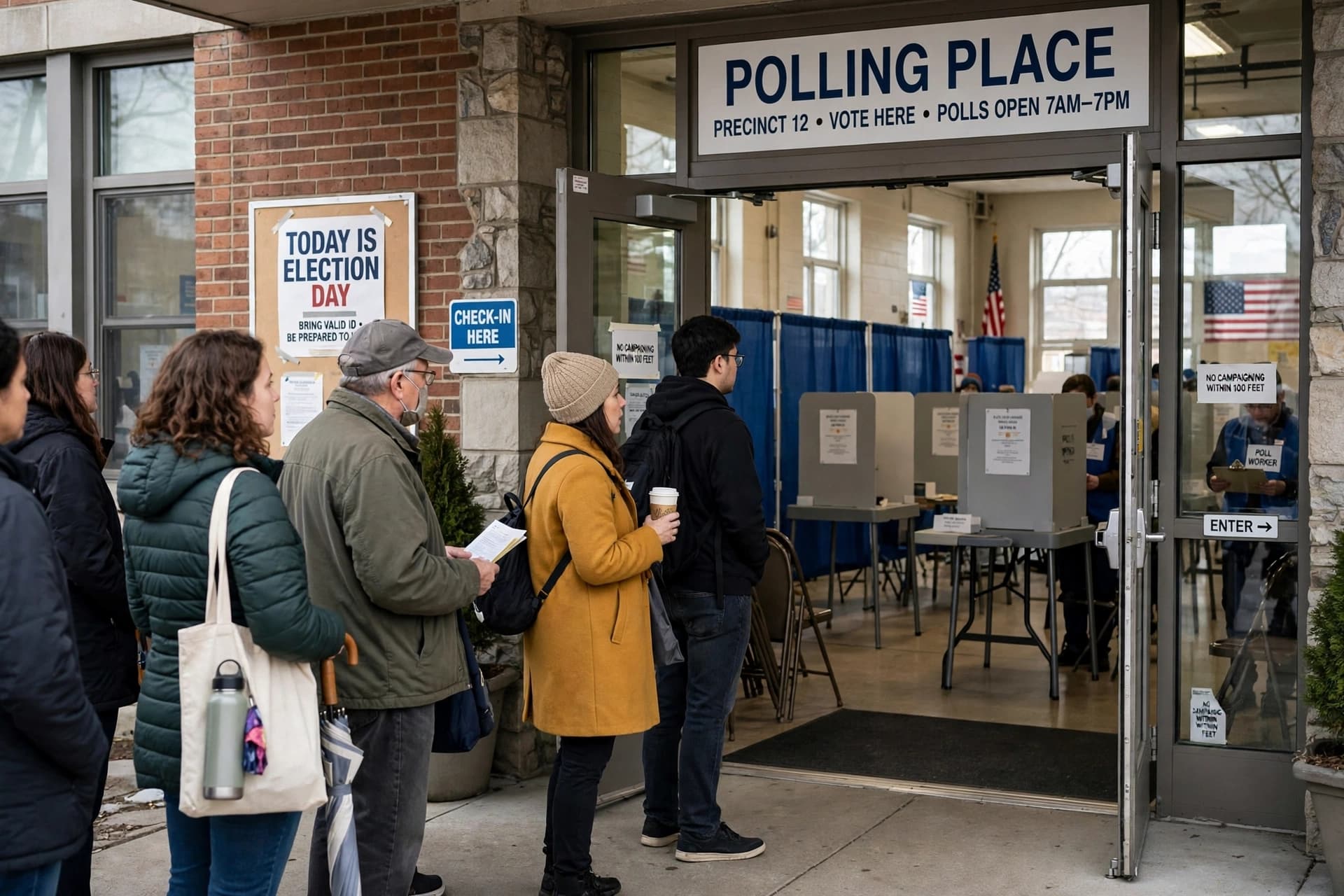
The preparations of election officials have changed as well. Maine Secretary of State Shenna Bellows said this is the first time they have had to engage in scenario planning to guard against potential federal interference. "The federal government now appears to be hostile to state governments," she said. Officials are training poll workers on what to do if immigration enforcement agents appear, rehearsing the statutes that bar federal agents from polling places, and clarifying what federal monitors may and may not do on Election Day. The preparations themselves are a quiet statement: certain things once unthinkable now must be considered.
The scenario that troubles election officials most is not monitors at polling sites but seized ballots. Earlier this year, the FBI executed a search warrant in Fulton County, Georgia, and seized ballots. NPR reported that the action "really is unprecedented to have ballots seized from an elections office." Since then, election officials across the country have been preparing for a similar scenario: if, on November 5, the count is not finished and absentee ballots are still arriving, and federal law enforcement appears with a warrant demanding the ballots, what then. The scenario sounds exaggerated, but as one reporter put it, "it feels less exaggerated now than ever before."
Civil rights groups and unions recently sued the Trump administration to try to prevent the deployment of federal agents at polling places. Courts have blocked most of the president's efforts to insert the federal government into state and local election administration. But court blocks take time, and Election Day does not wait. For those planning to vote, the question is not whether the legal arguments hold but whether they will encounter something at the polls they cannot control.
The election will be held on Tuesday. Polls will open, ballots will be cast, and counting will begin. The voters who expressed fear will still vote—Hall already has. But their fear is itself a signal that something has changed. Once trust in elections is eroded, rebuilding it takes far more than a single vote.
Image Disclaimer: The image with this article was created using AI generation tools and does not represent actual voters or election scenes.
Sources: The New York Times, NPR, MS NOW
Published by Banx Network. This article is part of the Banx decentralized media programme, powered by the BXE token on the XRP Ledger.