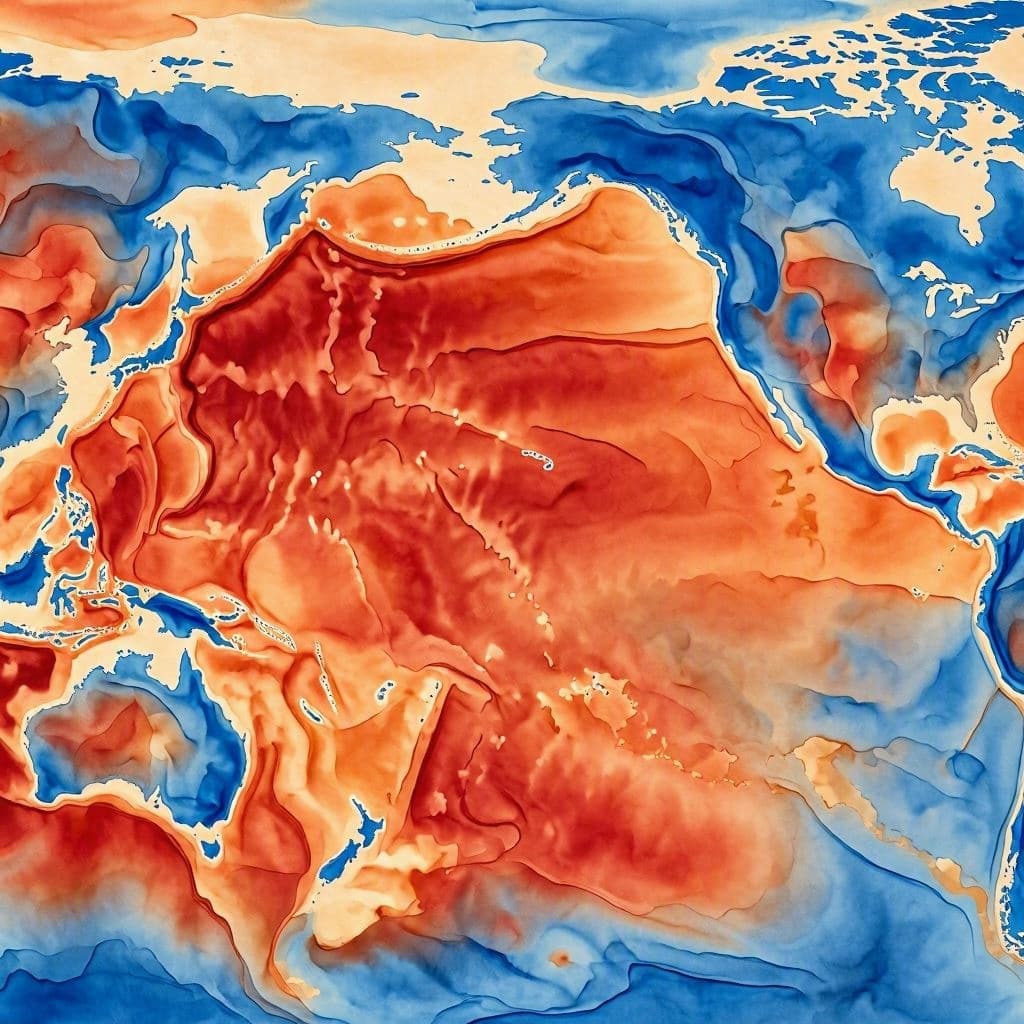
The climate is a vast, breathing entity, its rhythms dictated by forces both familiar and mysterious. Among these rhythms is El Niño, a warming of the Pacific Ocean that sends ripples of weather changes across the globe. But this time, scientists warn, the pattern is shifting into uncharted territory. The current El Niño event is projected to be unlike any observed in the past eighty years, a deviation that invites both caution and curiosity about our changing planet.
El Niño events typically occur every two to seven years, bringing warmer sea surface temperatures to the central and eastern Pacific. These changes disrupt normal weather patterns, often causing droughts in some regions and heavy rains in others. However, the current event is unfolding against a backdrop of record-high global temperatures, driven by human-induced climate change. This combination creates a compound effect, intensifying the usual impacts of El Niño.
Researchers note that the interaction between natural variability and long-term warming is creating new extremes. The ocean is retaining more heat than in previous decades, meaning that when El Niño strikes, it adds fuel to an already hot fire. This synergy results in higher peak temperatures and more severe weather anomalies, challenging historical models that relied on past data alone. The past is no longer a perfect predictor of the future.
The implications for global weather are significant. Regions that rely on predictable seasonal patterns for agriculture may face unexpected disruptions. Water resources could become scarcer in areas already prone to drought, while coastal communities might experience stronger storms and flooding. The uncertainty requires adaptive strategies, moving from reaction to preparation. It is a call for resilience in the face of evolving risks.
Scientists are using advanced climate models to understand these new dynamics. By comparing current data with historical records, they can identify deviations and project potential outcomes. This work is crucial for policymakers and communities who need accurate information to plan for the coming months. Knowledge, in this context, is a tool for survival and stability.
The uniqueness of this El Niño also highlights the urgency of addressing climate change. While El Niño is a natural phenomenon, its intensity is being amplified by greenhouse gas emissions. Reducing these emissions remains the most effective way to mitigate future extremes. The current event serves as a stark reminder that natural cycles and human actions are now inextricably linked.
Public awareness of these changes is growing. People are noticing hotter summers, erratic rains, and unusual weather events. Connecting these observations to broader climate trends helps build support for sustainable practices. It transforms abstract data into lived experience, fostering a deeper understanding of our environmental reality.
As this unprecedented El Niño unfolds, it offers a lesson in humility and adaptation. We are witnessing a climate system in transition, one that demands our attention and care. By understanding its complexities, we can better prepare for the challenges ahead, ensuring a safer and more resilient future for all.
AI Image Disclaimer: Please note that any accompanying visuals for this article are AI-generated illustrations designed to represent ocean temperature anomalies and weather patterns, not actual satellite data maps.
Sources: NOAA, Nature Climate Change, The Guardian, Scientific American
Published by Banx Network. This article is part of the Banx decentralized media programme, powered by the BXE token on the XRP Ledger.