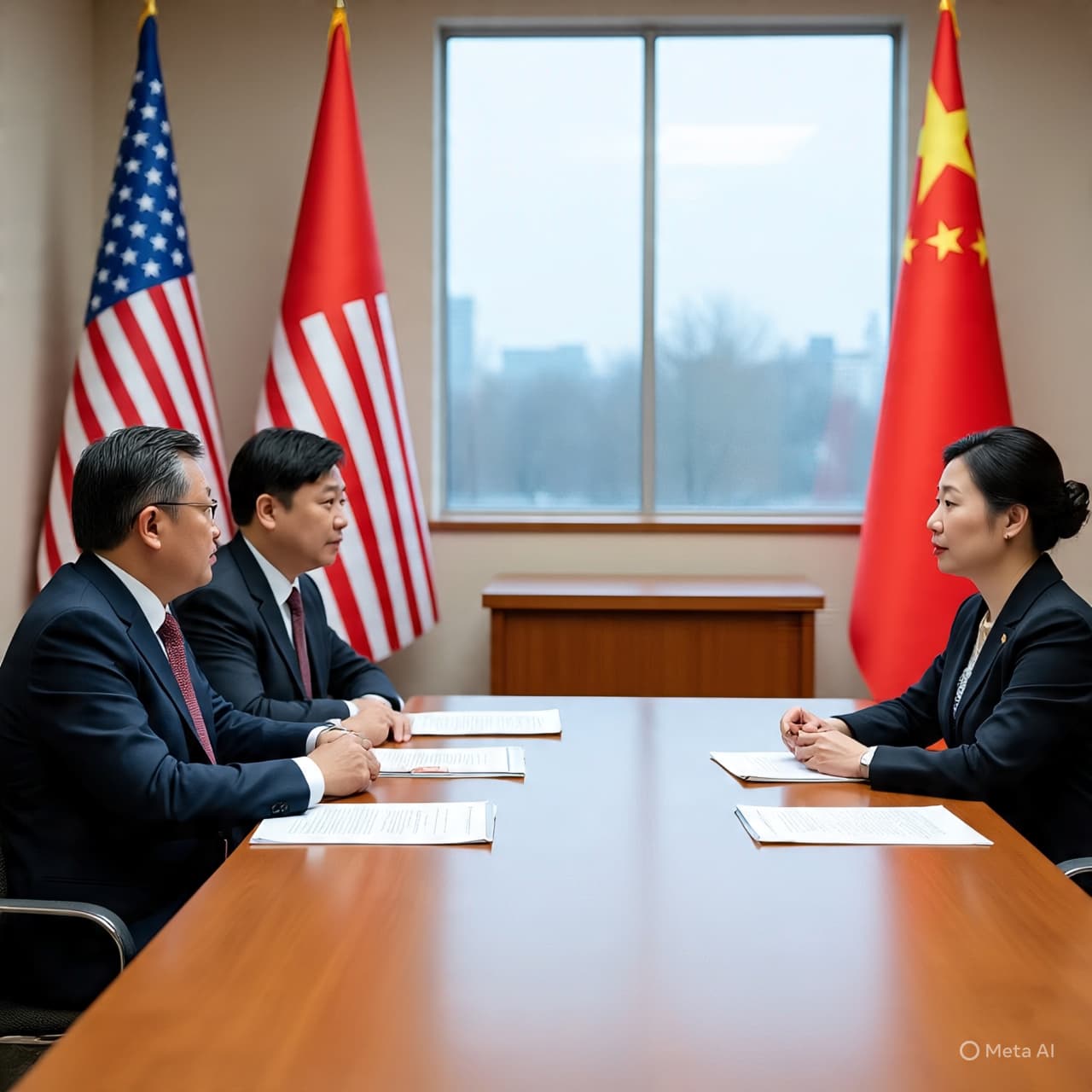
In the often intricate theatre of international law, actions speak louder than press releases. This week, those actions took an unusual turn as the People’s Republic of China filed a sweeping lawsuit against the U.S. state of Missouri, portraying the state as an “economic and reputational threat” to China’s interests. That language, contained in a complaint lodged in the Intermediate People’s Court of Wuhan, marks an extraordinary chapter in a long‑running legal clash born from the global upheaval of the COVID‑19 pandemic.
The roots of this unusual legal confrontation trace back to Missouri’s lawsuit against China, first filed in 2020. The state claimed that China’s actions during the early months of the pandemic—including the hoarding of personal protective equipment (PPE) at a time of acute global need—caused severe economic harm to its residents and institutions. After years of litigation and appeals, a federal court ruled in March 2025 that Missouri was entitled to a default judgment of roughly $24 billion in damages, interest, and penalties because China did not participate in the case.
China’s new complaint, however, reframes the legal battlefield. Filed by plaintiffs including the People’s Government of Wuhan Municipality, the Chinese Academy of Sciences, and the Wuhan Institute of Virology, the suit seeks about $50.5 billion in economic damages and legal costs. It alleges that Missouri’s actions have inflicted serious harm on China’s reputation and “soft power,” undermining the global standing of Chinese science and technology institutions and even “deeply endangering” the country’s sovereignty and development interests. The filing also demands public apologies in major American and Chinese media outlets.
Missouri officials have dismissed the suit as a “stalling tactic” or a form of legal counterpressure. Attorney General Catherine Hanaway characterised China’s filing as confirmation that Missouri’s claims have cut to the heart of sensitive questions about accountability during the pandemic. Similarly, U.S. Senator Eric Schmitt, named as a defendant, said he would “wear” the lawsuit “like a badge of honor,” framing it as part of a larger effort to hold China responsible for its pandemic‑era conduct.
Legal experts note that China’s strategy—filing in a Chinese court yet targeting U.S. state officials—raises complex questions about enforceability, jurisdiction, and the role of international litigation in geopolitical disputes. Under international sovereign immunity principles, foreign states and government actors are typically shielded from suit in one another’s courts unless narrow exceptions apply. Whether China’s legal action will have any practical effect outside of political signalling is an open question that observers on both sides of the Pacific are watching closely.
At its core, this saga reflects broader tensions between legal activism and international diplomacy in the post‑pandemic world. What began as a state‑level bid to seek accountability for economic loss has evolved into a rare instance of cross‑border legal recrimination. It underscores the unpredictable intersections of public health, law, and geopolitics—and the ways in which historical grievances can resurface in courts far from the original crisis.
AI Image Disclaimer “Visuals are created with AI tools and are not real photographs.” Sources (credible news reports) Associated Press/Local10 — China sues after Missouri seeks to collect on $25 billion judgment The Missouri Times — China files $50 billion lawsuit declaring Missouri an economic and reputational threat WSLS/ABC reports — details of the Wuhan complaint and demands BizPacReview — China’s retaliation and legal framing Teile of Reuters‑type coverage from aggregated news sources
Published by Banx Network. This article is part of the Banx decentralized media programme, powered by the BXE token on the XRP Ledger.


.jpg&w=3840&q=75 "Zelensky Warns China Is Helping Russia Develop a Starlink Rival")