
Key Highlights
- Reduced Scale:Moscow's Victory Day parade featured fewer military displays than in previous years.
- Security Concerns:Heightened tensions due to the ongoing conflict in Ukraine influenced the event's atmosphere.
- Historical Significance:Despite changes, the commemoration retained its focus on remembrance and national pride.
On May 9, 2026, Moscow observed Victory Day, marking the anniversary of the Soviet Union's triumph over Nazi Germany. This year, the event unfolded with a notable restraint, reflecting a shift in both the scale and tone of the traditional celebration. The iconic Red Square, usually filled with the sounds of military might and patriotic fervor, presented a quieter scene, as the city prepared for its annual commemoration.
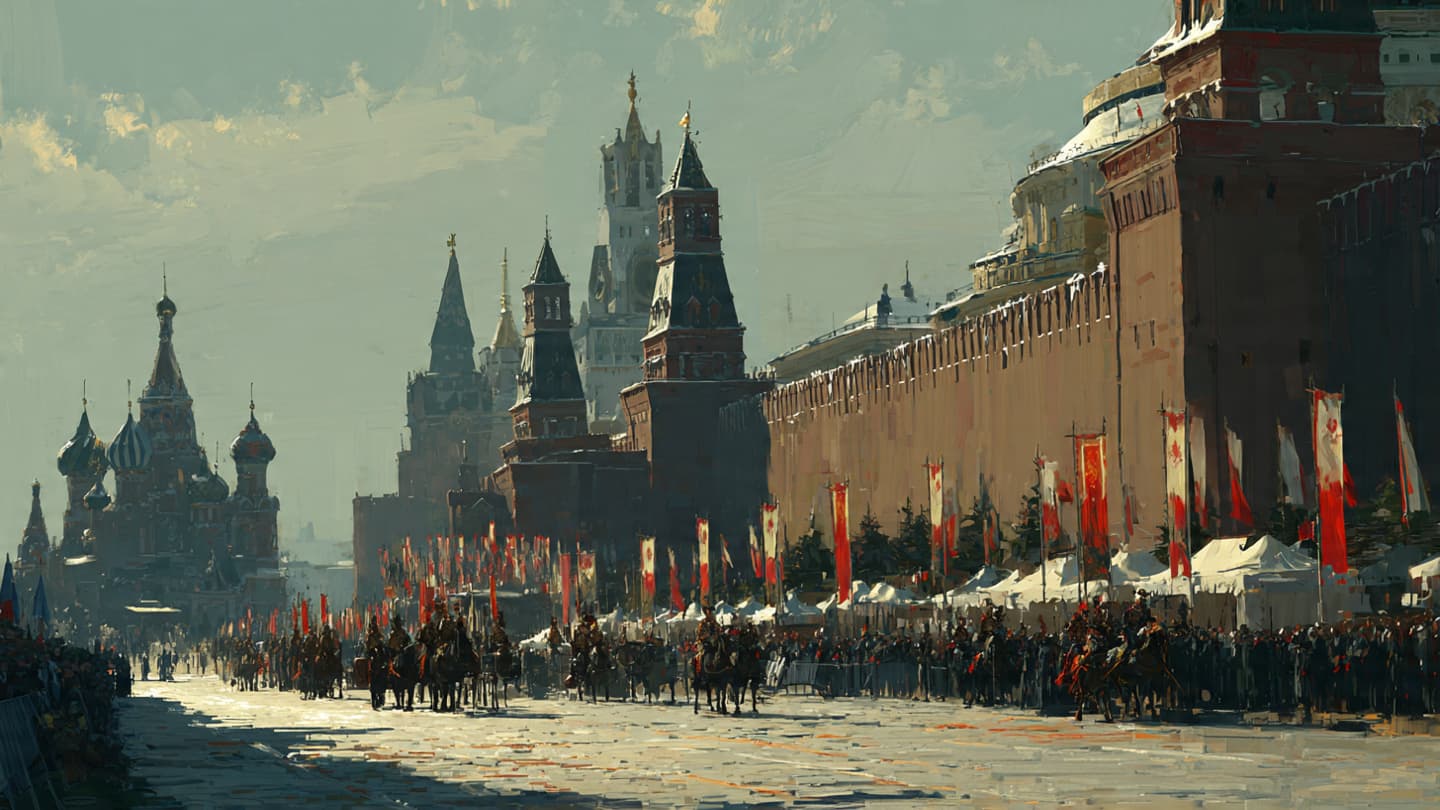
The parade, while still featuring a procession of armored vehicles and aerial formations, was markedly reduced in scale. Observers noted that the absence of certain large-scale demonstrations of air power and a shorter overall duration contributed to a more subdued atmosphere. Officials framed the event as a continuation of tradition, yet the palpable sense of caution suggested a tightening of both logistical and symbolic space.
Security concerns loomed large over the proceedings, shaped by the ongoing conflict in Ukraine and recent drone activity reported in various parts of Russia. This context influenced not only the parade's composition but also the public discourse surrounding it. The celebration proceeded, but with a more cautious rhythm, as if each formation was carefully curated to reflect the current geopolitical climate.
Victory Day has historically served as a powerful national ritual in Russia, blending remembrance of the immense losses suffered during World War II with displays of contemporary military capability. However, this year's iteration revealed a subtle recalibration of that balance. While the historical memory remained central—veterans, ceremonial units, and speeches honoring wartime sacrifice were still present—the outward projection of military strength was tempered, creating a ceremony that felt both familiar and constrained.
The adjustments observed during the parade align with broader trends seen in recent public events across Russia, where large gatherings have been modified in response to security concerns. The traditional route through Red Square, framed by the Kremlin's walls and the gentle spring light, felt less expansive than in years past, echoing the current state of national sentiment.
As the parade concluded and the square began to empty, life in Moscow resumed its usual pace. Traffic returned, pedestrians dispersed, and the ceremonial echoes faded into the everyday hum of the city. What emerged from this year's Victory Day was not a break from tradition but rather a variation in its expression—a reminder that even the most established rituals are subject to the influences of their time.
In its closing moments, the event left a layered impression: continuity expressed through restraint, and memory conveyed through a narrower channel of display. The essence of Victory Day, deeply rooted in collective remembrance, persists, albeit framed within a quieter geometry, where presence remains visible but is drawn with greater care.
Published by Banx Network. This article is part of the Banx decentralized media programme, powered by the BXE token on the XRP Ledger.



