
Key Highlights
- Donald Trump voiced support for Viktor Orbán during a rally for J.D. Vance.
- The call illustrates the growing trend of cross-border political endorsements.
- The event took place in Hungary, showcasing the intersection of U.S. and Hungarian politics.
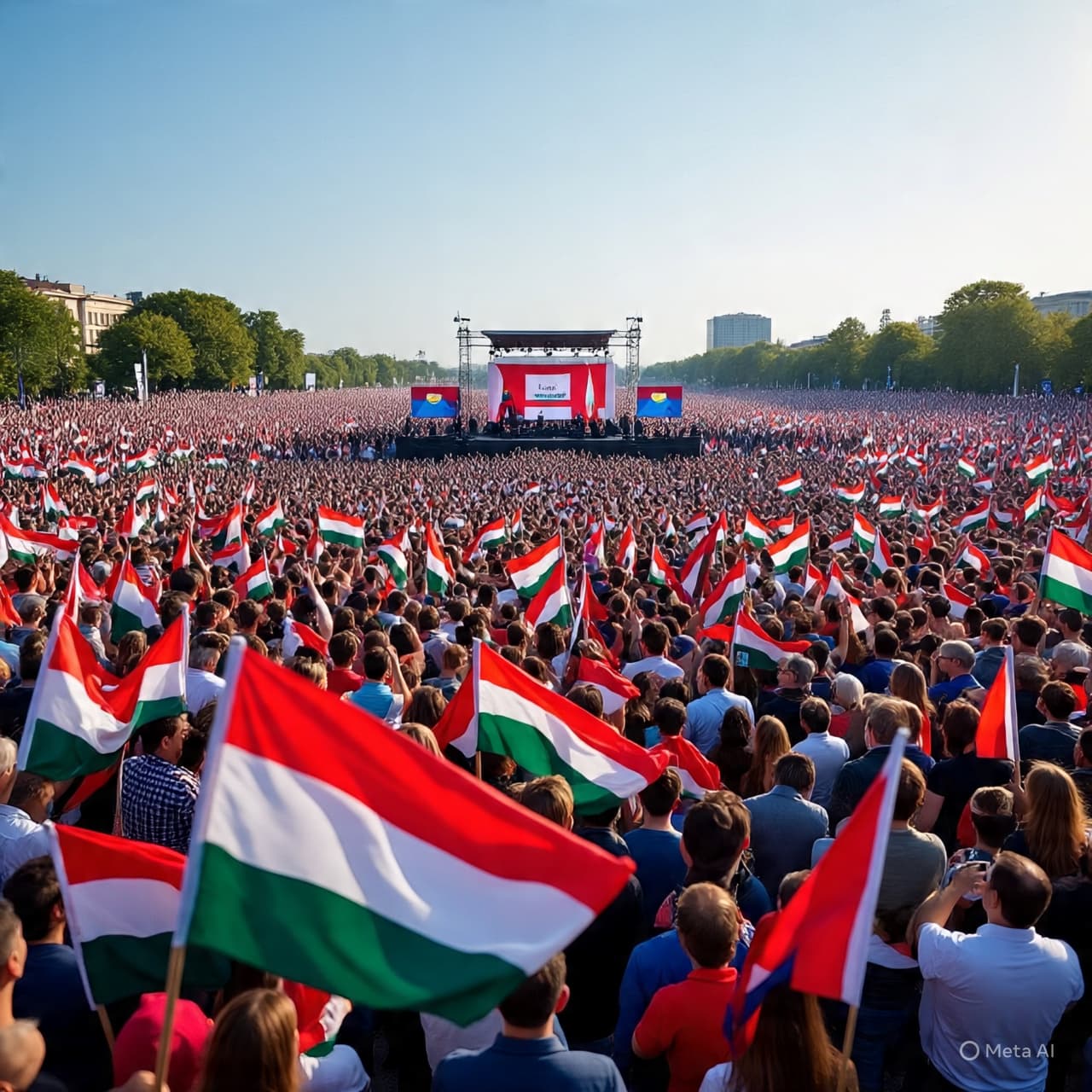
In a public square in Hungary, the atmosphere buzzes with anticipation as supporters gather for a rally featuring J.D. Vance. The air is charged with excitement, not just for the speeches to come, but for a unique moment that transcends geographical boundaries. As the crowd waits, a voice emerges from afar—Donald Trump, the former U.S. president, delivers a message of support for Viktor Orbán, Hungary's long-standing leader. This moment encapsulates the evolving nature of political engagement in an age defined by rapid communication.
Trump's call, transmitted across continents, resonates within the context of Orbán's political narrative. The endorsement is not merely a gesture of camaraderie; it signifies a deeper alignment between the two leaders, reflecting shared ideologies and mutual reinforcement. For Orbán, who has cultivated a strong national identity, such endorsements from prominent figures like Trump serve to bolster his position domestically, reinforcing his narrative of leadership.
The rally itself is a microcosm of contemporary political dynamics, where the boundaries of national politics are increasingly fluid. The integration of a remote voice into the rally's fabric alters its texture, reminding attendees of the interconnectedness of global political landscapes. This moment is emblematic of a broader trend where political figures engage with audiences beyond their borders, creating a network of support that transcends traditional political confines.
Observers note that while cross-national endorsements are not new, their significance has grown in recent years. The immediacy of communication technology allows leaders to connect with foreign audiences in real time, shaping perceptions and influencing local political landscapes. In Hungary, the reception of such endorsements can vary widely; some may view them as affirmations of shared values, while others may express concerns about external influence on domestic affairs.
As the rally progresses, the impact of Trump's call becomes woven into the larger narrative of the event. The applause and cheers from the crowd reflect a moment of solidarity, yet the complexities of international political relationships linger in the background. The presence of a foreign endorsement raises questions about sovereignty and the nuances of political identity, particularly in a nation where history and national pride are deeply intertwined.
In conclusion, the call from Trump to Orbán during Vance's rally serves as a reminder of how political conversations are no longer confined to local arenas. The echoes of this moment will resonate beyond the immediate gathering, illustrating the far-reaching implications of political endorsements in today's interconnected world. As the crowd disperses, the connection forged through a simple phone call remains, symbolizing the evolving landscape of global politics.
Published by Banx Network. This article is part of the Banx decentralized media programme, powered by the BXE token on the XRP Ledger.



