
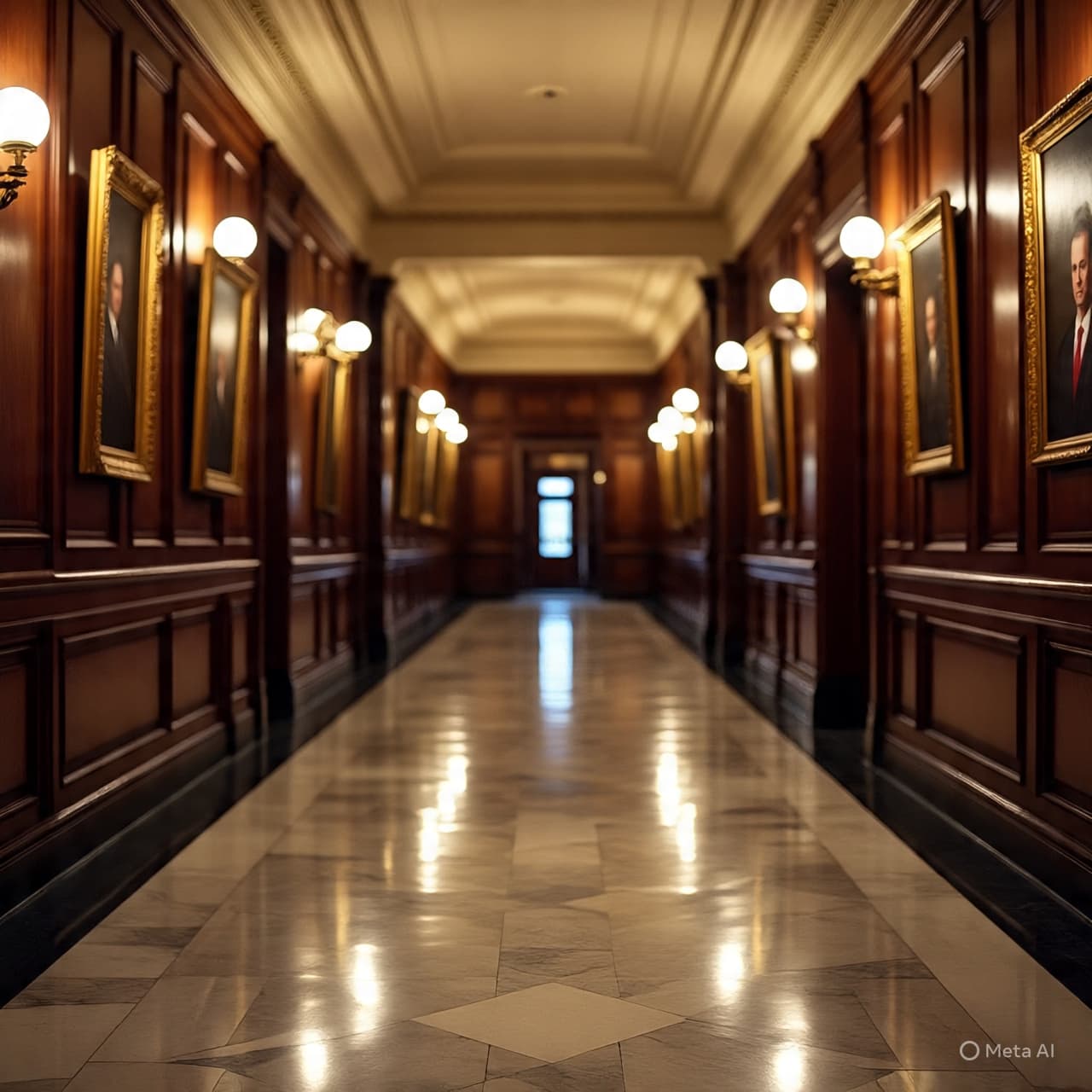
In Washington, the Capitol dome gathers the light differently at dusk. Its marble seems to soften as the sun lowers, and the long corridors inside hold a hush that feels older than any one debate. The Rotunda, with its circular sweep and painted ceiling, has long been a chamber not only of legislation but of memory. There, beneath frescoes and flags, the nation has paused to honor figures whose lives left deep imprints on its civic story.
This week, that quiet space became the center of a different kind of conversation. House Speaker Mike Johnson declined a request for the Rev. Jesse Jackson to lie in honor at the U.S. Capitol, a ceremonial tribute reserved for individuals deemed to have rendered distinguished service to the country. The decision, communicated through official channels, signaled that the proposal would not move forward under current House leadership.
Jesse Jackson’s public life has stretched across decades and movements. As a civil rights leader and founder of the Rainbow PUSH Coalition, he emerged in the orbit of Martin Luther King Jr., later mounting two presidential campaigns in the 1980s that broadened the national political dialogue. His activism, sermons, and negotiations carried him from church pulpits to international stages, often at moments of social tension. For supporters, his career represents a thread in the long tapestry of American civil rights advocacy; for others, it reflects a more contested political legacy.
The practice of lying in honor at the Capitol differs from lying in state, which is typically reserved for elected officials and military leaders. Those invited to lie in honor have included private citizens whose contributions, as judged by congressional leadership, hold national significance. The decision to extend or withhold such recognition rests largely with congressional leaders, reflecting both institutional tradition and contemporary judgment.
Johnson’s rejection arrives within a broader climate of partisan sensitivity around commemorations and symbols. In recent years, debates over whom and how to honor have carried political resonance beyond ceremony itself. Capitol tributes are not only acts of remembrance but signals about collective memory—about which chapters of the American narrative are elevated beneath the dome.
No formal explanation detailing the Speaker’s reasoning was made expansive, but aides indicated that the House would not proceed with arrangements. Jackson, now in advanced age and largely retired from public life after years of health challenges, has not issued a direct response. Allies and civil rights advocates have voiced disappointment, framing the moment as one of reflection on the nation’s evolving standards of recognition.
Yet within the Capitol, the Rotunda remains unchanged. Tourists continue to move through its echoing chamber, gazing upward at scenes from the country’s founding. Staffers pass briskly along corridors lined with portraits, each frame a testament to decisions made in earlier eras about who belongs in the official gallery of memory.
Ceremonial honors, like legislation, are shaped by the hands that guide the institution at any given time. Speaker Johnson’s decision leaves the question of tribute unresolved, at least within this particular venue. Whether future leadership might revisit the proposal is uncertain.
As evening settles over Washington and the dome’s lights begin to glow against the darkening sky, the Capitol stands as it always has—both a monument and a mirror. The choice not to extend an invitation for Jesse Jackson to lie in honor becomes part of its ongoing story, a reminder that remembrance in public life is never only about the past. It is also about the present moment, and the quiet calculations that define it.
AI Image Disclaimer Illustrations were created using AI tools and are not real photographs.
Sources U.S. House of Representatives Associated Press The Washington Post Reuters CNN
Published by Banx Network. This article is part of the Banx decentralized media programme, powered by the BXE token on the XRP Ledger.

.jpg&w=3840&q=75 "Man Tapes Ears to His Head in Bizarre Attempt to Enter Poland With False Passport")
.jpg&w=3840&q=75 "Convicted War Criminal Ratko Mladić to Be Buried With Full State Honors")