In the stillness that follows the holidays, communities often seek renewal, a sense of turning the page toward a new chapter. But sometimes, beneath the surface of calm, unseen forces gather momentum like a silent current beneath winter waters. In South Carolina, what began as scattered ripples of measles cases in the Upstate has crept into a stronger tide, drawing in families, schools, and entire neighborhoods into its embrace. As the latest update unfolded this week, health officials reported 124 new confirmed cases of measles since Friday, bringing the total in the ongoing outbreak to 434.
This surge, concentrated in northwest parts of the state including Spartanburg and Greenville counties, is more than just numbers on a dashboard — it represents a community grappling with a virus known for its swift spread. Measles, an airborne pathogen that can linger in the air for hours after an infected person has passed through a space, has pushed at least 409 people into quarantine and left others under watchful observation.
Public exposure notices have extended to places such as the South Carolina State Museum in Columbia, where a contagious individual unknowingly spent hours among visitors. Such moments highlight the challenge health officials face in tracing the invisible paths of transmission.
Health authorities continue to encourage vaccination through clinics and mobile units, seeking to boost community immunity in the face of a disease that is highly contagious and largely preventable. The measles-mumps-rubella (MMR) vaccine, commonly administered in childhood, remains the most effective tool in curbing outbreaks like this one.
As families check school calendars and plan daily routines around quarantine end dates, the outbreak casts a reflective light on the delicate balance between public health readiness and the everyday rhythms of life. Schools, community spaces, and healthcare providers have become unexpected focal points in this unfolding story — not just as sites of exposure, but as hubs of response and resilience.
In the gentle cadence of public health reporting, officials provide updates and guidance without alarm, noting case counts and quarantine figures while urging vigilance and care. With each new case confirmed, there is also an effort to strengthen community support — through vaccination access, transparent communication, and shared responsibility to protect those most vulnerable.
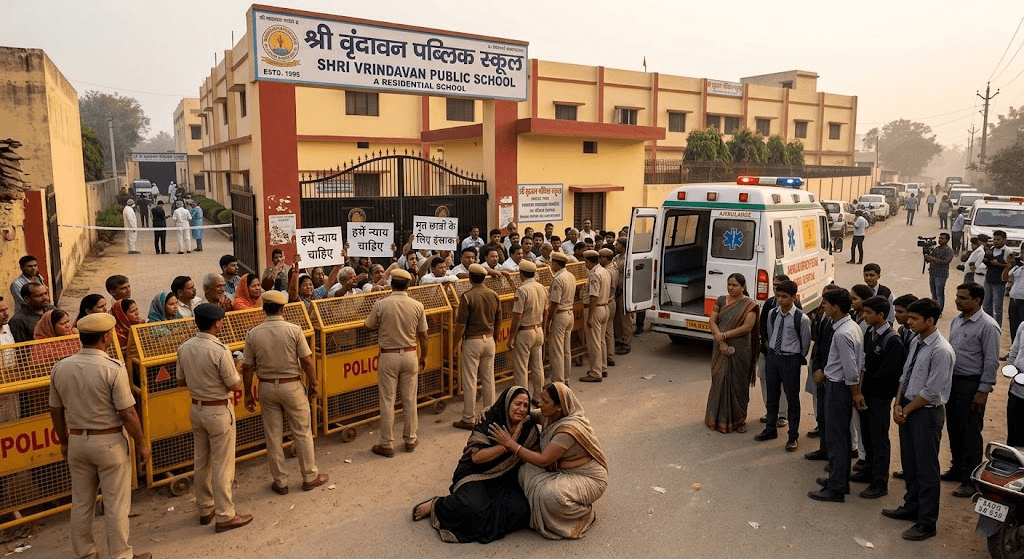
AI Image Disclaimer (Rotated) Illustrations were produced with AI and serve as conceptual depictions.
Sources
Reuters — major international news agency reporting on the increase to 434 cases, vaccination status, and quarantine figures. Ars Technica — detailed health-focused coverage highlighting growth and exposure issues. AP/ABC News syndicated reporting — confirming 124 new cases and outbreak context. WBTV / local reporting — updates on quarantine and public exposures. CIDRAP (University of Minnesota) — health outbreak tracking with current counts.
Published by Banx Network. This article is part of the Banx decentralized media programme, powered by the BXE token on the XRP Ledger.