In the hush between night and dawn, when old trees hold the breath of centuries, our faithful canine companions — curled at our feet or bounding across lawns — carry within them a quiet echo of wild forests. Hidden deep in their genetic memory lies a trace of ancestors who once howled at moonlit skies and ran in packs across untamed lands. Only now, thanks to advances in genome science, are we beginning to see how common that ancient wildness still is.
For decades, many believed that domestic dogs and wild wolves diverged long ago, leaving little more than distant resemblance. But a sweeping new study, analyzing thousands of genomes from dogs and wolves, reveals otherwise. Researchers found that over 64 percent of modern dog breeds carry detectable wolf ancestry. Even small, pampered breeds — the kind curled on sofas and stroking couches — show a thread of wild DNA: a tiny breed like a Chihuahua, for example, may harbor as little as 0.2 percent wolf heritage.
Yet not all dogs are equal when it comes to wolf heritage. Some carry surprisingly high proportions. At the top of the list are breeds intentionally bred with wolf lineage: the Czechoslovakian Wolfdog and the Saarloos Wolfdog — each holding anywhere from about 23 percent to as much as 40 percent wolf ancestry. Among more conventional pet breeds, the Grand Anglo‑Français Tricolore Hound stands out, with around 4.7–5.7 percent wolf DNA; another, the Shiloh Shepherd, shows roughly 2.7 percent.
In general, the study suggests that larger dogs — especially those bred for work, hunting, sledding, or life in more challenging environments — tend to have higher wolf ancestry. Arctic sled dogs, pariah breeds, and many hunting dogs often show more significant traces of wolf DNA. Meanwhile, terriers, gundogs, and many scent hounds appear toward the lower end of the “wolfiness” spectrum. Interestingly — and perhaps humbly — even petite companion dogs are part of this story, quietly carrying a whisper of the wild in their DNA.
What does this mean beyond fascination? According to researchers, those ancient wolf genes may have shaped more than appearance: in some cases, they may influence traits such as size, olfactory strength, and even patterns of behavior — though genetics alone does not determine personality. For many village dogs (free-roaming dogs living near humans but not owned by them), wolf ancestry was universal, possibly reflecting more frequent — even if rare — interbreeding between wolves and free-living dogs in certain regions.
In a world where our dogs share our sofas, our walks, our quiet mornings, it is humbling to remember that inside them stirs the legacy of wild forests, distant howls, and survival under open skies.
And though their fur is groomed and their food served in bowls, in their genome they remain — in part — children of the wild.
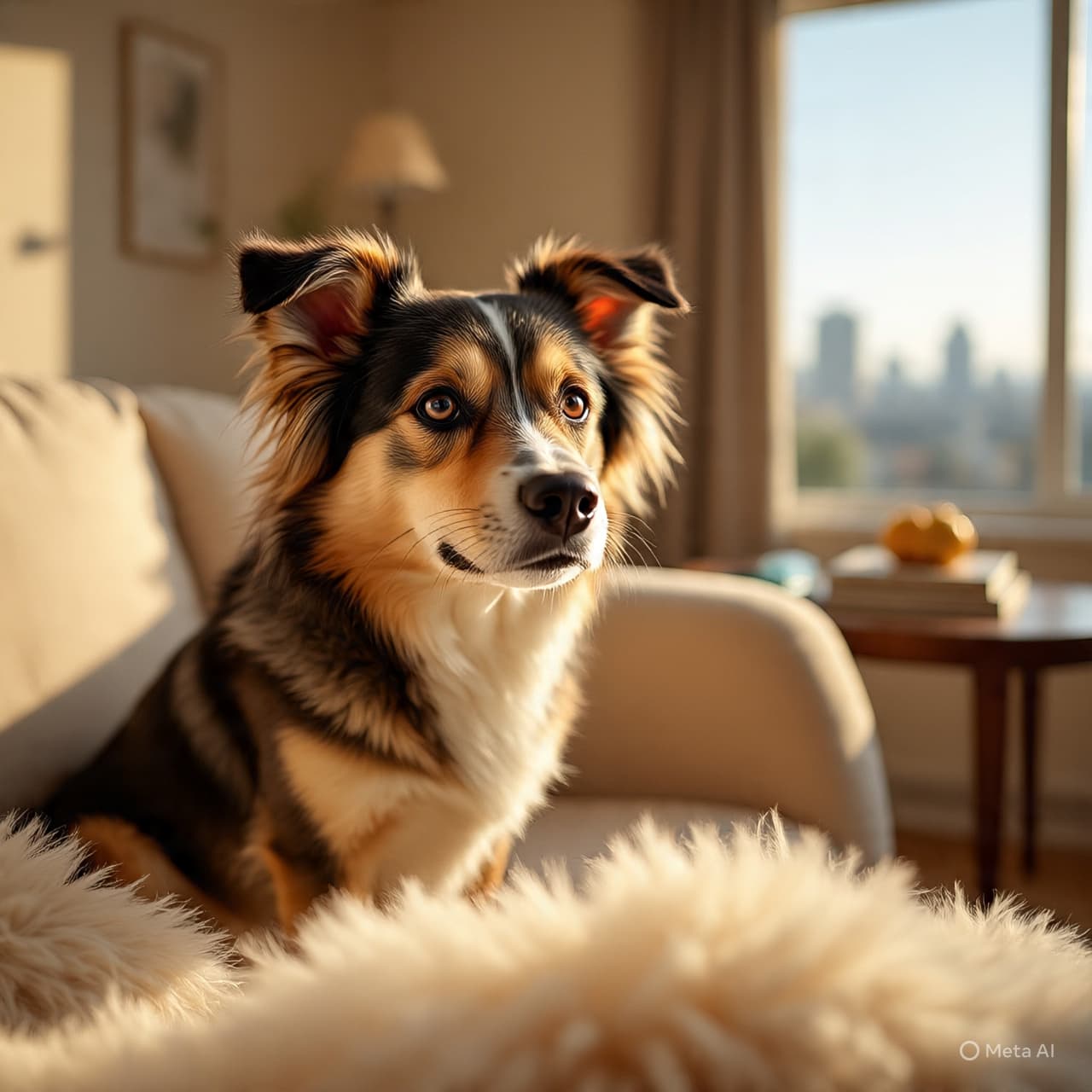
AI Image Disclaimer Visuals are generated with AI tools and intended solely as conceptual illustrations.
Sources The Independent NDTV Phys.org American Museum of Natural History Digital Journal
Published by Banx Network. This article is part of the Banx decentralized media programme, powered by the BXE token on the XRP Ledger.