As winter light filters softly over Berlin’s broad boulevards, a quiet unease seems to drift through the city’s youth — like a chill carried by the wind that hints at a coming storm. The streets are calm, yet beneath that calm, the undercurrent of a nation wrestling with its future pulses: What does duty mean in an age of uncertainty? And what is owed by the young to the state, when the world beyond their borders feels increasingly uneasy?
The bill recently approved by the German parliament seeks to reimagine military service in Bundeswehr — introducing a system that combines attractive incentives with prepared readiness. Under the new law, 18-year-old men will be asked to complete a questionnaire about their fitness and willingness to serve; women may answer voluntarily. Starting in early 2026, the first “service-entry window” opens under a voluntary scheme. New recruits who sign up for at least six months will receive a monthly pay of €2,600 (before tax), and those committing longer may also get support for driving lessons.
At the same time, the law also lays faint tracks toward a return of conscription. If voluntary enlistments fall short of what the Bundeswehr needs — the aim being roughly to swell active duty numbers from today’s ~182,000 to as many as ~260,000, plus an expanded reserve by 2035 — the government reserves the right to trigger a “needs-based conscription,” contingent on a separate parliamentary vote.
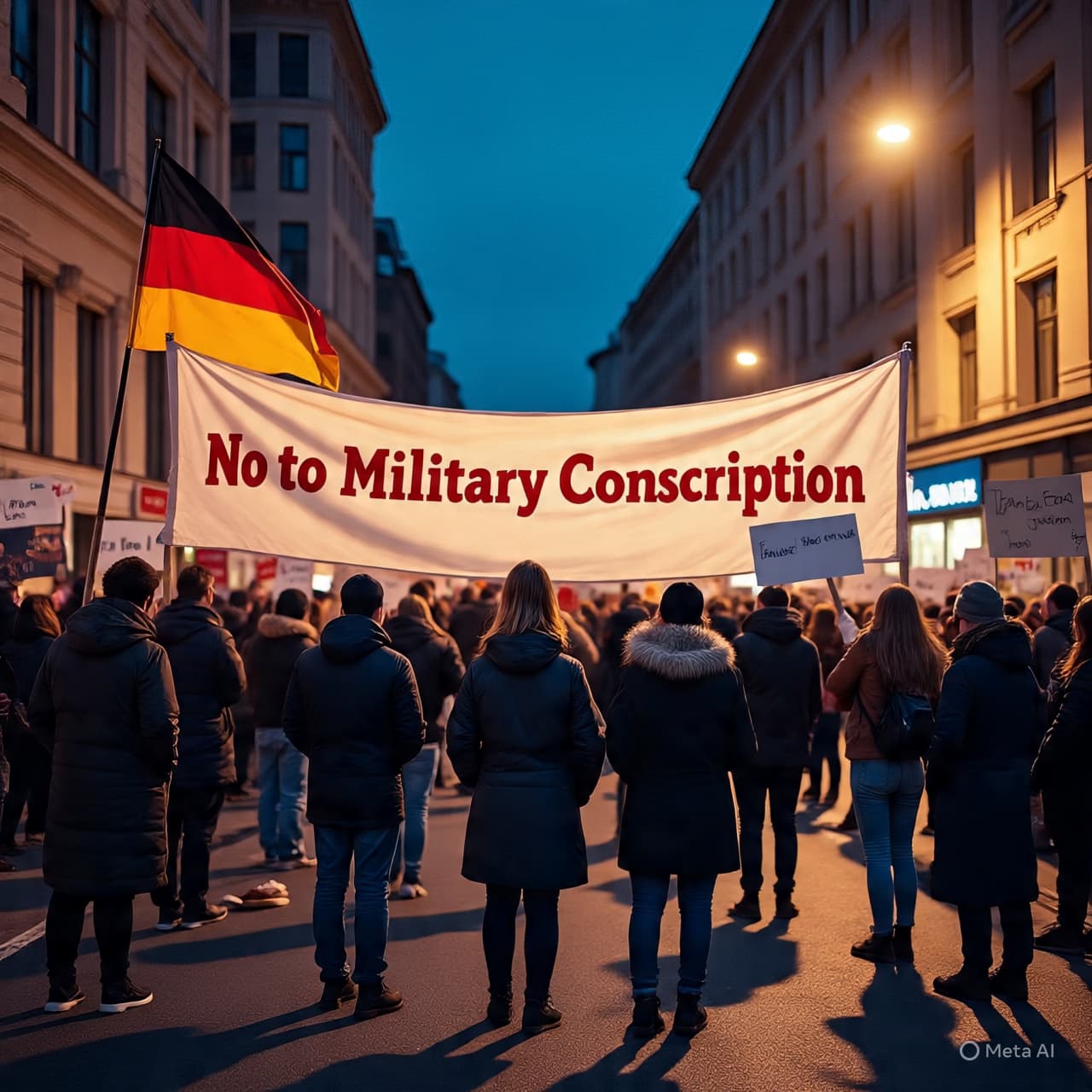
The reaction among Germany’s young has been swift and loud. In more than 90 cities, high-school and university students staged protests, waving banners that read “No to compulsory service,” “Our future belongs to us,” and demanding that their generation not be conscripted into a future they did not choose. Many expressed a sense of unease — that the new law blurs the line between voluntary service and forced obligation, especially with mandatory medical screenings and a national registry looming.
Supporters of the law, however, argue the change is a sober, necessary adaptation to the shifting geopolitical landscape. With heightened tensions in Europe, the government frames a stronger Bundeswehr as a deterrent: a safeguard not only for Germany but for European stability. Proponents say that by offering decent pay, flexible recruiting terms, and a voluntary framework — at least initially — the reform aims to restore public trust and rebuild the armed forces through choice rather than coercion.
Still, the difference between “voluntary” on paper and “inevitable” in practice leaves many uneasy. For young people — many not yet allowed to vote — the law feels like an advance notice: adulthood will soon come not just with rights, but with obligations that may feel less optional than advertised. The looming possibility of reactivated conscription hangs over their future plans, their ideas of freedom, career and mobility.
In the coming months, as the questionnaire reaches 18-year-olds and as recruitment figures begin to trickle in, the tension between necessity and choice, duty and freedom, will play out in towns and dorms, recruiting offices and living rooms alike. Whether this law forges a path to a reinvigorated Bundeswehr — or a generation embittered by what feels like the return of a draft — remains uncertain.
The new law may not yet demand forced service, but in many hearts, it has already reopened that old question: What does it mean to belong — to a nation, to a generation — when peace is fragile and tomorrow feels unsettled?
AI Image Disclaimer: “Visuals are created with AI tools and are not real photographs.”
Sources: DW; Anadolu Agency; Defense News; The Guardian; Associated Press.
Published by Banx Network. This article is part of the Banx decentralized media programme, powered by the BXE token on the XRP Ledger.