
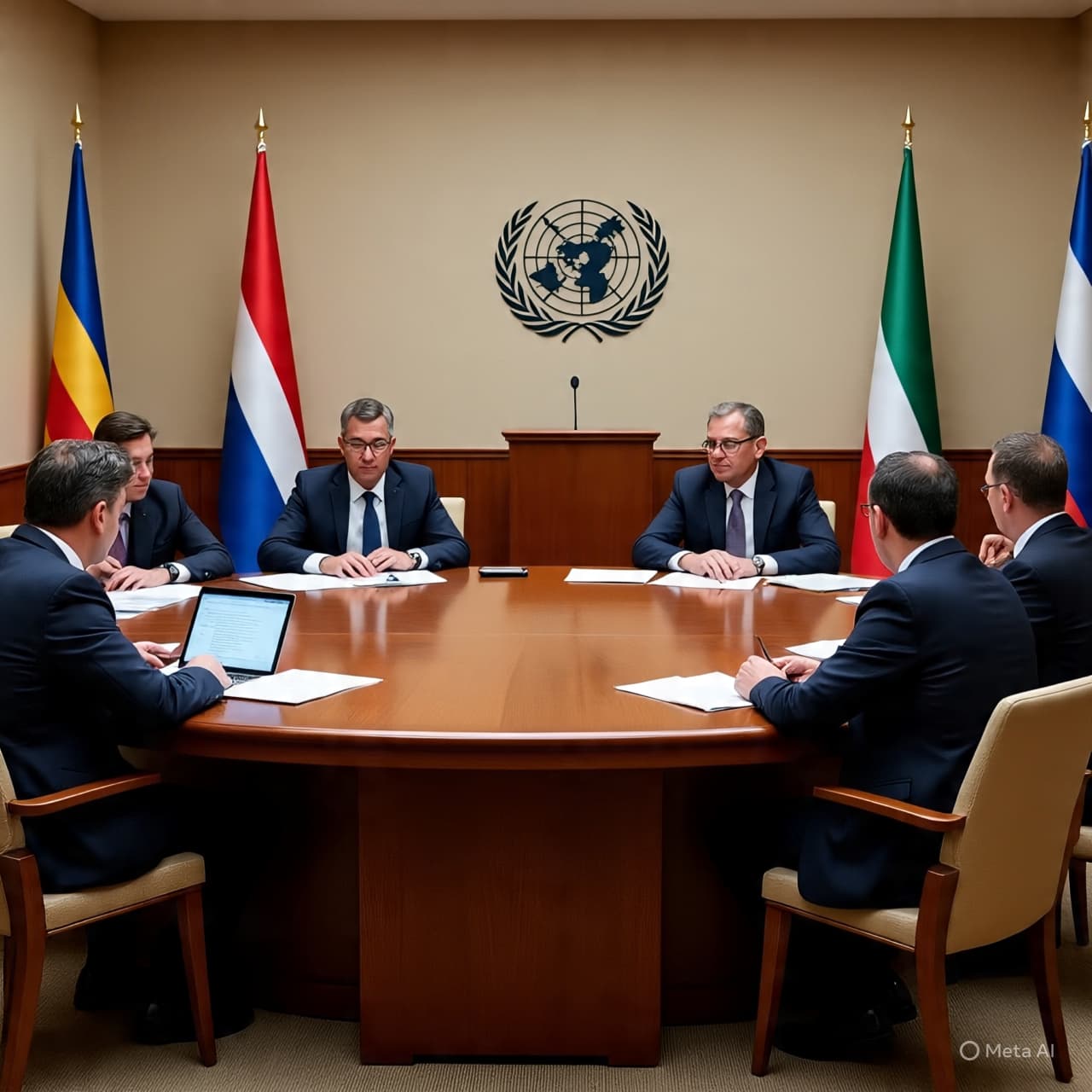
There are times when the past does not settle quietly behind us, but instead returns in fragments—voices, images, and accounts that ask to be heard once more. In places shaped by prolonged conflict, memory is rarely distant. It lingers, often waiting for moments when it can step forward, not to accuse, but to be acknowledged.
A recent report from the United Nations has done just that, revisiting deadly clashes in Syria involving members of the Druze community last year. The document, described by observers as sharply critical, calls on Syrian authorities to conduct thorough and transparent investigations into alleged abuses that occurred during those confrontations.
The clashes themselves unfolded in a region already marked by years of instability. Tensions escalated into violence, leaving dozens dead and many more affected in ways not easily quantified. Within such moments, lines between security measures and excessive force can become blurred, and it is within this ambiguity that the report directs its attention.
According to the findings, there are indications that serious violations may have taken place, including unlawful killings and mistreatment of civilians. The report does not present these conclusions as final judgments, but rather as concerns requiring deeper inquiry—an invitation, in a sense, for accountability to take shape through process rather than presumption.
The Druze community, a religious minority with deep historical roots in the region, has long navigated a delicate position within Syria’s broader social and political landscape. Episodes of violence involving such communities often carry layers of complexity, shaped by local dynamics as well as the wider currents of national conflict.
Syrian authorities have responded cautiously, acknowledging the report while maintaining that their actions have been guided by efforts to restore order and stability. As in many such cases, differing narratives coexist—each reflecting its own perspective on events that unfolded rapidly and under strain.
The role of international oversight, particularly from institutions like the United Nations, is often to bring these narratives into conversation with one another. Reports such as this do not resolve disputes on their own, but they can create space for dialogue, for examination, and, at times, for accountability mechanisms to emerge.
Beyond the immediate findings, the report also speaks to a broader theme: the enduring importance of documentation. In environments where events can pass quickly and records may be incomplete, the act of gathering testimony and evidence becomes a form of preservation—ensuring that moments of crisis are not lost to time or silence.
For those directly affected, the path forward is rarely defined by reports alone. It is shaped by local realities, by governance structures, and by the willingness of institutions to engage with the concerns raised. The process may be gradual, unfolding in steps rather than leaps.
In the meantime, the international community continues to observe, to respond, and to encourage measures that align with established norms of human rights and accountability. These efforts, while sometimes measured in tone, carry a persistent intent: that even in complex circumstances, there remains a place for review and reflection.
The report now stands as part of an ongoing conversation. Syrian authorities have been urged to investigate the incidents, and further developments are expected as responses take form. For now, the call is not one of conclusion, but of continuation—an appeal for clarity, pursued with care.
AI Image Disclaimer Images in this article are AI-generated illustrations, meant for concept only.
Source Check (Credible Media Identified):
Reuters Associated Press BBC News Al Jazeera The Guardian
Published by Banx Network. This article is part of the Banx decentralized media programme, powered by the BXE token on the XRP Ledger.
.jpg&w=3840&q=75 "US Declares Drought Disaster for Parts of Puerto Rico as Dry Conditions Persist")

