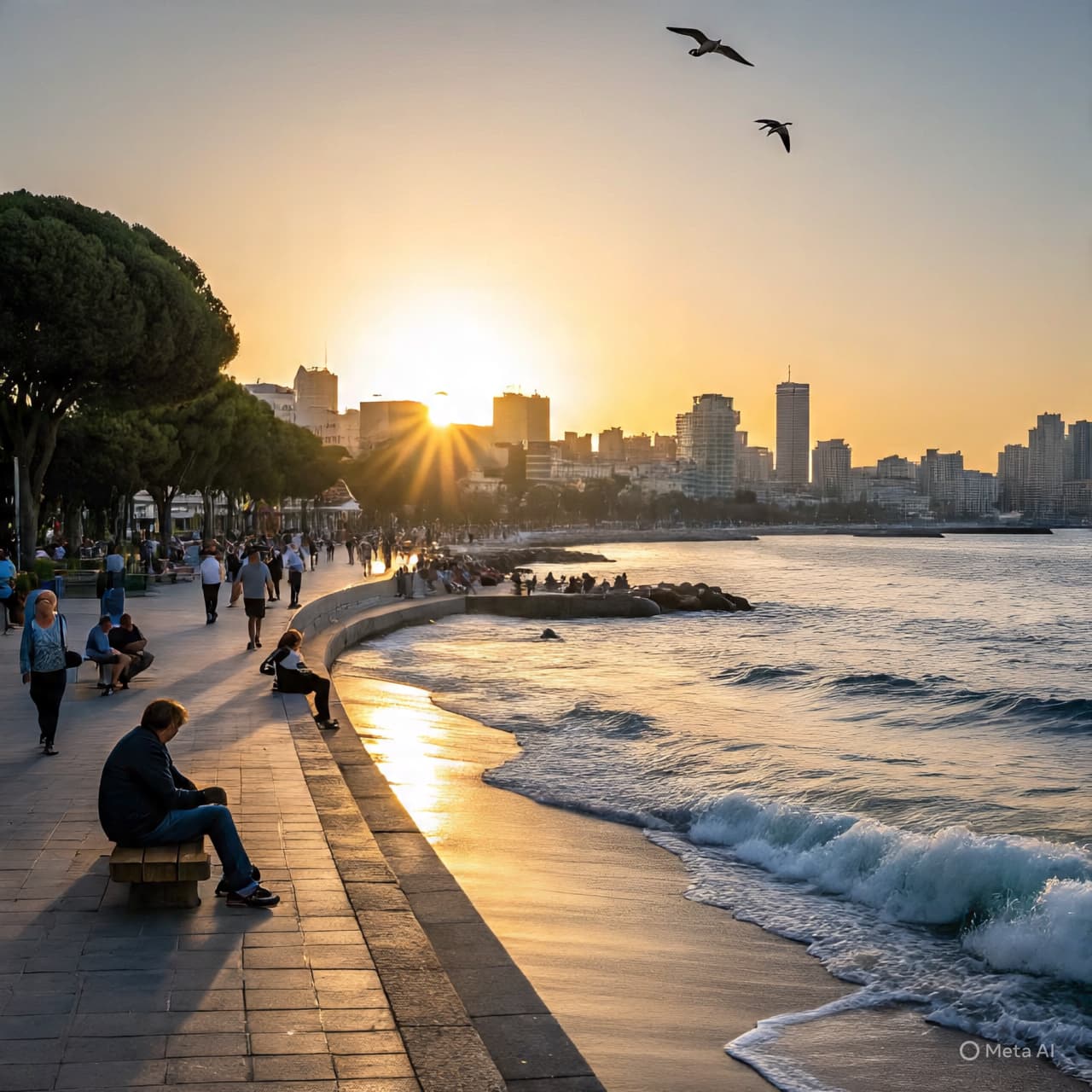
There is a particular stillness that settles over coastal cities at dusk, when the Mediterranean gathers the day’s light into a muted silver and balconies fill with the small rituals of evening. In Tel Aviv, cafés hum as they always have, bicycles skim along familiar paths, and the sea keeps its patient rhythm against the shore. It is a calm that feels practiced, almost deliberate—an outward steadiness shaped by decades of living with distant rumblings.
With Iran in the crosshairs of diplomatic tension and military calculation, Israel finds itself in a posture of readiness that is neither frantic nor theatrical. Officials speak in measured tones about contingency plans and defensive systems. The Israel Defense Forces maintain heightened alert levels, while air defense batteries—most visibly the Iron Dome—stand layered with longer-range systems such as David’s Sling and Arrow. The language of preparedness is technical, almost procedural, suggesting a nation accustomed to rehearsing for what it hopes will not come.
The contrast with June 1967 lingers like an old photograph. In the days before the Six-Day War, uncertainty thickened the air. Egyptian forces had massed in Sinai; the Straits of Tiran were closed; radio broadcasts carried the cadence of imminent confrontation. In Israel’s streets, anxiety was palpable. Reservists were called up in waves, trenches were dug in public parks, and families spoke in hushed tones about survival. When war arrived, it did so after weeks of visible dread.
Today, the anxiety—if it exists—moves differently. Iran’s nuclear program, long scrutinized by international inspectors and debated in world capitals, has reshaped the strategic landscape into something more diffuse. The threat is measured in centrifuges and enrichment levels, in satellite images and diplomatic communiqués. Israeli leaders have repeatedly declared that they will not allow Iran to acquire a nuclear weapon, framing the issue as existential. Yet daily life continues with an ease that would have seemed improbable in earlier eras.
Part of this composure rests on capability. Over the years, Israel has invested deeply in missile defense, intelligence coordination, and civil preparedness. Shelters are integrated into new buildings; alert systems are tested; public communication channels are streamlined. The expectation of danger has been woven into architecture and routine, transforming emergency into something almost infrastructural. Confidence in technology, in early warning systems and interception rates, tempers the imagination of worst-case scenarios.
There is also a broader regional context. The Middle East of 2026 is not the tightly aligned battlefield of 1967. Alliances have shifted; quiet understandings have emerged between former adversaries. The Abraham Accords redrew parts of the diplomatic map, while Iran’s network of regional partners—from Lebanon to Yemen—has complicated the geometry of confrontation. Any escalation would ripple outward in unpredictable arcs, touching oil markets, shipping lanes, and global powers that now watch the region with wary familiarity.
In Jerusalem, officials balance rhetoric with restraint. Statements underscore readiness without signaling urgency. Military exercises proceed, but without the visible mobilization that once signaled impending war. The memory of past conflicts—swift victories and long entanglements alike—shapes decision-making in subtler ways. Experience has taught that panic can be as destabilizing as attack.
For many Israelis, the tension with Iran exists more as background frequency than immediate alarm. News alerts punctuate routines, but they do not halt them. Parents walk children to school; investors scan markets; tourists photograph stone walls warmed by late afternoon sun. The extraordinary coexists with the ordinary, layered rather than opposed.
And yet, beneath the composure, history remains close. The memory of 1967 is not merely about fear; it is about the sudden pivot from vulnerability to triumph, from siege mentality to territorial transformation. It is a reminder of how quickly the regional order can shift. That memory informs today’s caution as much as today’s confidence.
As night settles again over the hills and the sea, Israel waits—not in panic, but in watchfulness. The facts are clear: heightened alerts, firm declarations, a strategic rivalry that shows little sign of resolution. The difference lies in tone. Where once sirens seemed to echo before they sounded, now there is an almost studied calm.
History does not repeat itself in identical rhythms. It changes tempo, alters its instrumentation. In 1967, anxiety filled the air before the first shot was fired. In this present moment, with Iran looming as both adversary and abstraction, Israel’s response is quieter—an awareness carried like a steady breath, measured and controlled, beneath an otherwise untroubled sky.
AI Image Disclaimer Visuals are AI-generated and serve as conceptual representations.
Sources Reuters Associated Press BBC News The New York Times Council on Foreign Relations
Published by Banx Network. This article is part of the Banx decentralized media programme, powered by the BXE token on the XRP Ledger.