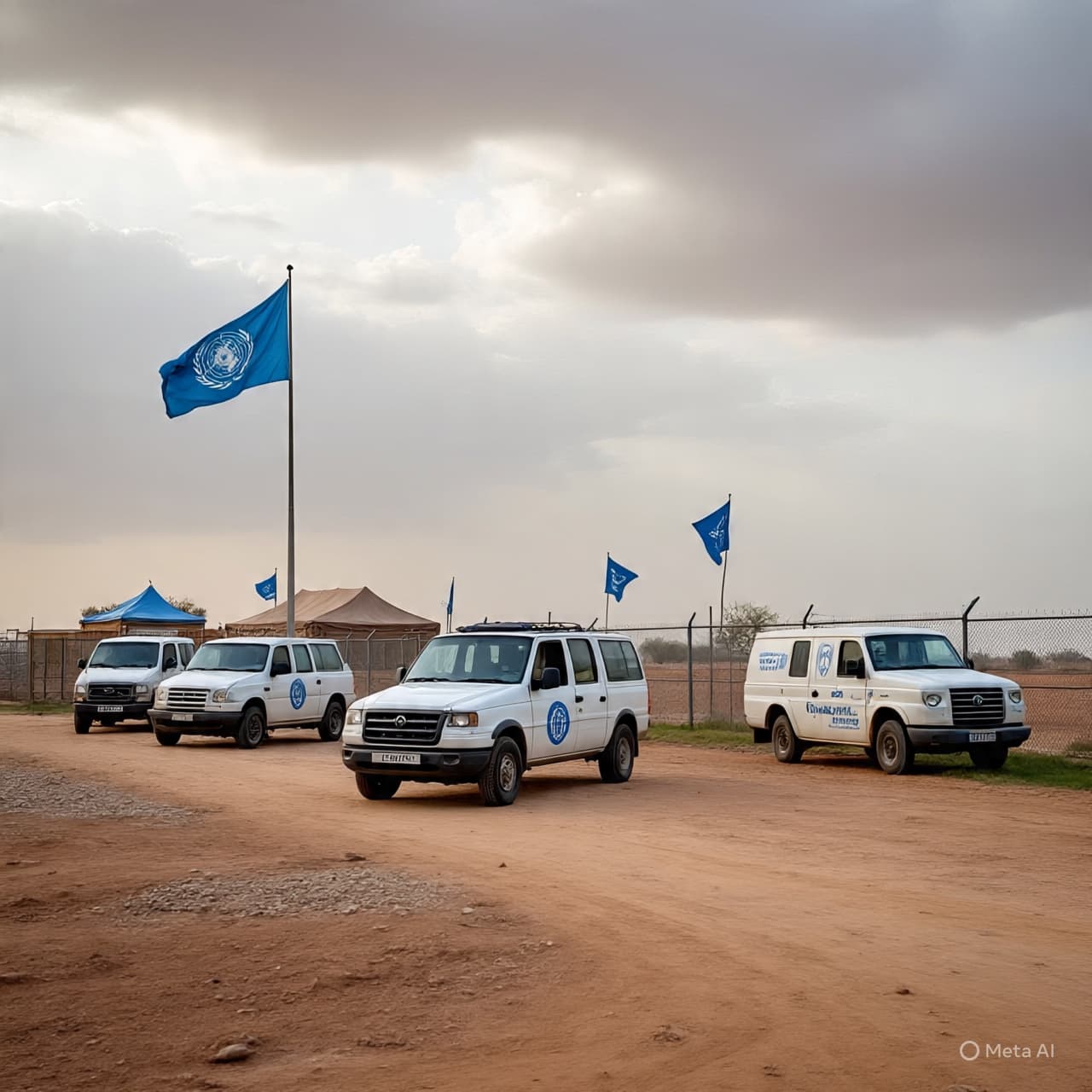
On a restless afternoon in Sudan’s contested Kordofan region, where dust winds trace the borderlands and distant horizons blur into uncertainty, a peacekeeping compound stood as a hopeful symbol amid decades of turmoil. There, dozens of blue-helmeted peacekeepers carried out their duties under the United Nations flag — a quiet testament to global aspirations for calm in lands rent by conflict. Yet in an instant, that serenity was shattered, and the horizon itself seemed to bear witness to sorrow.
Late on December 13, 2025, a drone struck the United Nations Interim Security Force for Abyei (UNISFA) logistics base in Kadugli, South Kordofan, killing six Bangladeshi peacekeepers and wounding eight others, according to official military statements and UN accounts. The soldiers, drawn from one of Bangladesh’s proudest traditions of international peace support, were engaged in their mission when the attack unfolded.
The victims were all Bangladeshi nationals serving in a mission tasked with protecting civilians and stabilizing a region long disputed between Sudan and South Sudan. The assault was widely reported as a drone strike, and while immediate claims of responsibility have been absent, the Sudanese military blamed the paramilitary Rapid Support Forces (RSF) for the attack, calling it a dangerous escalation.
In Dhaka, the shock of the news rippled through both the government and society. The Inter-Services Public Relations Directorate (ISPR) released the names of the fallen peacekeepers — individuals whose commitment to service took them far from home, and whose loss is now mourned by a nation and their comrades. Families grieve, colleagues recall their dedication, and an entire contingent confronts the fragile line between duty and danger.
Bangladesh’s interim Chief Adviser expressed deep sorrow, describing the deaths as a profound loss and affirming the government’s resolve to ensure comprehensive care for the wounded and respectful repatriation of the fallen. The Ministry of Foreign Affairs echoed these sentiments, calling the assault a grave crime against international peace and humanity, and urging stronger protection for peacekeepers worldwide.
At the United Nations in New York, Secretary-General António Guterres condemned the attack as “horrific,” and emphasized that assaults on peacekeepers may constitute war crimes under international law. His words underscored the precarious reality faced by those who serve under the UN banner in conflict zones — where intentions of peace can be met with the stark brutality of modern warfare.
For decades, Bangladesh has been a leading contributor to UN peacekeeping operations, and its troops have served in some of the world’s most volatile regions. Their sacrifice in Sudan is a poignant reminder of the peril inherent in peace missions — a calling fraught with unpredictability, yet rooted in hope. Amid Kuwait’s desert winds and Sudan’s scarred landscapes, the loss of life reverberates beyond headlines, touching families, communities, and the very idea of international cooperation.
In the reflecting quiet that follows these tragedies, there is space for remembrance, and for an honoring of those who stood in harm’s way under a symbol of global solidarity. The road to peace is long and often unsteady, but the stories of those who walk it — even in loss — remain etched in the wider journey toward collective security and dignity.
AI Image Disclaimer “Illustrations were produced with AI and serve as conceptual depictions.”
Sources Al Jazeera AP News CBS News The Business Standard Khaleej Times / Reuters
Published by Banx Network. This article is part of the Banx decentralized media programme, powered by the BXE token on the XRP Ledger.