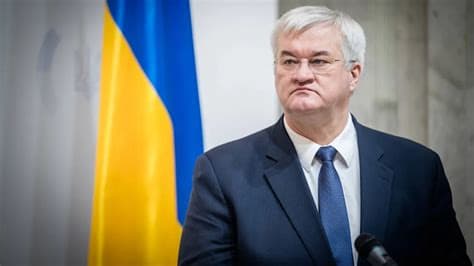
In the cool December light across Sofia’s broad avenues and cobblestone squares, the roar of voices chanting “Resign!” grew from a rumble into a defining moment for Bulgaria’s young winter. After weeks of widespread street protests against economic policies and entrenched corruption, Prime Minister Rosen Zhelyazkov announced that his government is resigning, stepping aside just minutes before parliament was due to vote on a no-confidence motion. The resignation marks a dramatic turn in a nation already poised to join the eurozone in just weeks, underscoring public frustration with political leadership and governance.
Thousands of Bulgarians took to the streets of Sofia and dozens of other towns, expanding demonstrations that began in response to the government’s controversial 2026 budget proposal, which included tax increases and higher social security contributions. Although that draft budget was withdrawn amid initial protests, anger did not dissipate and quickly broadened to encompass widespread grievances over perceived corruption and political inequality.
Zhelyazkov, who has been in office since January 2025, spoke in a televised address that the decision to resign reflected the need to respond to the voice of the people and the attitudes expressed in large-scale demonstrations. “We realise that the protest was against arrogance and conceit,” he said, describing the unrest as uniting “different components of Bulgarian society.”
The protests have drawn not only political opposition but also broad public participation from cities across Bulgaria, including Sofia, Plovdiv, Varna and Burgas. The demonstrations — one of the largest since the country’s anti-corruption mobilizations earlier this century — have seen tens of thousands march with chants demanding accountability, fair and free elections, and an end to oligarchic influence in government affairs.
President Rumen Radev, who had previously urged the government to resign, will now ask parliamentary parties to try to form a new administration. If they are unable to do so, he is expected to appoint an interim government to lead the country until fresh elections are organised.
The political change comes just weeks before Bulgaria is scheduled to adopt the euro on January 1, 2026, a milestone seen as integration into the European core economic architecture. While the resignation is unlikely to halt the eurozone accession, it adds a layer of domestic uncertainty at a moment of significant transition.
For many Bulgarians, the protests and government resignation symbolise not just discontent with specific policies, but a broader struggle over transparency, accountability and the future of democratic governance in a country grappling with repeated elections and public disillusionment.
AI Image Disclaimer Visuals are created with AI tools and are not real photographs.
Sources
Reuters Associated Press Al Jazeera Euronews Xinhua / Investing.com summaries
Published by Banx Network. This article is part of the Banx decentralized media programme, powered by the BXE token on the XRP Ledger.