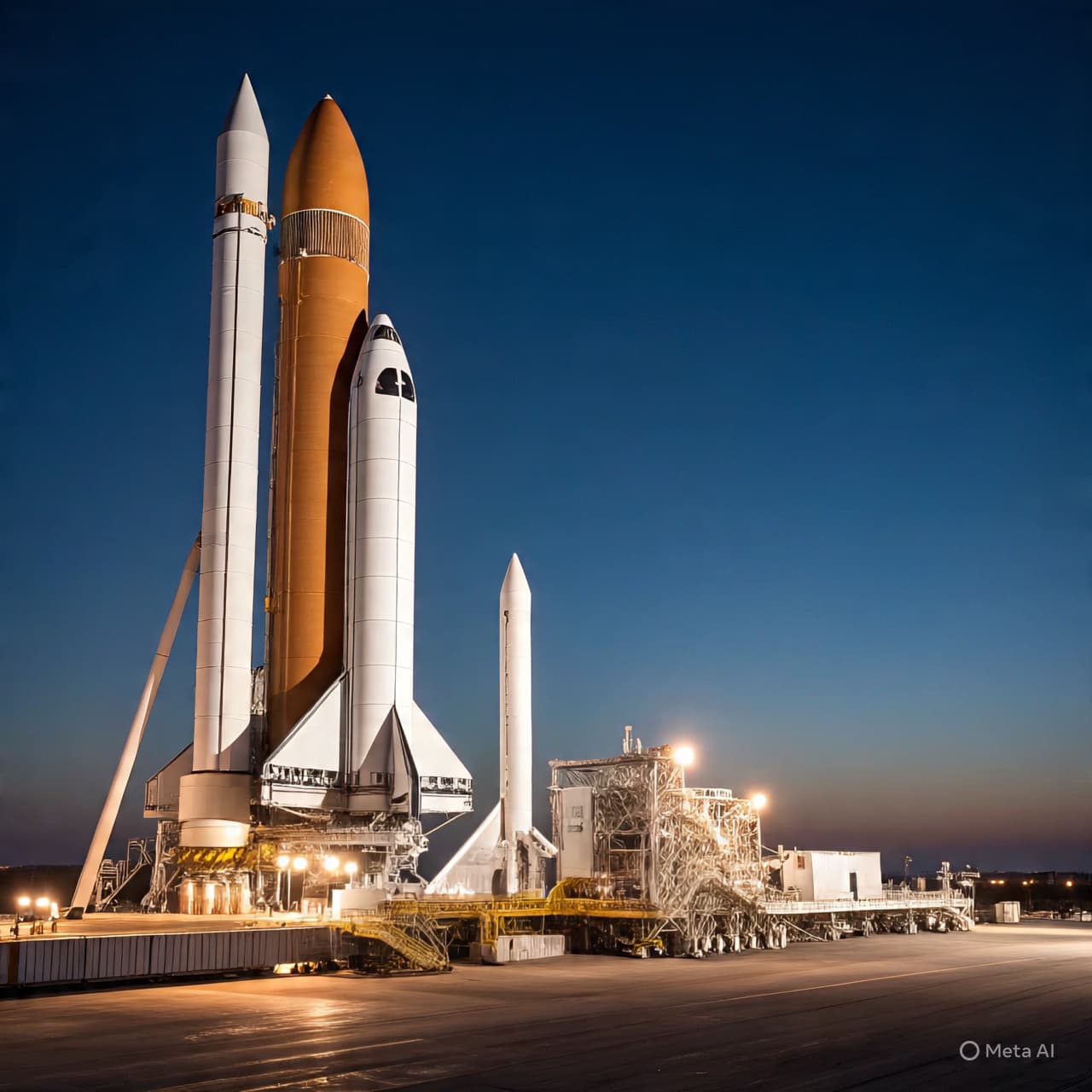
In the quiet hours before dawn at the Cape Canaveral launch complex, a great silver tower stands ready — poised like a lighthouse facing the dark sea of space. Soon, as the sun begins its slow rise over Florida’s Atlantic horizon, that tower will carry more than metal and fuel into the sky; it will bear centuries of human curiosity and the distinct pulse of a new chapter in exploration. In the coming weeks, astronauts will embark on a journey that hasn’t been undertaken in more than half a century, weaving a lineage of discovery that stretches back to the earliest visions of lunar travel.
Among the four crew members set to depart Earth’s gravity is Christina Koch, a seasoned astronaut whose life has been framed by the stars since her earliest training. On this mission, she will carry forward not only her own expertise but the collective hopes of many who see her as a symbol of what space exploration can become. This Artemis II flight — the first time humans will travel beyond low-Earth orbit since the end of the Apollo era — places her in a role that resonates far beyond a routine mission patch.
The journey itself will not touch the lunar surface, but it will loop around the Moon in a graceful arc that has been seen only in historic photographs and in the dreams of spacefarers for decades. For Koch, and for her fellow crew members — Commander Reid Wiseman, Pilot Victor Glover, and Canadian mission specialist Jeremy Hansen — this will be a test of technology and teamwork, of ship and spirit. In that silent ballet around Earth’s companion, new chapters will be written in the ledger of exploration.
NASA’s Space Launch System rocket and Orion spacecraft are the conduits of this journey, assembled with meticulous care and at times careful delay. Recent troubleshooting of rocket systems led technicians to roll the towering stack away from the launch pad for additional inspections, a reminder that even the most advanced machines require patience and precision before they can carry out their celestial ambitions.
When Artemis II finally lifts off — its launch currently aimed for the spring months ahead — it will mark another step toward returning humans to the Moon’s surface later in this decade. That broader effort, re-sequenced through recent planning, places the first lunar landing of this renewed program a few missions beyond this flight. Yet the flight around the Moon still carries historic significance, inviting us to reflect on how far we have journeyed and how much remains to be seen.
In the quiet anticipation of engines warming and rockets rising, there is a sense of continuity — an unbroken thread from early space explorers to today’s pioneers. As this orbit set against the dark backdrop of space unfolds, it will be a voyage not only of science and skill, but of human wonder once again reaching upward, gently and with intention, toward the lunar horizon.
AI Image Disclaimer (Rotated Wording) “Visuals are created with AI tools and are not real photographs.”
Source Check — Credible Mainstream/Niche Sources Exist Here are reliable outlets and missions referenced for this topic:
NASA official Artemis mission information (Artemis II crew details and objectives) Space.com reporting on Artemis II and its launch targets and crew roles Associated Press (AP News) on recent launch pad and rocket delays affecting schedule The Verge reporting on NASA’s revised Artemis moon landing timeline Smithsonian Magazine (via National Air and Space Museum) on historic firsts aboard Artemis II crew
Published by Banx Network. This article is part of the Banx decentralized media programme, powered by the BXE token on the XRP Ledger.