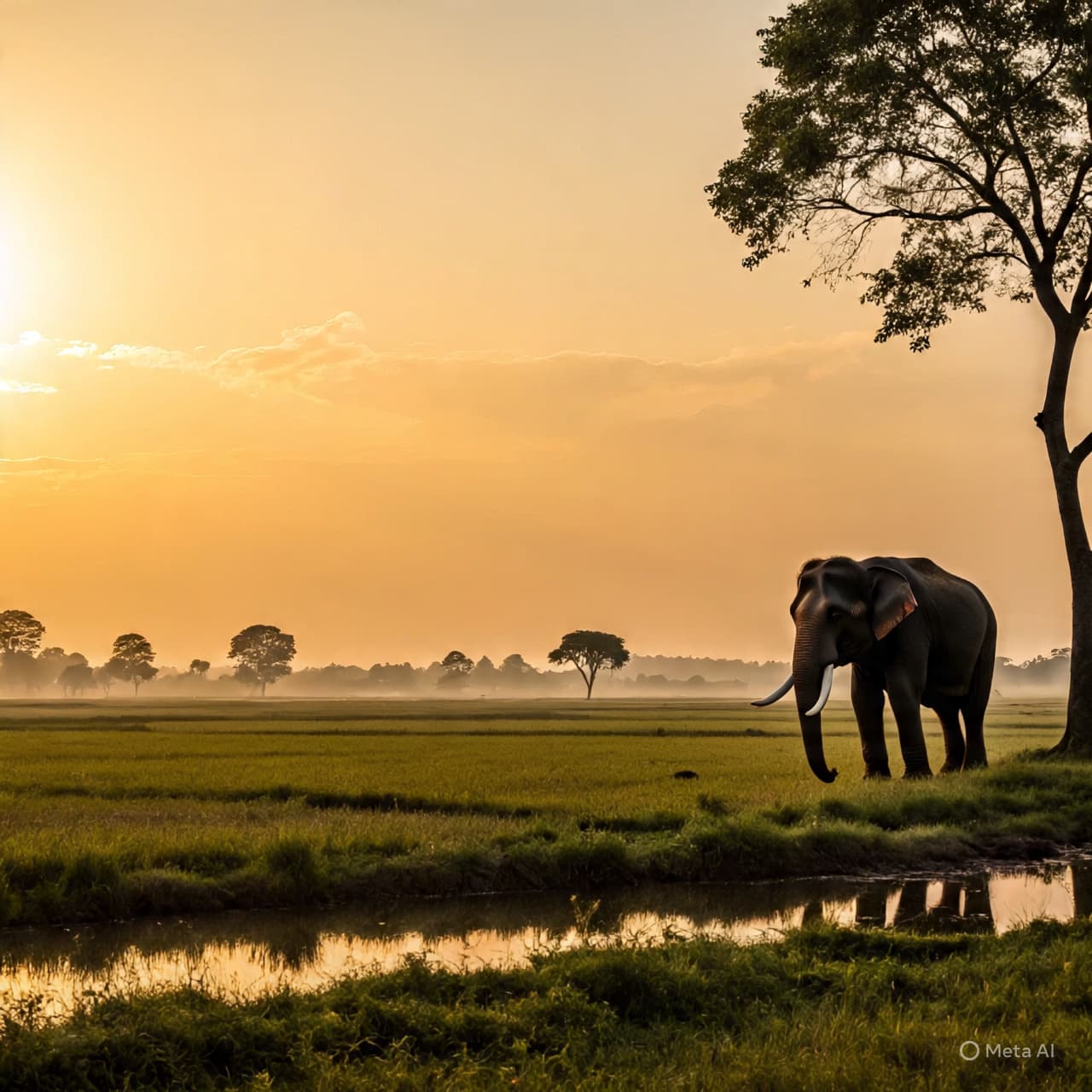
In the rolling plains near Mihintale, once known for centuries as fertile ground between jungle and village, a shocking scene played out that stirred grief and revulsion across Sri Lanka and beyond. A wild elephant — an animal revered here as a symbol of cultural heritage and deep spiritual meaning — was found severely burned after being intentionally set on fire, in an act caught on video that quickly spread on social media. The disturbing footage prompted authorities to move swiftly: police have arrested three men in connection with the incident, marking a rare moment of decisive action in a case that has unsettled a nation deeply attached to its wildlife.
The three suspects — men aged 42, 48 and 50 from the Seeppukulama area in the north‑central Anuradhapura district — were taken into custody by Mihintale police on charges of animal cruelty and were remanded by the Anuradhapura Magistrate’s Court until December 24 as investigations continue. The violent act, authorities say, was documented in a viral video showing the injured wild elephant being set alight after already suffering wounds.
Wildlife officials and veterinarians rushed to the scene to treat the elephant’s grave injuries, but despite their efforts, the majestic creature later died from severe trauma, shock and its extensive burn wounds. Early post‑mortem examinations indicated the animal had already been in poor condition before the incident, with pre‑existing kidney and liver issues aggravated by the burning and the shock of the attack.
Sri Lanka is home to an estimated about 7,000 wild elephants, which are protected under law and held in high cultural and religious esteem, especially within Buddhist traditions. Killing a wild elephant is a serious criminal offence under Sri Lankan law, carrying penalties that can include life imprisonment after automatic commutation of death sentences, as executions have not been carried out in the country since 1976.
Still, the tragic episode has highlighted the deepening and often deadly human‑elephant conflict that has plagued the island for years. Encroaching agriculture, expanding settlements and habitat loss have brought elephants and humans into ever‑closer contact, with both sides suffering losses. Statistics suggest that roughly 400 elephants and 200 humans are killed annually in these clashes, even as conservationists push for long‑term coexistence strategies.
Public outrage at the incident has come from all corners — from wildlife activists to ordinary citizens who view the elephant not merely as an animal, but as part of the country’s national identity. Social media users condemned the act as cruel and demanded swift justice, while conservationists used the moment to call for stronger protections for elephants and more effective conflict management in rural areas where tensions run high.
As investigators continue to piece together the circumstances that led to this brutal killing, Sri Lanka finds itself at a crossroads between tradition and modern pressures, between conservation ideals and the harsh realities of human‑wildlife competition. Whether this arrest marks the beginning of stronger enforcement or simply an isolated response remains to be seen — but the national and international response underscores the deep cultural value placed on these grand creatures and the urgency many feel in safeguarding their future.
AI Image Disclaimer “Visuals are created with AI tools and are not real photographs and are intended for representation only.”
Sources
• Reuters via news aggregators
• The Business Standard / AFP
• Daily Mirror (Sri Lanka)
• OnLanka.com
• NewsDrum / PTI
Published by Banx Network. This article is part of the Banx decentralized media programme, powered by the BXE token on the XRP Ledger.