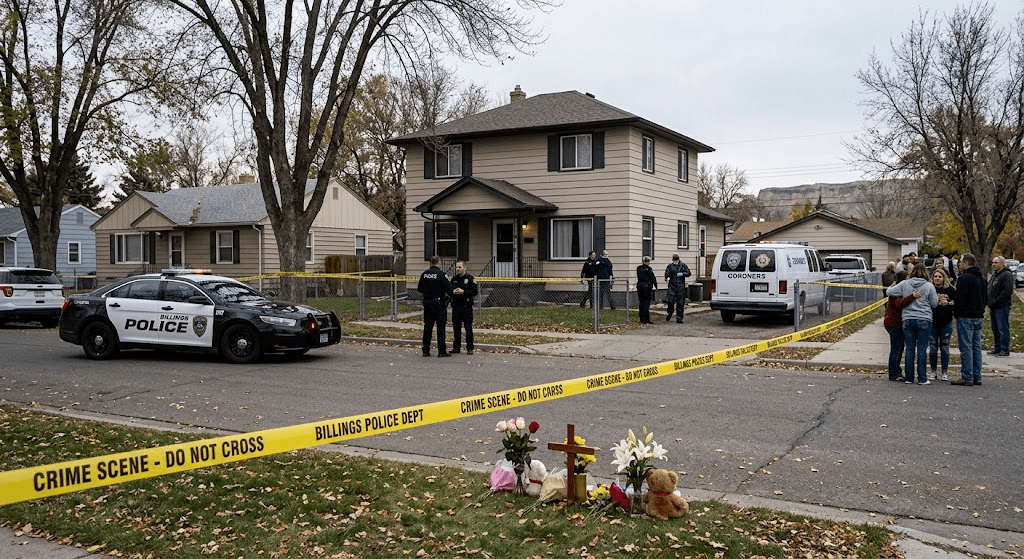
Opening Article In the quiet hush of a snow-blanketed Canadian town, a distant horizon once promised the rhythm of ordinary life. But when violent echoes shattered that calm in Tumbler Ridge, they gave rise to painful questions whispered around candlelit vigils: what signs were there, and what might they tell us? Sometimes, the footprints we leave online — in words, videos, and fleeting posts — become a faint trail of human struggle, tracing not only interests but inner conflicts we barely understand until it’s too late.
Article Body In the days since the tragic school shooting in Tumbler Ridge, British Columbia, investigators and family members alike have sifted through digital traces left by the suspect, trying to understand the complex interplay between a young life’s online presence and the real-world violence that unfolded. Authorities have identified the alleged shooter as 18-year-old Jesse Van Rootselaar, who killed her mother and 11-year-old stepbrother at home before opening fire at Tumbler Ridge Secondary School, killing multiple students and a teacher and then taking her own life.
What stands out in the rash of reporting is a portrait of someone who, before the violence, had posted about guns and hunting on social media platforms — including a YouTube channel featuring videos about firearms and outdoor pursuits. Those posts, now taken down, suggest an interest in shooting and self-reliance that was shared publicly and enthusiastically at times.
Alongside those posts about hobbies, some accounts and archived content hinted at more troubling struggles with mental health. According to police, Van Rootselaar had a documented history of mental-health-related calls to her home and had previous interactions with authorities under Canada’s Mental Health Act.
The gentle hum of digital expression — a comment, a video, a personal reflection — can carry subtle clues to someone’s inner world. Yet it’s equally shaped by community, identity, and the quirks of online culture. It would be a mistake to leap from a social media post to a motive, or to assume that online interests in firearms alone predict violence. Many people post about guns, hunting, and outdoor sports without ever harming others. The challenge lies in discerning context without oversimplifying individual experience.
Mental health struggles are often entwined with broader social threads — stigma, isolation, misunderstanding — and when these play out in public spaces like online forums, the signals can be both noisy and incomplete. In the aftermath of tragedy, there’s a natural impulse to retrospectively trace steps, to look for a pattern in posts, images, and comments that might explain what happened. But lived complexity rarely fits neatly into digital footprints alone.
Closing Article As investigators continue combing through digital records and personal histories, officials stress that a clear motive has yet to be determined. While the online presence of the Tumbler Ridge shooter offers fragments of interest and expression, experts remind the public and policymakers alike that understanding violence involves looking at many interwoven factors — from mental health support systems to access to firearms and the ways individuals find solace or identity online. What remains clear is a community’s need for healing and careful reflection rather than hasty conclusions.
AI Image Disclaimer Images in this article are AI-generated illustrations, meant for concept only. Visuals are created with AI tools and are not real photographs. Illustrations were produced with AI and serve as conceptual depictions. Sources CNN, AP, DW, KeyT News, Opinion Nigeria.
Published by Banx Network. This article is part of the Banx decentralized media programme, powered by the BXE token on the XRP Ledger.