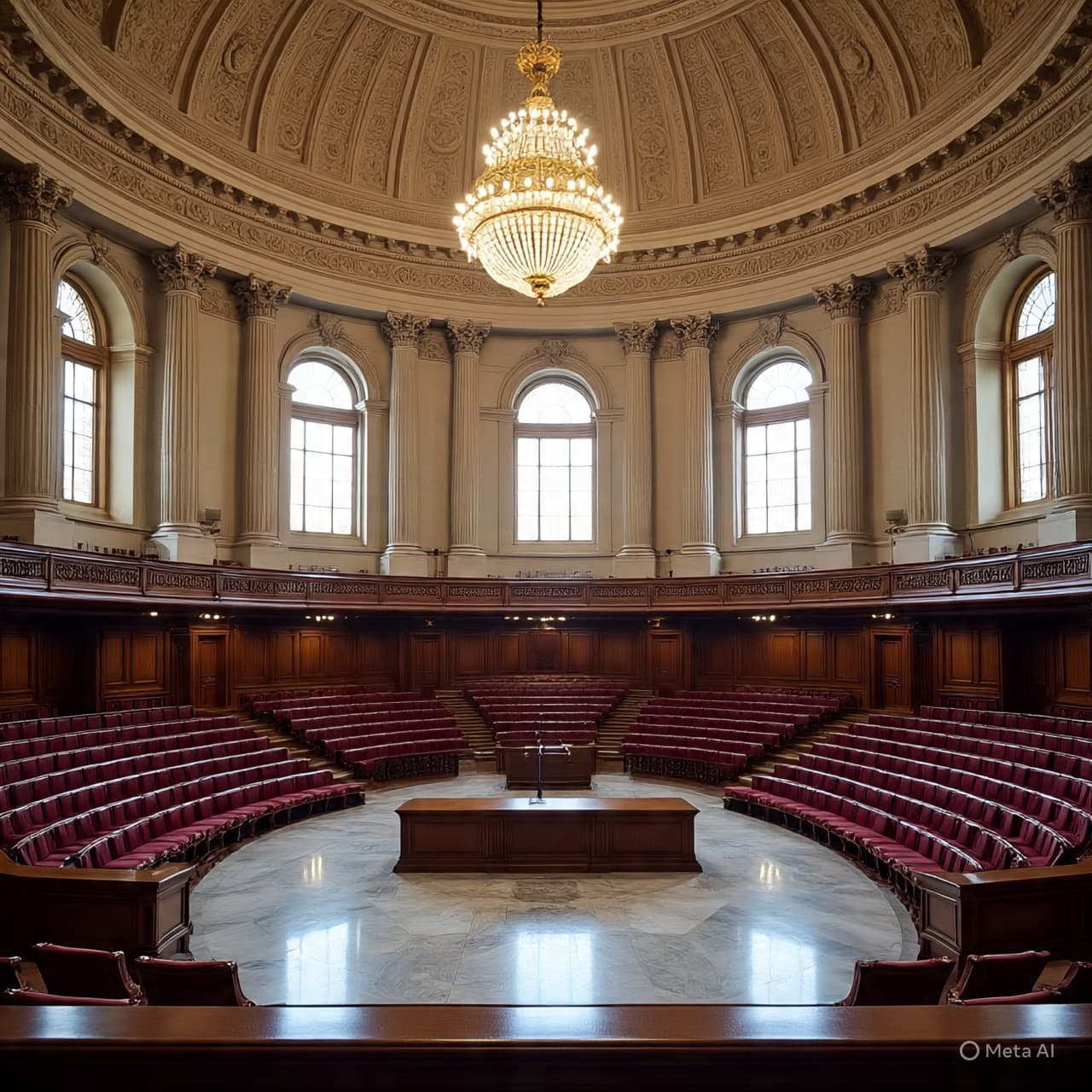
There are moments in politics that resemble less a march forward and more a pause held in place—a quiet, unyielding stillness where neither side moves, yet much seems to be at stake. In such moments, time does not stop, but it lingers, stretching the space between decision and delay. The language grows sharper, the positions more fixed, and the sense of motion gives way to something closer to a standstill.
In the United States Senate, that stillness has taken on the shape of a prolonged impasse over funding for the Department of Homeland Security. Lawmakers remain locked in disagreement, with negotiations showing little sign of immediate resolution. As discussions continue, reports describe an atmosphere where exchanges have grown increasingly pointed, reflecting both the intensity of the issue and the difficulty of finding common ground.
At the center of the standoff lies a familiar challenge in governance: balancing competing priorities within the constraints of time and resources. Funding for DHS, which oversees a wide range of national security and immigration functions, has become entangled in broader policy debates. These include questions about border enforcement, immigration policy, and the allocation of federal resources—issues that often carry both practical and symbolic weight.
The term “staring contest” has been used to describe the current dynamic, suggesting a situation where each side holds its position, waiting for the other to shift. In such a setting, progress can feel less like negotiation and more like endurance. The longer the impasse continues, the more attention turns to its potential consequences—not only for the agency itself, but for the services and personnel it supports.
Amid the stalemate, reports indicate that rhetoric within the Senate has sharpened. Insults and pointed remarks have surfaced in public and private exchanges, adding another layer to an already complex situation. While political disagreement is not unusual, the tone of these interactions can shape both the pace and the perception of the negotiations.
Beyond the immediate exchanges, the practical implications of the funding delay remain a central concern. Agencies under the DHS umbrella continue to operate, often under temporary measures, but the absence of a long-term agreement introduces uncertainty. Questions arise about staffing, planning, and the ability to sustain operations over time without stable funding.
Observers note that such standoffs, while not unprecedented, often follow a familiar arc. Initial disagreements give way to extended negotiations, punctuated by moments of tension and attempts at compromise. Whether this particular impasse will follow that pattern remains to be seen, as both sides weigh their positions against the pressures of time and public expectation.
For those watching from outside the chamber, the details of the dispute may appear distant, yet its effects can ripple outward. Funding decisions at the federal level shape a wide range of services, from security operations to administrative functions, each carrying its own impact on daily life.
As the Senate continues its deliberations, no final agreement has been reached. Talks remain ongoing, with lawmakers signaling both the challenges and the importance of finding a path forward. In the meantime, the impasse stands as a reminder of how governance can sometimes move—not in swift strides, but in careful, contested pauses.
AI Image Disclaimer Visuals are created with AI tools and are not real photographs.
Source Check (Credible Media Outlets): Reuters Associated Press Politico The Washington Post CNN
Published by Banx Network. This article is part of the Banx decentralized media programme, powered by the BXE token on the XRP Ledger.