
Key Highlights
- Keir Starmer is expected to address Parliament regarding vetting issues related to Peter Mandelson.
- The discussion highlights gaps in internal communication within the government.
- The situation raises broader questions about trust in political systems and governance.
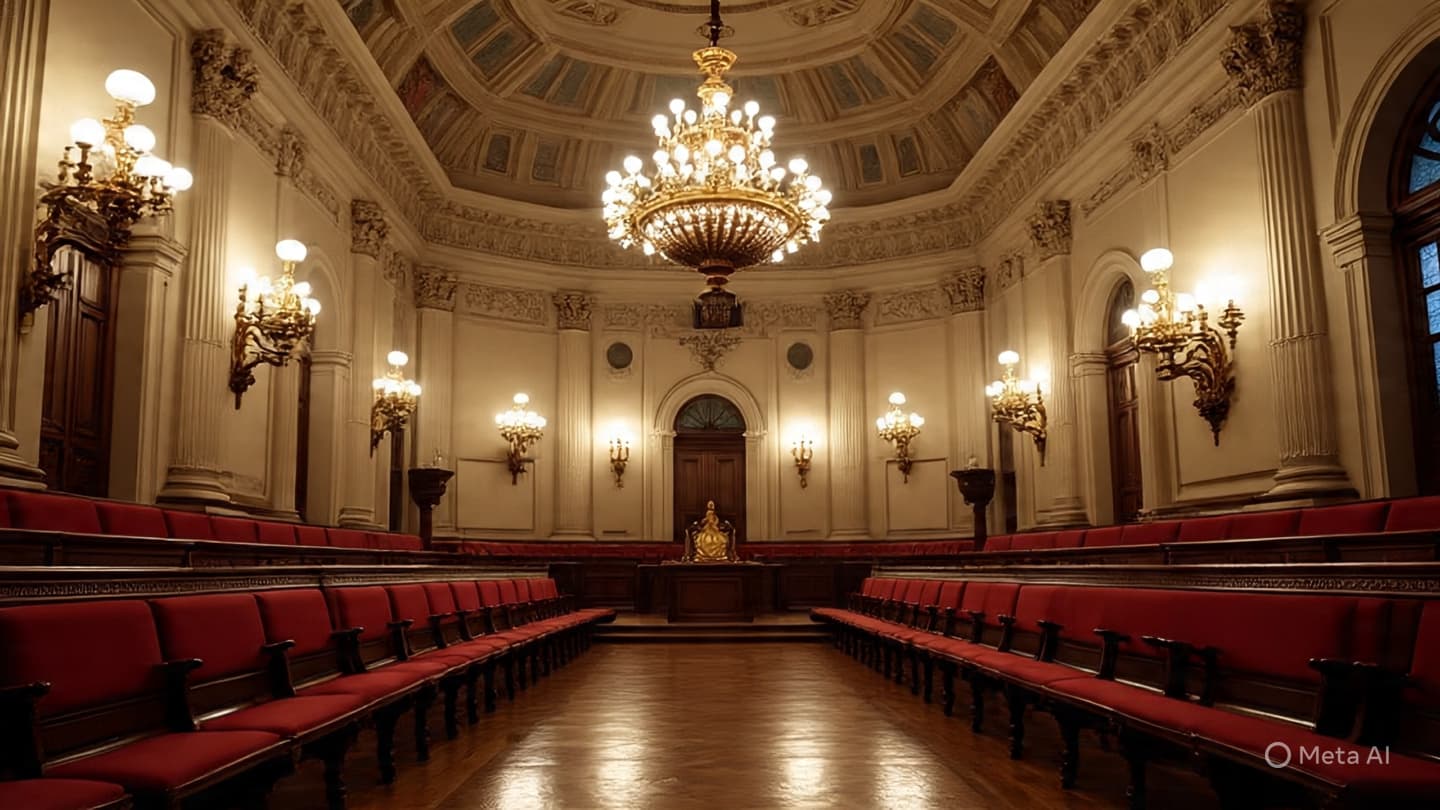
In the long corridors of the Palace of Westminster, where footsteps echo against stone and time seems to gather in quiet layers, information often moves less like a current and more like a tide—advancing, retreating, sometimes arriving later than expected. It is in these spaces, shaped by procedure and tradition, that absence can carry as much weight as presence.
This week, that absence has taken on a particular form. Keir Starmer, the leader of the Labour Party, is expected to address Parliament with a message that is as much about what was not known as what was done. At the center of the matter lies the vetting process connected to Peter Mandelson, a figure whose long political career has often intersected with moments of scrutiny and return. According to reports, Starmer will state that he had not been fully informed about aspects of Mandelson’s vetting, suggesting a gap between internal processes and executive awareness.
The issue unfolds not in the urgency of crisis, but in the quieter tension of governance—where trust in systems depends on the steady, often invisible flow of information. Vetting, by its nature, is a careful exercise, one that balances discretion with accountability. It is designed to filter risk before it surfaces, to ensure that decisions are made with clarity rather than assumption. When that flow is interrupted, even subtly, questions arise not with sharp edges, but with a persistent, low hum.
Within Westminster, such moments are rarely isolated. They become part of a broader rhythm, where oversight, responsibility, and communication intersect. Lawmakers are expected to listen, to question, and to interpret not only the content of what is said, but the spaces between statements—the pauses where uncertainty can reside. Mandelson’s presence in the narrative adds a layer of historical continuity. Once a central figure in earlier governments, his reappearance in contemporary political discussion evokes the cyclical nature of public life, where individuals and institutions often return in altered contexts.
The vetting process surrounding him, while procedural in form, becomes symbolic in effect—reflecting how past and present remain in quiet dialogue. For Starmer, the acknowledgment of being “kept in the dark,” as it has been described, is less an admission of failure than an articulation of process under strain. Leadership, in such instances, is measured not only by decisions made, but by the transparency with which gaps are addressed. Parliament, in turn, becomes both audience and participant, absorbing the explanation while preparing its response.
Beyond the chamber, the implications settle into the wider landscape of governance. Public trust, though often discussed in broad terms, is built through these smaller moments—through the expectation that systems function as intended, and that when they do not, the deviation is recognized and examined. As the statement is delivered and recorded, the contours of the situation will become clearer: Starmer is set to tell Parliament that he was not fully briefed on the vetting process related to Peter Mandelson, prompting questions about internal communication and oversight within government structures. The corridors will continue to carry their quiet echoes, but for a time, they will also hold this moment—a reminder that even in well-worn systems, information can move unevenly, and its absence can speak just as clearly as its presence.
Published by Banx Network. This article is part of the Banx decentralized media programme, powered by the BXE token on the XRP Ledger.



