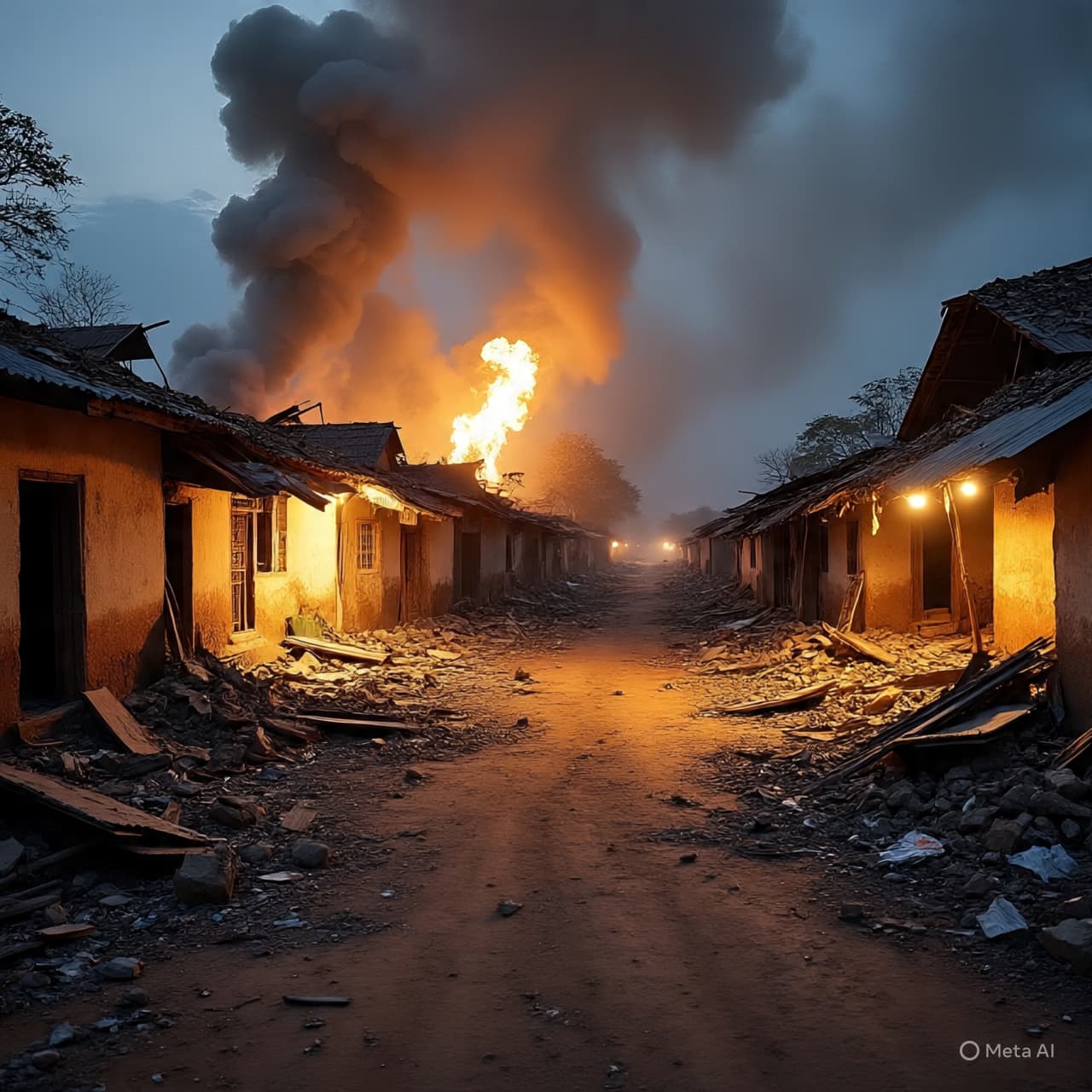
There are times when quiet fields and dusty paths hold nothing more than the ordinary rhythms of daily life — until a moment arrives that shifts everything. In the remote reaches of Kasuwan-Daji village, nestled within Nigeria’s northern Niger state, that fragile calm was shattered on a Saturday evening when gunmen rode in from the nearby forest, turning market laughter and household routines into chaos, smoke, and grief. The echoes of gunfire and the blaze of burning homes cut through dusk like a storm breaking a long-held silence.
By the next morning, the toll was grim: at least 30 villagers had been killed and several more were kidnapped during the raid, police officials said, the latest chapter in a cycle of violence that has become tragically familiar for many communities in this region. Witnesses and local church representatives suggested the number of fatalities could be higher, with some putting the figure closer to 37 or more as missing villagers remained unaccounted for amid the devastation.
Residents described how the assailants — believed to be armed bandits using the expansive forest reserves in the Kabe district as hideouts — came on motorcycles shortly before evening, opening fire indiscriminately and setting fire to the local market and several homes. “Women and children were not spared,” said one survivor who managed to escape the immediate violence, underscoring the utter vulnerability of villages with little security presence.
Police spokesman Wasiu Abiodun acknowledged the attack in a statement, and authorities claimed that security forces had been deployed to track down the perpetrators and search for those abducted. Yet several villagers said that no officers had actually reached the scene in the hours following the raid, leaving families to grapple with loss and fear on their own.
The region’s history is punctuated with similar tragedies: remote communities targeted by heavily armed groups exploiting gaps in security infrastructure, conducting raids that blend criminal motives with the very real terror of abduction and death. Just months ago, more than 300 schoolchildren and their teachers were kidnapped from a Catholic school in a nearby community, highlighting the chronic insecurity that plagues parts of northern Nigeria.
Nigeria’s President, Bola Tinubu, condemned the assault, promising that those responsible will be pursued and held to account, and emphasizing the urgency of rescuing those taken captive. Yet for survivors in Kasuwan-Daji, the immediate reality remains one of shattered homes, grieving families, and the uneasy question of what comes next as the sun rises over fields still smoldering from the previous night’s violence.
AI Image Disclaimer “Images in this article are AI-generated illustrations, meant for concept only.”
Sources Associated Press/AP News, Al Jazeera, Afro.com (AP), Newsweek, The Boston Globe/AP.
Published by Banx Network. This article is part of the Banx decentralized media programme, powered by the BXE token on the XRP Ledger.