There are moments in science when the past does not feel distant, but merely quiet—waiting, perhaps, for the right instrument to listen. In the vast stillness of space, the remnants of ancient explosions linger like fading echoes across a cosmic canyon. They are not gone, only softened by time, their stories scattered in fragments of light invisible to the human eye. And so, with patient curiosity, humanity builds new ways of seeing—not to disturb the silence, but to understand it.
In this gentle pursuit, NASA has turned once more to the language of X-rays, deploying advanced observational tools to study the ghostly remains of a long-ago supernova. These stellar explosions, among the most powerful events in the universe, do not simply vanish after their brilliant finale. Instead, they leave behind intricate structures—expanding shells of gas, enriched with heavy elements, quietly shaping the cosmos over millennia.
The mission’s focus rests on decoding these remnants through high-energy X-ray emissions, which reveal details otherwise hidden in darkness. Unlike visible light, X-rays can trace the hottest and most energetic processes, allowing scientists to map shock waves, temperature variations, and chemical compositions within the debris. What emerges is not just an image, but a layered narrative—one that speaks of creation as much as destruction.
Through this lens, the ancient supernova becomes less of an ending and more of a transformation. Elements forged in the explosion—iron, oxygen, silicon—are dispersed across space, eventually contributing to new stars, planets, and perhaps even life itself. In this way, the mission quietly reinforces a profound idea: that the universe is not static, but continuously rewriting itself through cycles of collapse and renewal.
The data gathered also offers insight into the behavior of extreme physics. By studying how matter interacts under such intense conditions, scientists refine models of stellar evolution and cosmic dynamics. Each observation, though technical in nature, carries a certain poetic weight—a reminder that even in destruction, there is structure; even in silence, there is information.
As the mission continues, its findings will likely deepen our understanding of both the distant past and the processes that still shape the present universe. Yet, rather than delivering abrupt revelations, it unfolds gradually, like a story told across light-years—measured, precise, and quietly profound.
In the end, this endeavor does not seek to dramatize the cosmos, but to listen more carefully. And in doing so, it allows us to glimpse how even the oldest echoes of the universe still have something to say.
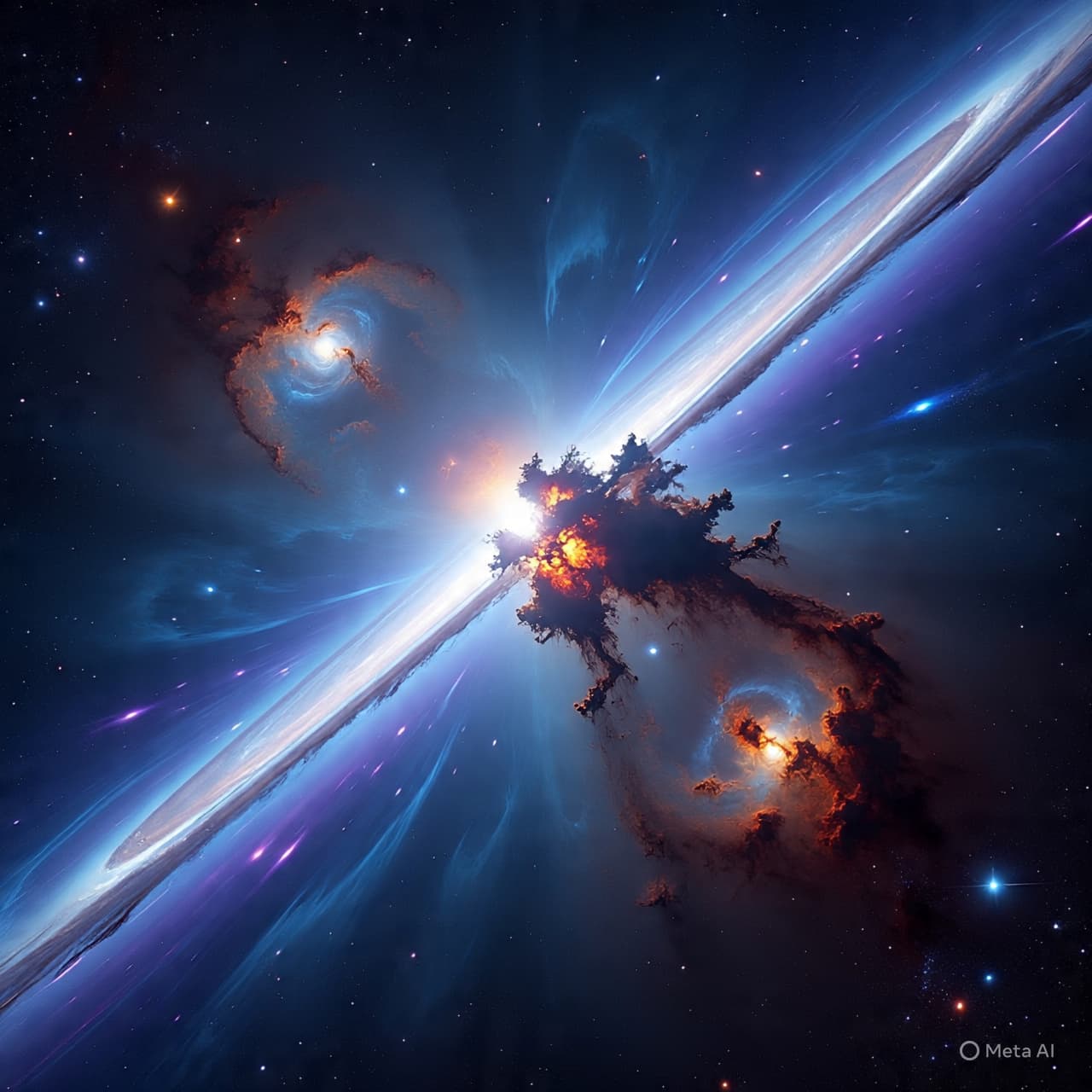
AI Image Disclaimer Visuals are created with AI tools and are not real photographs.
Source Check (Credible Media Outlets):
NASA ESA Space.com The New York Times Scientific American
Published by Banx Network. This article is part of the Banx decentralized media programme, powered by the BXE token on the XRP Ledger.