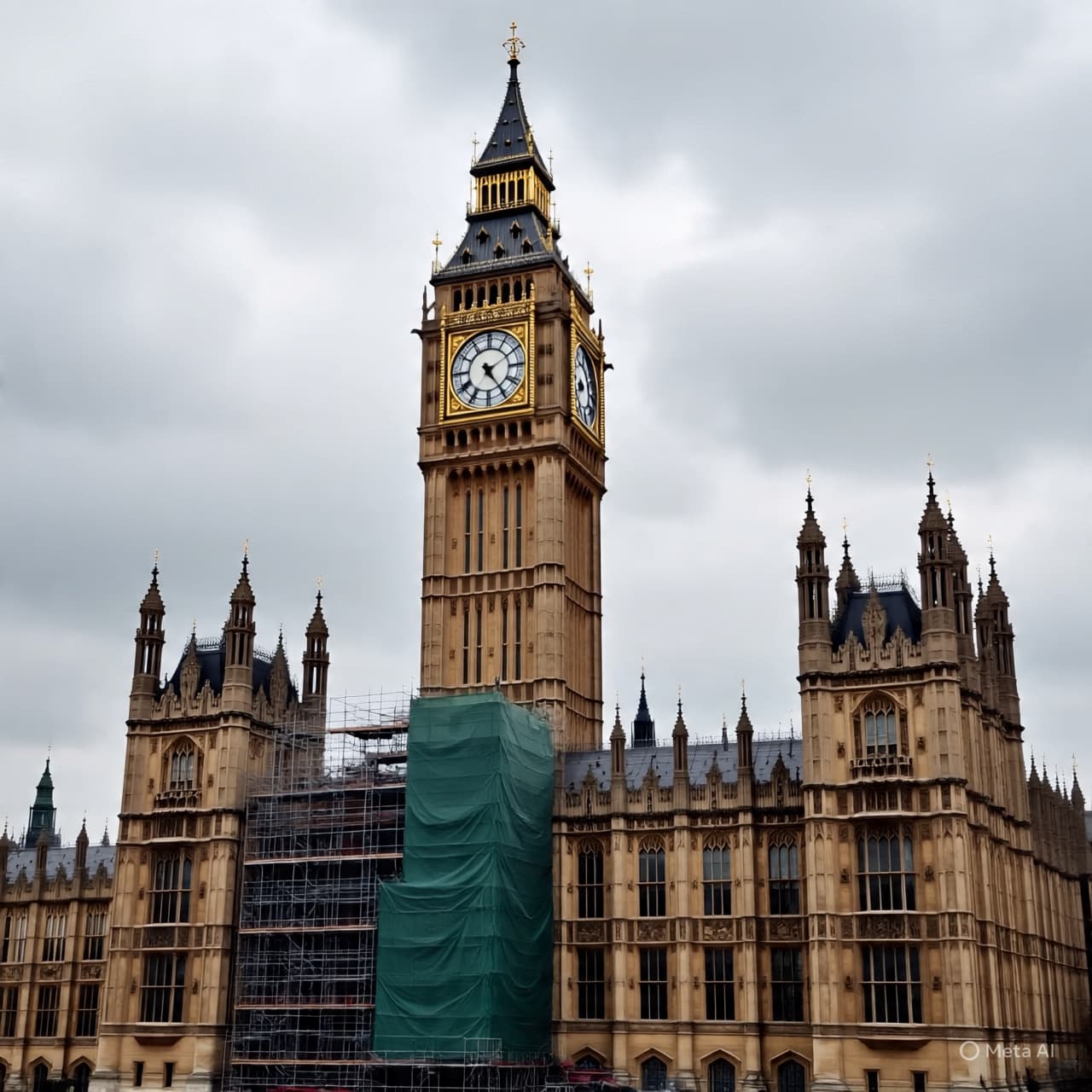
On a wintry morning in Westminster, where the river Thames glints under a muted sky, the centuries‑old walls of the Palace of Westminster bear both the dignity and the burden of time. The building’s façades and chambers are etched with history, yet beneath the splendor lies a network of crumbling masonry, tangled pipes, and fragile infrastructure that whispers of urgency. Like an heirloom treasured but in need of careful mending, Parliament now stands at a crossroads: to finally agree, after years of debate, how it should be repaired — and what legacy will be passed to future generations.
For decades, MPs and peers have acknowledged that the iconic estate requires extensive work — far beyond simple maintenance — to safeguard its future. Cracks in the walls have widened, water has seeped through ancient stone, and staff whisper of “exploding toilets and rats in the basement,” a vivid reminder that the building’s decay is not merely cosmetic but a daily challenge. What was once pushed down the long corridor of political priorities now demands attention, not least because delaying action could risk further hazards and escalating costs.
The broad contours of the challenge before parliamentarians are now clearer than ever. In early 2026, lawmakers will be presented with a set of three key options: a full decant, where both the House of Commons and House of Lords temporarily relocate while repair works are carried out; a partial decant, moving only the Lords; and an enhanced maintenance strategy that involves phased work while MPs and peers continue their business on site. Each option carries its own mix of costs, risks and timelines. A full decant could see Parliament out of the Palace of Westminster for up to two decades, with decadal budgets reaching into the billions.
In the corridors of power, voices vary. Some argue that an outward move — perhaps to the nearby QEII Conference Centre or other temporary chambers — would allow the most comprehensive restoration, preserving the historic fabric while enabling modern safety and accessibility upgrades. Others caution that dislocation could disrupt the rhythms of democratic life and inflate costs further still, without guaranteeing a clear timetable. Debates have lingered as the metaphorical sand of cost estimates and design plans shifts beneath political feet.
Yet the question is no longer whether repairs are needed; it is how to manage the decision. A report from the Restoration and Renewal Client Board, composed of MPs, peers and lay experts, is expected to set out clear recommendations in 2026 — detailing the risks, benefits and financial implications of each path forward. Once the government schedules a vote, the fate of the restoration plan will rest in the hands of those very parliamentarians whose future workplace is under discussion.
For many observers, the deep cultural symbolism of the Palace of Westminster adds gravity to the talks. The building is not simply bricks and mortar but a stage on which centuries of British political life have played out. To see it slowly degrade is to face questions about heritage, democracy, and the role of institutions in a rapidly changing world. There is a quiet urgency among MPs and peers alike: the longer the deferral, the steeper the eventual bill becomes — not only in pounds, but in public confidence and legislative continuity.
As 2026 unfolds, the question of consensus is not merely technical, but philosophical: What will it take for the custodians of Britain’s democracy to act in concert, balancing history with practicality, reverence with necessity? Whether this year becomes the turning point may hinge on the willingness of lawmakers to see beyond short‑term controversy and commit to a path that secures Parliament’s future. The debate continues — and with it, the hope that the Palace of Westminster will stand renewed as a testament to both heritage and progress.
AI Image Disclaimer “Graphics are AI‑generated and intended for representation, not actual photographs.”
Sources BBC / parliamentary repair decision expected in 2026 Yahoo News Singapore / details on repair options PoliticsHome / Lords relocation planning Parliamentary Buildings (Restoration and Renewal) Act 2019 context Reddit discussions on repair delay background
Published by Banx Network. This article is part of the Banx decentralized media programme, powered by the BXE token on the XRP Ledger.