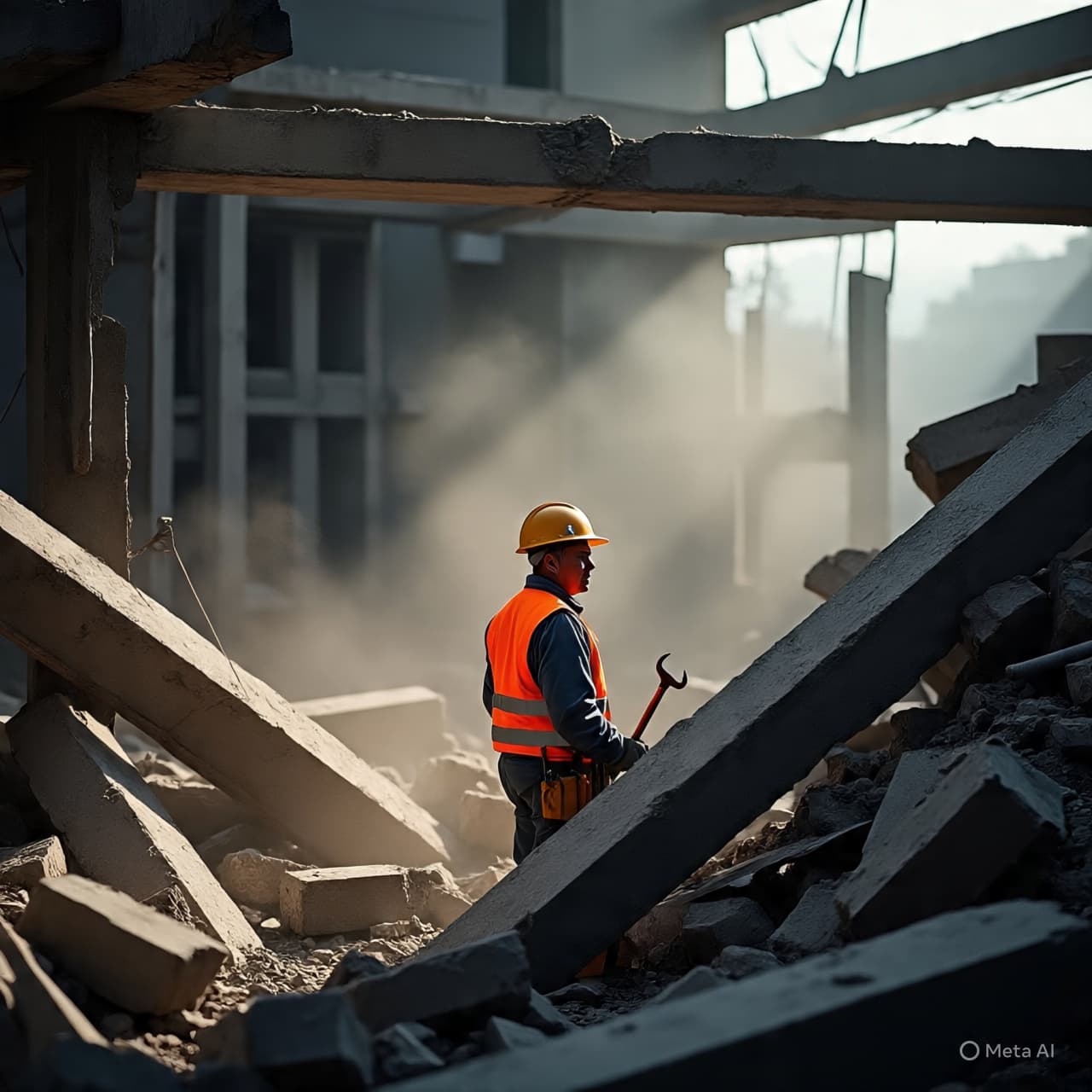
It began like a soft tremor in a quiet afternoon — prayers drifting in the air, young voices in devotion. But in a heartbeat the calm broke: steel and concrete groaned, the ceiling gave way, and the space where students had gathered transformed into a cage of rubble. The sunlight that had filtered gently through windows turned into dust, and hope shivered in that moment. Rescuers in Sidoarjo now move through the debris like gardeners searching for seeds beneath winter’s frost, hoping to coax life back into impossible places. The collapse at the Al-Khoziny Islamic boarding school claimed 37 lives, and roughly 26 students remain missing, buried under fractured slabs of concrete. Among them were boys aged 12 to 19, congregated for afternoon prayers in a building under expansion. Rescue teams have used jackhammers, saws, sensors, and their bare hands in an effort to locate survivors. The collapse was not a mystery but a warning: the structure had been illegally extended — two extra floors added without proper permits. Construction experts say the foundation was inadequate to bear the extra load, especially while concrete was being poured. In some moments, rescuers paused, fearful a further shift could endanger lives already trapped. Among grieving families, anger and sorrow mingle. Some parents camp near the site, clutching photographs of their children, demanding answers and accountability. The school’s caretaker, a respected cleric, has publicly apologized, invoking divine will — a gesture many see as inadequate in the face of so much loss. Meanwhile, authorities have launched a criminal investigation, seeking to determine whether negligence or willful violation of building standards contributed to the disaster. In the tangled concrete and twisted steel, every recovered body tells a story of youth interrupted. Every name called aloud by rescuers is a fragile tether between those above ground and those still buried. The “golden window” of hope for survivors — often cited as 72 hours — has long passed, and the mission has shifted toward recovery and closure. Still, even in darkness, there is purpose. Volunteers bring food and water for rescuers, drones scan for heat signatures, forensic teams prepare to identify remains, and communities whisper prayers for reconciliation of grief and justice. As the hours stretch into days, Sidoarjo holds its breath — waiting for bodies, waiting for names, waiting for explanation. In the wake of this ruin, authorities must not only clear rubble, but also restore trust. Families deserve transparency, rules must be enforced, and standards must not be bent for expediency.
AI Image Disclaimer “Graphics are AI-generated and intended for representation, not reality.” Sources Associated Press Reuters The Guardian Wikipedia
Published by Banx Network. This article is part of the Banx decentralized media programme, powered by the BXE token on the XRP Ledger.