

Key Highlights
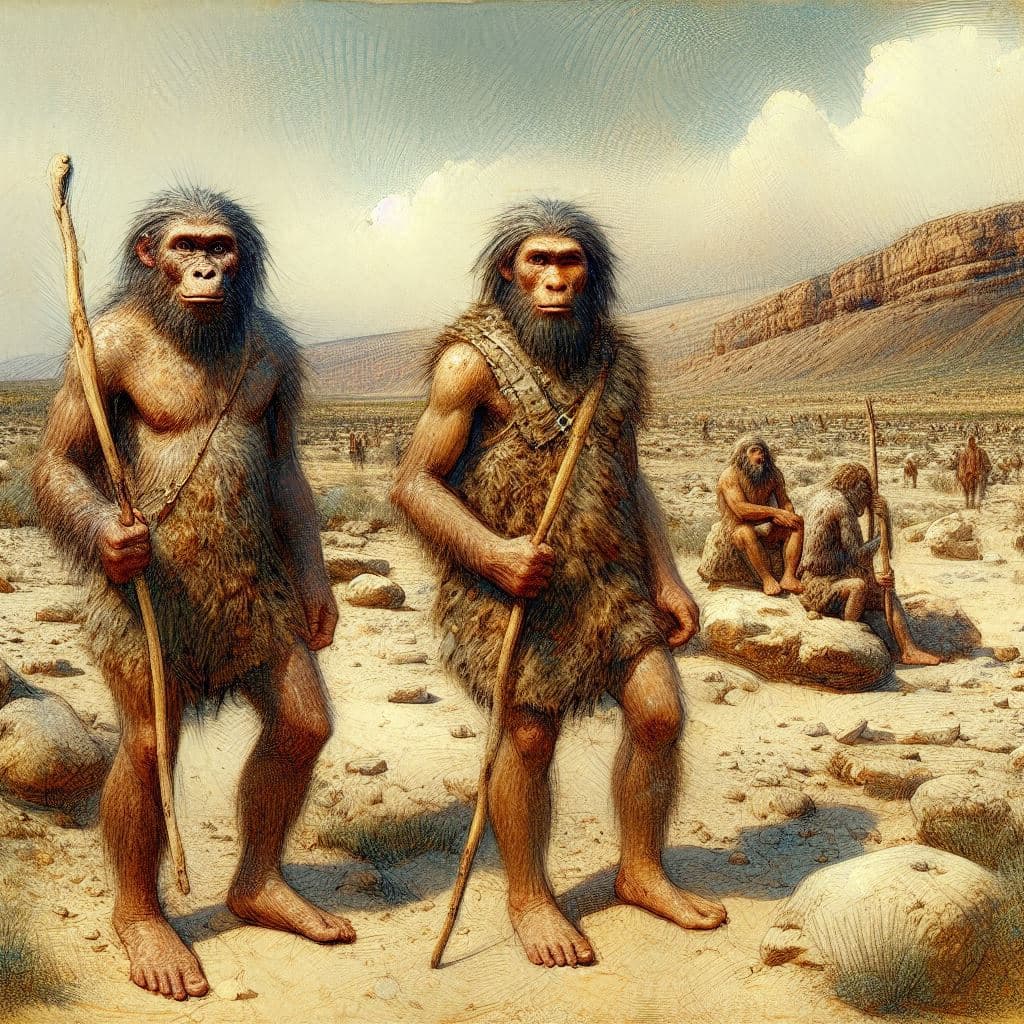
- New Study:Researchers from the University of Maine and University of Chicago investigate AI's portrayal of Neanderthals.
- Outdated Representations:AI-generated images and narratives often reflect 19th and 20th-century misconceptions.
- Call for Awareness:The study emphasizes the need for critical engagement with AI outputs to ensure accuracy.
[AI's Misrepresentation of Neanderthals]
In a recent study, researchers from the University of Maine and the University of Chicago examined how generative AI tools misinterpret the lives of Neanderthals, our ancient relatives. As technology advances, the ability of AI to generate text and images has become increasingly sophisticated. However, this study highlights a significant gap between AI outputs and contemporary scientific understanding. The researchers crafted prompts for AI models to visualize and narrate Neanderthal life, aiming to assess the accuracy of the generated content against decades of anthropological research.
The findings were striking. Without explicit instructions for scholarly accuracy, both the text and image outputs from the AI models often echoed outdated scientific ideas. The visuals produced were reminiscent of early 20th-century depictions of Neanderthals, portraying them as stooped, hairy figures, which starkly contrasts with modern reconstructions that recognize their complexity and adaptability. Furthermore, the absence of women and children in the AI-generated scenes fails to reflect the archaeological evidence that highlights their presence in Neanderthal communities.
[The Era of AI Knowledge]
The researchers conducted a comparative analysis of the AI outputs against scientific literature spanning the 20th and 21st centuries. They discovered that one model's text outputs often aligned with mid-20th-century perspectives, while the image generator's results were more consistent with late 20th-century academic views. This discrepancy underscores a critical limitation of AI: its reliance on training data that may be outdated or inaccessible due to copyright restrictions. Consequently, AI can inadvertently perpetuate and amplify misconceptions about Neanderthals, despite its ability to produce visually striking and coherent narratives.
[Implications for AI and Knowledge]
This study serves as a mirror reflecting not only the capabilities of AI but also its limitations. Many recent discoveries in anthropology and related fields remain hidden behind paywalls or scattered across various publications, leaving AI models unable to access the latest knowledge. As a result, the narratives generated by AI can often reflect outdated understandings, which can mislead users who may not critically engage with the content.
The researchers stress that this is not a critique of AI technology itself but rather a call for heightened awareness among scholars, educators, and the general public. While AI can process vast amounts of information and identify patterns quickly, it is essential to approach its outputs with a critical eye to ensure they align with current scientific knowledge. By highlighting the discrepancies in how generative AI portrays Neanderthals, this study provides a framework for examining similar gaps in other disciplines, reminding us that knowledge is continually evolving even as our technologies strive to keep pace.
[Conclusion]
As we navigate the complexities of AI-generated content, it is crucial to remain vigilant and informed. The study of Neanderthals serves as a poignant example of how technology can misinterpret our past, emphasizing the importance of integrating contemporary research into AI training processes. By fostering a critical engagement with AI outputs, we can better ensure that the narratives we encounter reflect the richness and complexity of our shared human history.
Published by Banx Network. This article is part of the Banx decentralized media programme, powered by the BXE token on the XRP Ledger.




