Opening The night sky has always been a tapestry woven with questions—pinpricks of light stretching back through unfathomable time, murmuring tales of beginnings beyond the reach of human memory. In these ancient starlit corridors, the James Webb Space Telescope (JWST) has become our lantern, casting its infrared gaze upon the most distant reaches of the cosmos. Like an archaeologist brushing dust from a forgotten relic, Webb reveals structures formed when the universe was scarcely more than a newborn—a time when the first and most colossal objects began their silent dance into existence. Among these are the titans that defy our simplest expectations: supermassive black holes, born far earlier than once thought possible, beckoning us to rethink not only when, but how they came to be.
Body In a cosmic epoch closer in time to the Big Bang than to today, scientists have peered deeper than ever before and uncovered clues about the genesis of supermassive black holes. One of the puzzles has been their sheer size: astounding masses—millions of times that of our Sun—found in a universe still in its infancy. Such gargantuan objects should take billions of years to grow under classical models that depend on the gradual collapse of stars followed by slow mergers. Yet Webb’s observations suggest an alternative lore.
By disentangling faint starlight from the dazzling glow of quasars, astronomers have detected signatures suggesting that some of these early black holes did not grow slowly but may have started life much larger than expected. In this scenario, so-called “heavy seeds” formed directly from enormous primordial gas clouds, collapsing without first passing through the life-and-death cycles of stars. These heavy seeds could have rapidly become the gravitational leviathans we observe in galaxies seen just hundreds of millions of years after the universe began.
Webb has also helped uncover a population of supermassive black holes cloaked in dust, hinting that these objects may be more common than previously understood, and that dust-obscured growth played a significant role in their early evolution. Another piece of this cosmic jigsaw comes from observations of particularly red, feeding black holes whose energetic accretion of gas and dust suggests voracious growth early in time.
These discoveries, supported by data from coordinated telescope campaigns such as those involving Subaru and ESA’s Webb programs, are compelling scientists to piece together a picture of early cosmic evolution in which black holes and galaxies grow in a tightly linked, dynamic interplay—far from the simple hierarchical growth once assumed.
Closing As Webb continues to sift the ancient light of the cosmos, its revelations about the earliest supermassive black holes remind us of the universe’s subtle complexity—still unreadable in parts but gradually yielding its secrets through patient observation. What once seemed improbable now takes shape in the data, providing gentle yet profound guidance for the next steps in cosmic exploration. Scientists remain cautious, building consensus with each new observation, yet hopeful that the tapestry of these earliest epochs will continue to come into focus.
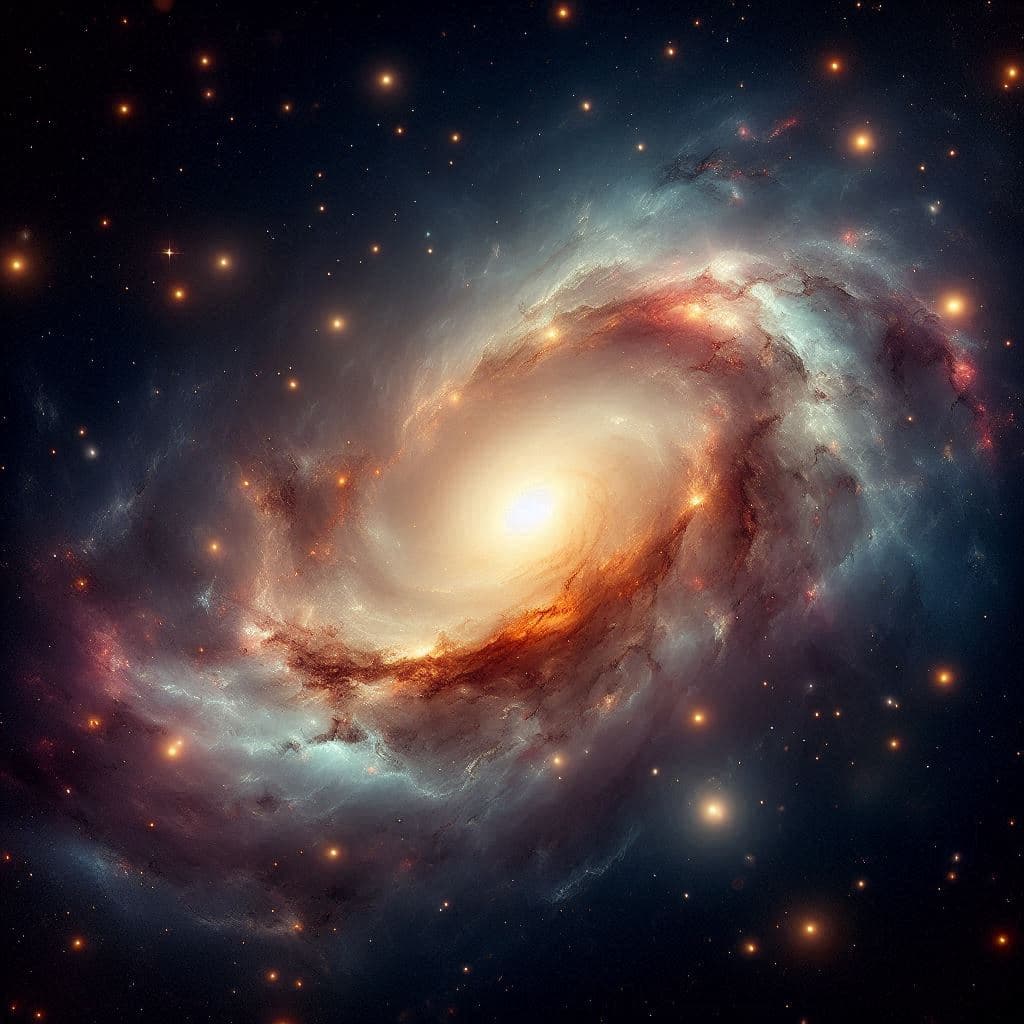
AI Image Disclaimer (Rotated Wording) “Visuals are created with AI tools and are not real photographs.”
Sources Check — Credible Media Outlets
Space.com (Space news and analysis) ScienceDaily (Research summaries) Live Science (Science journalism) ESA/Webb science release (Official Webb mission updates) Subaru Telescope announcements (Astronomical research context)
Published by Banx Network. This article is part of the Banx decentralized media programme, powered by the BXE token on the XRP Ledger.