In the vast, silent expanse of interstellar space, two tiny ambassadors from Earth continue their lonely journey. Voyager 1 and Voyager 2, launched in the 1970s, have outlasted their designers’ expectations, sending back data from beyond the heliosphere. Recently, Voyager 1 has faced significant challenges, with only two of its science instruments still fully operational. Meanwhile, engineers have successfully implemented a power-saving fix on Voyager 2, extending its life by another year. Now, they are attempting to apply similar ingenuity to Voyager 1, a probe that no longer behaves quite like its sibling. This effort is a poignant display of human perseverance, trying to keep a connection alive across billions of miles.
Voyager 1’s decline has been gradual but steady. Over the decades, its systems have aged, and some instruments have been powered down to conserve energy. The recent issues with its attitude control system have made communication difficult, requiring innovative solutions from the team at NASA’s Jet Propulsion Laboratory. The fact that any data is received at all is a miracle of engineering, a testament to the robustness of the original design and the skill of the operators.
The fix applied to Voyager 2 involved shutting down non-essential heaters and redistributing power to critical systems. This delicate balancing act allowed the probe to continue its scientific mission despite dwindling resources. For Voyager 1, the situation is more complex. Its systems have degraded differently, and the commands that worked for its twin do not always yield the same results. Each probe has developed its own unique quirks after forty years in the harsh environment of space.
Scientists are carefully testing new command sequences, hoping to stabilize Voyager 1’s orientation and restore full communication. The process is slow and requires extreme patience, as signals take over twenty hours to travel one way. Every adjustment is a gamble, but the potential reward—more data from the edge of our solar system—is worth the risk. The team works with a mix of caution and hope, knowing that time is a finite resource.
The differences between the two Voyagers highlight the unpredictability of long-duration space missions. No amount of ground testing can fully simulate decades of exposure to cosmic rays and extreme cold. Each anomaly is a new puzzle, requiring creative problem-solving and deep understanding of the spacecraft’s architecture. It is a masterclass in remote maintenance.
For the public, the ongoing saga of the Voyagers is a reminder of our reach and our limits. These machines are extensions of human curiosity, traveling further than any other object we have built. Their continued operation, however fragile, inspires awe and respect for the scientists who keep them alive.
NASA’s efforts to extend the life of Voyager 1 and Voyager 2 demonstrate remarkable engineering resilience. As Voyager 1 faces unique challenges, the team remains committed to extracting every possible bit of science from these historic probes. Their journey continues, a silent testament to human ingenuity.
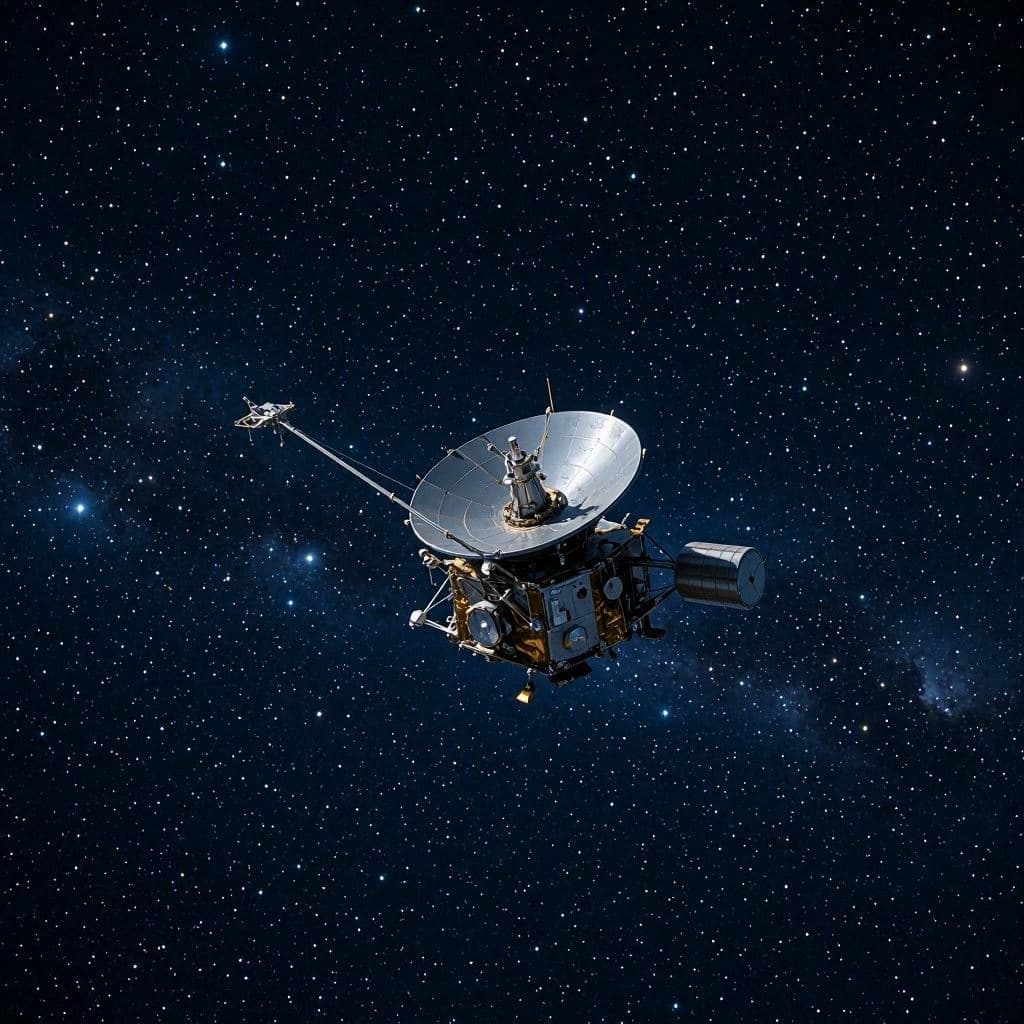
AI Image Disclaimer: Visuals associated with this article are AI-generated to illustrate the themes of space exploration and engineering.
Sources: NASA JPL Space.com Scientific American
Published by Banx Network. This article is part of the Banx decentralized media programme, powered by the BXE token on the XRP Ledger.