

Key Highlights
- Discovery:A 500-million-year-old fossil found in Utah.
- Significance:Challenges existing theories on spider evolution.
- Implications:Suggests a more complex early arthropod lineage.
In the vast stillness of the Utah desert, where time feels suspended and the earth holds its breath, a remarkable discovery has stirred the quiet narrative of evolution. Beneath layers of ancient sediment, scientists have uncovered a creature that lived over 500 million years ago, a predator whose form now challenges what we thought we knew about the origins of spiders.
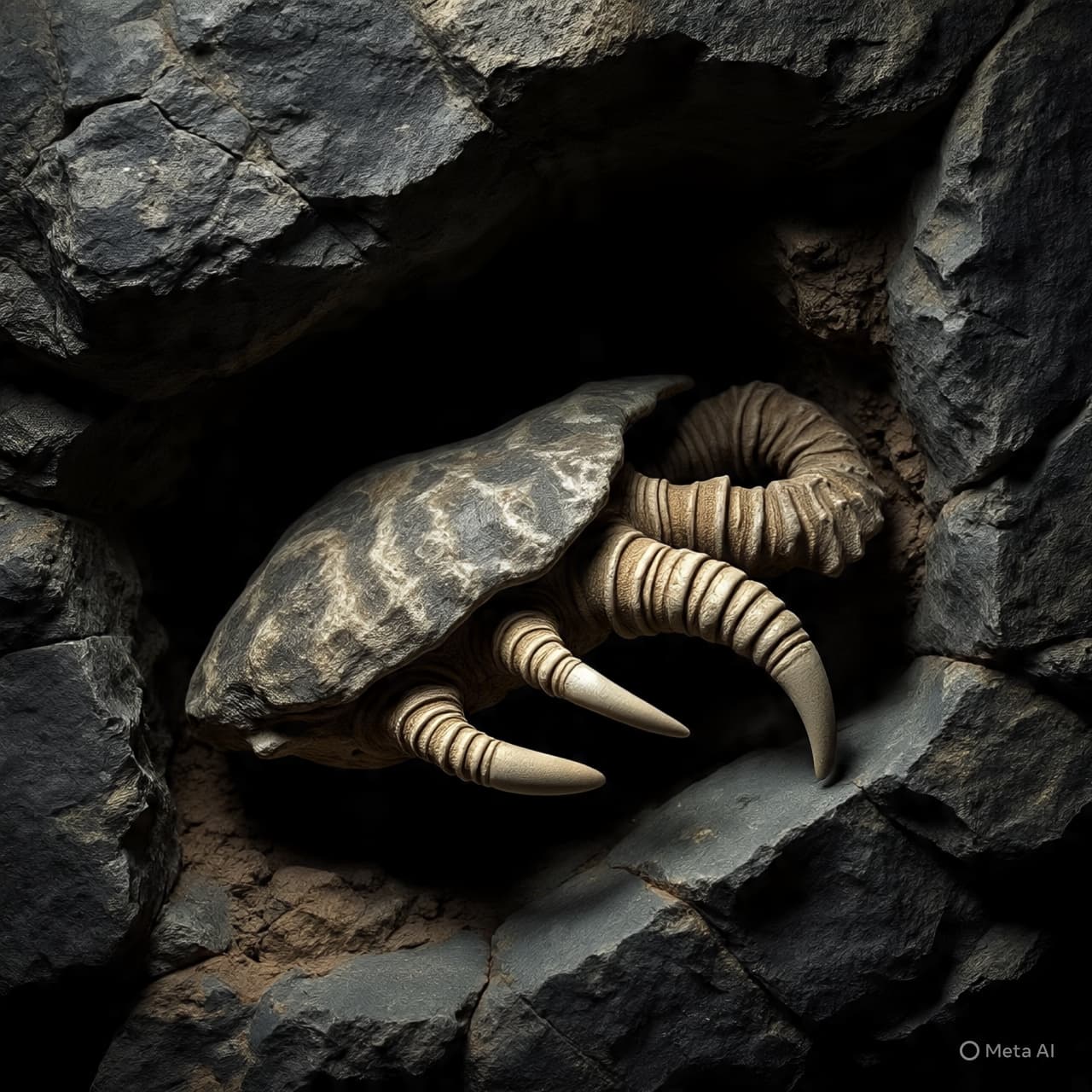
The fossil, remarkably preserved, reveals a clawed organism with features both familiar and foreign. Its anatomy suggests a lineage connected to early arthropods, yet its structure does not fit neatly into existing evolutionary categories. It is, in many ways, a puzzle piece that seems to belong to a different picture, complicating the relatively clear evolutionary path traced by scientists for decades.
Researchers believe this predator may represent a transitional form, bridging gaps between known species. Its claws, likely used for capturing prey, indicate an active and possibly aggressive hunting style, suggesting that complex predatory behavior evolved earlier than previously expected. This finding not only reshapes our understanding of spiders but also has broader implications for the evolution of arthropods during the Cambrian period, a time often described as an evolutionary explosion.
Advanced imaging technologies have allowed scientists to examine the fossil in extraordinary detail. These tools reveal microstructures that provide clues about movement, feeding, and environmental adaptation. Each detail adds depth to a story that is still unfolding, emphasizing that even well-studied regions like the Utah desert can yield findings that challenge established theories.
The philosophical resonance of such discoveries is significant. They remind us that science is not static but constantly evolving, shaped by new evidence and fresh perspectives. What we accept as truth today may be refined tomorrow, inviting further exploration and deeper analysis.
As the desert winds continue to move across the landscape, they carry with them the quiet possibility of more revelations. The past, it seems, still has many stories left to tell, and this fossil serves as both a breakthrough and an invitation for the scientific community to reconsider long-held assumptions about the origins of life on Earth.
Published by Banx Network. This article is part of the Banx decentralized media programme, powered by the BXE token on the XRP Ledger.




