
Key Highlights
- U.S. military strikes on Iranian targets escalate tensions in the Gulf.
- Iran warns of potential consequences for maritime shipping.
- Oil prices rise amid uncertainty over regional stability.
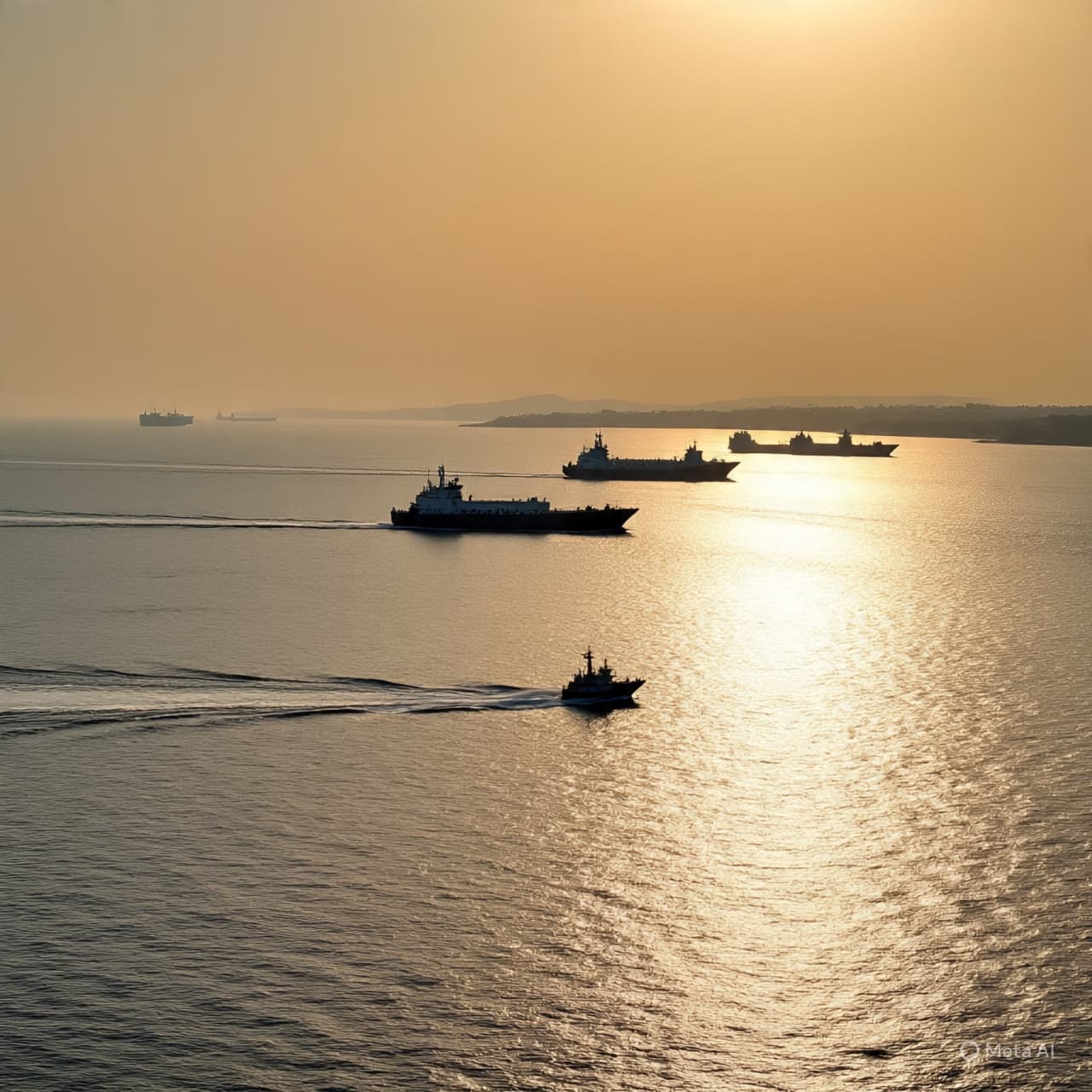
The horizon over the Gulf at dawn is often indistinct, sea and sky blending into a pale continuum. Tankers drift along established lanes, their hulls heavy with crude, their routes plotted months in advance. The Strait of Hormuz narrows like a held breath, a corridor where geography shapes history. In recent days, the stillness of that passage has felt more fragile, as words spoken far from its waters ripple outward in widening circles.
From Washington, U.S. officials described recent military strikes on Iranian targets as a necessary response to escalating threats. The operations were intended to degrade specific capabilities and deter further aggression from Tehran. This framing suggests a calculated approach, aiming to prevent a broader conflict while acknowledging the precarious nature of the situation. However, in geopolitics, such decisive moments often lead to further complexities rather than resolutions.
In Tehran, the response was swift and edged with warning. Iranian officials condemned the strikes and indicated that Gulf shipping could face repercussions if pressure continues. The Strait of Hormuz—through which roughly a fifth of the world’s oil supply transits—has long been a focal point during periods of tension. Iran has a history of seizing tankers and conducting military drills in the area, showcasing its strategic leverage over vital shipping lanes. The threat to these lanes is not only a matter of military strategy but also an economic one; even the mere suggestion of disruption can send shockwaves through global markets.
Gulf states, including Saudi Arabia and the United Arab Emirates, have observed these developments with cautious concern. Their economies are intricately tied to global oil markets, and their longstanding security partnerships with the United States add another layer of complexity. While some Gulf nations have sought to engage diplomatically with Tehran to stabilize regional relations, the delicate balance of reassuring allies while avoiding provocation remains a challenge.
The energy markets reacted predictably to the heightened tensions. Oil prices experienced an uptick, reflecting the immediate impact of geopolitical uncertainty. Insurance premiums for vessels navigating these sensitive waters also rose, indicating a growing perception of risk among shipping companies. Behind these statistics are real people and businesses adjusting to the shifting political landscape, highlighting the human cost of such conflicts.
The broader context of these tensions stretches back several years. The U.S. withdrawal from the Iran nuclear agreement in 2018 significantly altered the diplomatic landscape, reintroducing sanctions and limiting formal channels of communication. In response, Iran has expanded its nuclear program and strengthened regional alliances, leading to a series of confrontations in Iraq, Syria, and the Gulf. This ongoing cycle of pressure and retaliation has created a complex web of interactions that complicate any potential resolution.
As evening settles again over the Strait, navigation lights blink steadily against the dark. Warships patrol at measured distances; commercial vessels maintain their course. The immediate question—whether shipping will be directly targeted—remains unanswered, suspended between statement and action. International maritime coalitions continue to monitor the corridor, and diplomatic messages are exchanged through back channels, reflecting the intricate dance of diplomacy and military readiness.
In the end, the phrase “last best chance” lingers in the air, both declarative and uncertain. History suggests that in the Middle East, moments described as final often become preludes to negotiation, recalibration, or renewed tension. For now, the Gulf endures in its familiar role: a narrow passage where global commerce and regional rivalry converge, and where each decision made on distant shores is felt in the quiet churn of passing wakes.
Published by Banx Network. This article is part of the Banx decentralized media programme, powered by the BXE token on the XRP Ledger.



