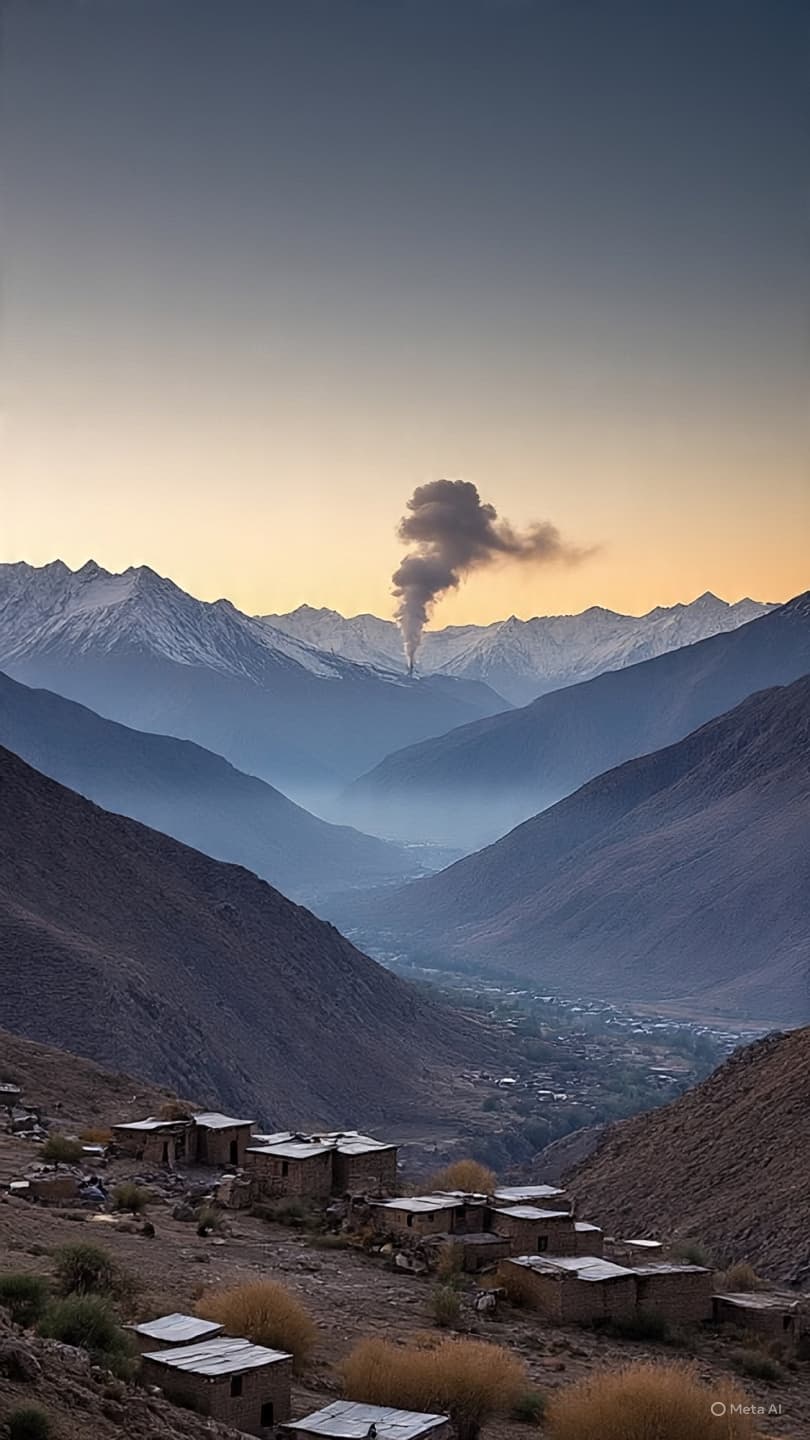
As the mountains along the border stand in their ancient silence, they have long borne witness to history’s restless footsteps. Winds pass freely across the rugged ridges separating nations, but the human lines drawn upon maps often carry heavier consequences. In the early hours of a tense and uncertain day, those winds carried not just dust, but the echo of explosions — a reminder of how fragile calm can be in regions shaped by decades of mistrust and conflict.
Dozens were reported killed after Pakistan carried out cross-border strikes inside Afghanistan, targeting what it described as militant hideouts near the frontier. The strikes, according to Pakistani officials, were aimed at groups they accuse of launching attacks from Afghan soil into Pakistan’s border provinces. In recent months, Islamabad has voiced growing concern over rising militant activity, asserting that certain factions have found sanctuary beyond its immediate reach.
Afghan authorities, however, offered a different account. Officials in Kabul condemned the operation, describing it as a violation of sovereignty and reporting that civilians were among those killed. Local reports from affected provinces suggested homes were damaged and families displaced in the aftermath. The human toll, as so often happens in border conflicts, appears to extend beyond the intended targets.
Tensions between Islamabad and Kabul have simmered for years, shaped by historical disputes over the porous frontier known as the Durand Line and by the complex legacy of militant movements operating in the region. Since the Taliban regained control of Afghanistan in 2021, Pakistan has repeatedly called for stronger action against groups such as the Tehrik-i-Taliban Pakistan (TTP), which it blames for attacks inside its territory. Afghan officials have consistently denied allowing their soil to be used for cross-border violence, even as diplomatic exchanges grow more pointed.
The latest strikes risk deepening a fragile relationship. Pakistan has framed its actions as defensive and necessary for national security. Afghan leaders, meanwhile, have warned that unilateral military operations threaten regional stability and could provoke further escalation. Between these positions lies a border community already accustomed to uncertainty — farmers, traders, and families whose lives are measured less by geopolitics and more by the search for ordinary peace.
International observers have urged restraint, mindful that both countries face internal challenges that make stability not merely desirable, but essential. Pakistan grapples with economic pressures and security concerns, while Afghanistan continues to navigate political isolation and humanitarian strain. In such an environment, each military move carries consequences that may ripple far beyond the immediate battlefield.
For now, official casualty figures remain under review, and both governments have signaled that diplomatic channels remain open, even as rhetoric sharpens. Whether this episode marks a brief flare-up or the beginning of a more sustained confrontation will depend on choices made in the days ahead.
In the quiet that follows explosions, the mountains once again return to stillness. Yet beneath that stillness lies a question that lingers: can lines drawn in stone ever truly contain the currents of conflict, or will they continue to shift under the weight of history?
AI Image Disclaimer
Illustrations were produced with AI and serve as conceptual depictions.
Source Check: Reuters BBC News Al Jazeera Associated Press The Guardian
Published by Banx Network. This article is part of the Banx decentralized media programme, powered by the BXE token on the XRP Ledger.