

Key Highlights
- Russia launched a large-scale bombardment across Ukraine, targeting 147 locations.
- The strikes involved missiles, drones, and artillery, affecting energy and military infrastructure.
- Global reactions emphasize support for Ukraine and concerns over humanitarian impacts.
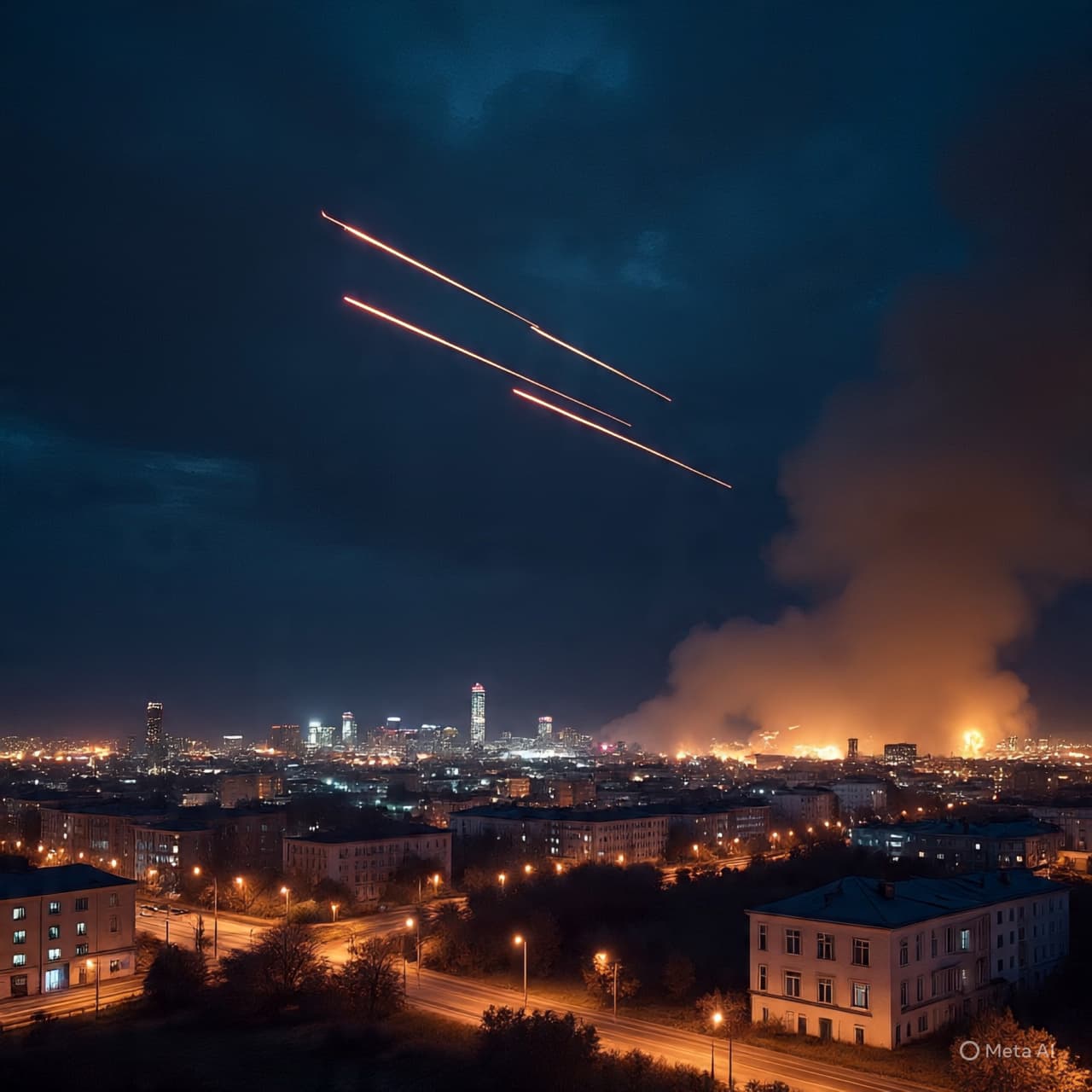
Russia's recent military actions in Ukraine have escalated tensions significantly, with a large-scale bombardment reported across 147 locations. This operation, described by officials as a retaliatory measure, involved a combination of missiles, drones, and artillery, striking various regions and impacting both military and civilian infrastructure.
The strikes unfolded overnight, with Ukrainian authorities confirming that energy facilities, industrial sites, and logistical points were among the primary targets. Air defense systems were activated in several cities as residents sought shelter from the onslaught. Explosions echoed across different oblasts, highlighting the extensive nature of the assault. Emergency crews were quickly deployed to assess damage and assist civilians affected by the strikes.
Russian officials have framed this operation as a response to previous Ukrainian attacks, asserting that the strikes were aimed at military and strategic targets. This narrative of retaliation has been a recurring theme in Moscow's communications, reflecting the ongoing cycle of escalation that has characterized the conflict. The language used by Russian authorities suggests a strategic intent to weaken Ukraine's defense capabilities and infrastructure.
Independent verification of the targeted sites remains challenging in the active war zone. However, reports from international media and defense analysts confirm widespread strikes across multiple regions. The targeting of energy infrastructure is particularly significant, especially as winter approaches, when disruptions can have severe humanitarian consequences.
For civilians, the renewed bombardment has resulted in another night filled with uncertainty and fear. Daily life in cities far from the front lines has adapted to the constant threat of power outages, transportation disruptions, and the sound of air raid sirens. Schools and businesses have learned to navigate between normalcy and emergency, reflecting the ongoing impact of the conflict on everyday life.
Global reactions to the strikes have been swift, with Western governments reiterating their support for Ukraine while calling for restraint and de-escalation. International organizations have expressed concern over the humanitarian impact of the attacks, particularly regarding critical infrastructure. The conflict, which has persisted for years, continues to elicit diplomatic responses even as military actions unfold on the ground.
The reported strike on 147 locations serves not only as a military maneuver but also as a strategic message. Analysts suggest that such large-scale operations are intended to project military capability and deterrence, even as they risk further intensifying the cycle of retaliation. Beneath the statistics of the bombardment lies the human cost of conflict: families displaced, workers navigating damaged systems, and communities grappling with uncertainty.
As assessments of casualties and infrastructure damage continue, Ukrainian authorities are engaged in repair efforts and defense operations, while Russia maintains that its strikes were directed at military objectives. The situation remains fluid, with both sides closely monitoring developments.
In wars of attrition, each action leaves a lasting imprint. The bombardment of 147 locations adds another chapter to a conflict that has already transformed landscapes, lives, and geopolitical dynamics. For now, the skies over Ukraine remain tense, and the international community watches closely for the next developments in this ongoing crisis.
Published by Banx Network. This article is part of the Banx decentralized media programme, powered by the BXE token on the XRP Ledger.




