
Key Highlights
- Nineteen confirmed dead due to flash floods in eastern Afghanistan.
- Hundreds of mud-brick homes collapsed, leaving many families displaced.
- Urgent international aid requested to assist with recovery efforts.
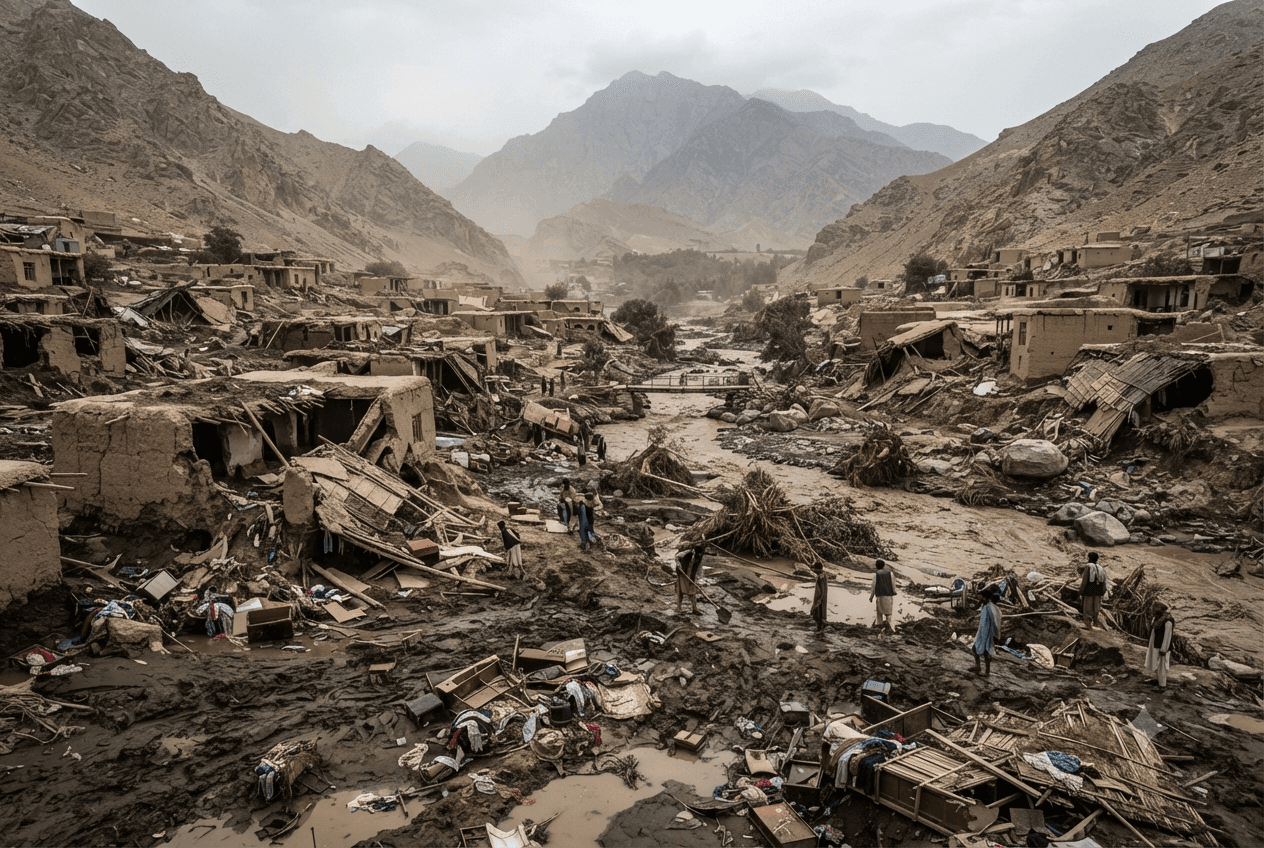
Kabul, Afghanistan—Torrential rains triggered massive flash floods across remote mountain valleys in eastern Afghanistan. Raging walls of water swept through rural settlements during the middle of the night, collapsing hundreds of traditional mud-brick homes instantly under the pressure of the current. Villagers trapped in their sleep had virtually no chance of survival.
Local rescue committees confirmed that nineteen residents lost their lives in the torrent. Volunteers worked tirelessly to pull bodies from the debris of pulverized earthen dwellings at dawn. Medical personnel treated dozens of injured survivors suffering from severe trauma and exposure. As the sun rose, several families remained unaccounted for, prompting neighbors to search through the muddy wreckage for any signs of life.
The flash floods also washed away vital agricultural bridges and livestock pens, cutting off all ground transport links to the hardest-hit rural districts. International humanitarian agencies attempted to coordinate emergency food and shelter deliveries, but difficult terrain and damaged roads severely hindered initial relief vehicle movements. The situation was dire, with many communities isolated and in desperate need of assistance.
Provincial authorities struggled to respond effectively due to a lack of heavy earthmoving machinery. Local leaders made urgent appeals for international aid to assist with search and recovery efforts. Climate experts noted that prolonged regional droughts had made the soil highly susceptible to flash flooding, exacerbating the disaster's impact. Government representatives visited the disaster zone to assess the structural damage levels and coordinate relief efforts.
Survivors gathered on elevated ground under makeshift canvas shelters and blankets, facing a critical shortage of drinking water as wells filled with mud and debris. Public health workers rushed to distribute water purification tablets to prevent disease outbreaks among the displaced population. Meanwhile, relatives buried the dead in temporary graves near the ruined village sites, mourning their losses amidst the chaos.
Relief coordinators established rudimentary communication links using satellite equipment to facilitate coordination among various humanitarian organizations. Emergency food packages were prepared for distribution to displaced households, but meteorological forecasts predicted additional rainfall across the mountainous eastern terrain, raising concerns about further flooding. Emergency response teams maintained a 24-hour watch along swollen river channels, ready to act if conditions worsened.
This catastrophe has exposed the extreme fragility of rural Afghan housing infrastructure. Community elders have demanded financial assistance to rebuild homes using reinforced materials to withstand future disasters. Engineering teams surveyed surrounding slopes for signs of further land slippage, while rescue operations continued as daylight faded over the devastated valley, highlighting the urgent need for comprehensive disaster preparedness in the region.
Published by Banx Network. This article is part of the Banx decentralized media programme, powered by the BXE token on the XRP Ledger.



