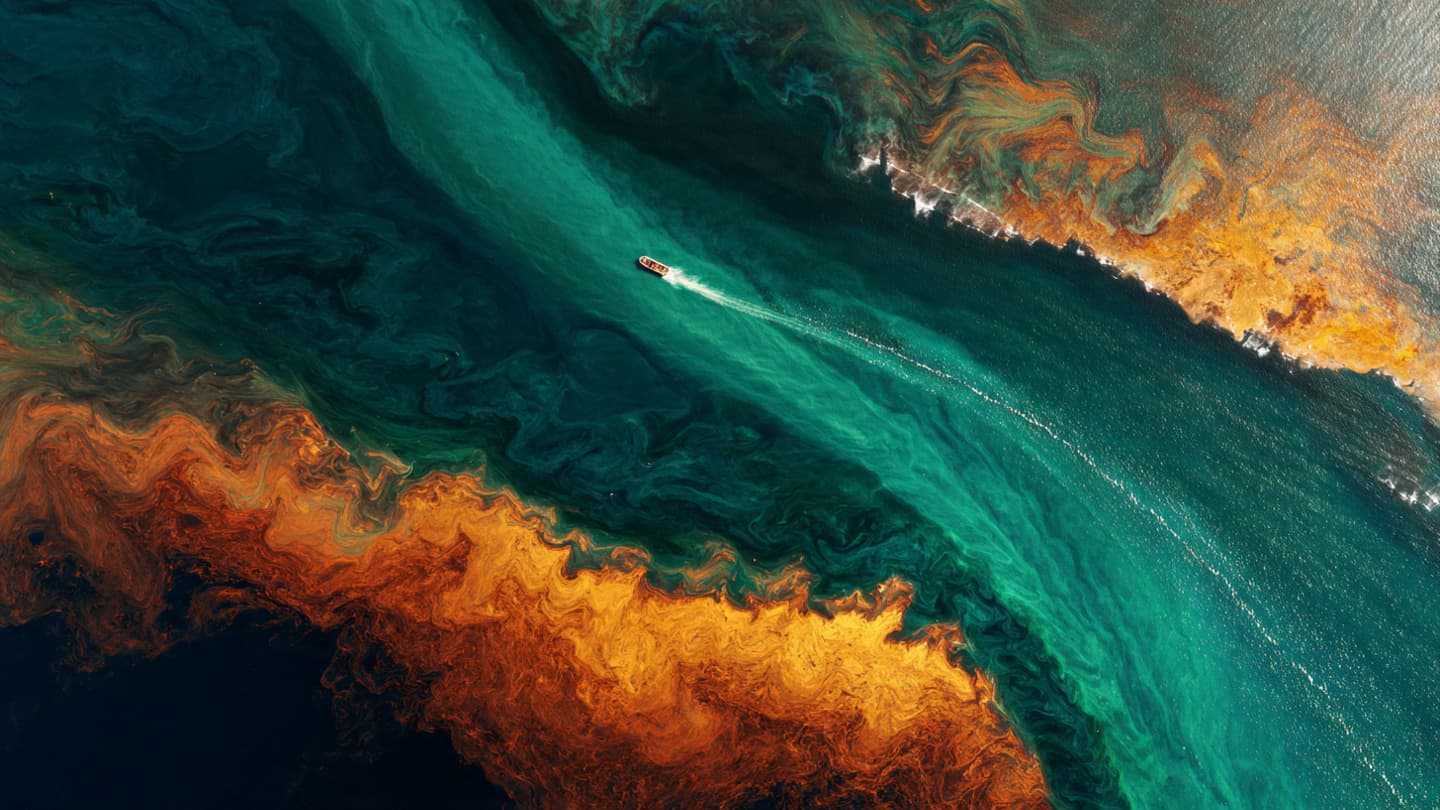
From high above Earth, the oceans often resemble living canvases, constantly shifting through currents, temperature changes, and biological activity invisible from the shoreline. Satellite imagery has increasingly revealed that the seas carry patterns as dynamic as weather systems in the sky. Recently released images from drew attention after capturing enormous colored plumes spreading across sections of the ocean, creating striking visual contrasts visible from orbit.
Scientists explain that such plumes are commonly linked to natural and environmental processes including sediment movement, phytoplankton blooms, river discharge, or pollution events. Different colors observed from satellites can indicate variations in organic matter, algae concentration, or suspended particles carried into marine environments.
In some regions, heavy rainfall and flooding can push large amounts of sediment and nutrients from rivers into coastal waters, temporarily changing ocean coloration. In other cases, seasonal phytoplankton growth creates vivid green or turquoise swirls that become visible through advanced satellite sensors.
NASA researchers use Earth-observing satellites not only for dramatic imagery but also for environmental monitoring. Tracking ocean color helps scientists study marine ecosystems, fisheries, climate interactions, and water quality across vast geographic areas difficult to monitor directly from ships alone.
Experts note that not all colored plumes represent harmful events. Some indicate healthy biological activity essential to marine food chains. However, certain blooms — particularly harmful algal blooms — can disrupt ecosystems, affect fisheries, and pose risks to coastal communities under specific conditions.
Satellite monitoring has become increasingly important as climate change, warming oceans, and shifting weather patterns influence marine systems worldwide. Long-term observational data allows researchers to identify trends, seasonal variations, and environmental stress factors that may otherwise remain unnoticed.
The images also demonstrate how technology continues changing humanity’s relationship with Earth itself. Satellites now allow scientists and the public to observe planetary processes unfolding almost in real time, transforming invisible environmental dynamics into visible global patterns.
NASA officials and environmental researchers are expected to continue analyzing the observed plumes to better understand their causes and ecological implications. While the images may appear dramatic from orbit, scientists emphasize the importance of careful interpretation grounded in ongoing environmental research.
AI Image Disclaimer: Some environmental illustrations related to this article may be AI-generated visual interpretations based on satellite observation themes.
Sources: NASA Earth Observatory, NOAA, Reuters, National Geographic, Scientific American
Published by Banx Network. This article is part of the Banx decentralized media programme, powered by the BXE token on the XRP Ledger.