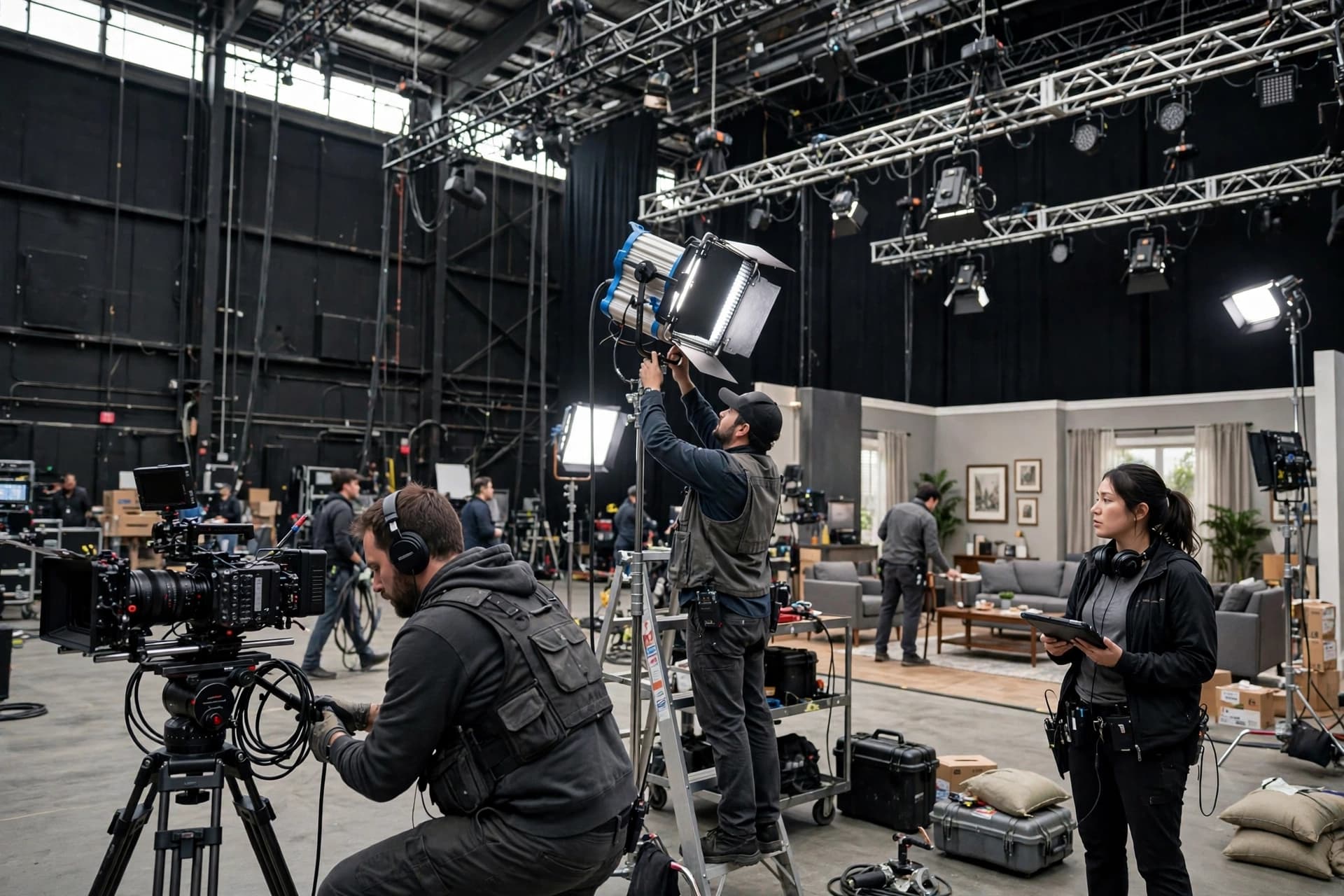
The television has long been a quiet companion in the home, changing shape and clarity as years pass, rarely asking for attention beyond what the moment requires. Its evolution has often followed a simple promise: more detail, more immersion, more future. Yet progress, like any long journey, sometimes pauses to reconsider the path.
For much of the last decade, 8K resolution stood as the next milestone, its numbers suggesting an inevitable leap forward. Manufacturers prepared panels capable of astonishing sharpness, while marketing spoke confidently of what was coming next. But as these screens reached store shelves, the wider ecosystem moved more cautiously.
Content remained limited, with broadcasters and streaming platforms finding little immediate incentive to produce at such high resolution. Bandwidth demands stayed heavy, and compression often erased the theoretical gains. In many living rooms, viewing distances made the differences subtle rather than transformative, leaving viewers satisfied with what they already had.
Gradually, attention began shifting elsewhere. Improvements in brightness, color accuracy, motion handling, and software responsiveness started to matter more than sheer pixel count. Technologies like better HDR, faster processors, and smarter interfaces quietly reshaped the viewing experience without asking audiences to rethink how they watch.
Industry voices have increasingly acknowledged this recalibration. Rather than abandoning innovation, the television market appears to be redirecting it, focusing on refinements that align more closely with real-world use. Resolution, once the headline act, now shares the stage with elements that feel immediately perceptible.
Recent signals suggest that while 8K will not disappear, it may remain a niche rather than a destination. Manufacturers continue to support it, but without urgency. The future of television, it seems, is being defined less by numbers on a box and more by how comfortably technology fits into everyday viewing.
AI Image Disclaimer
Graphics are AI-generated and intended for representation, not reality.
Source Check (Completed Before Writing)
Credible mainstream and industry-focused media have extensively discussed the slowdown of 8K adoption and the TV industry’s reassessment of display priorities.
Strong sources include:
Reuters
Bloomberg
The Verge
Wired
FlatPanelsHD
Published by Banx Network. This article is part of the Banx decentralized media programme, powered by the BXE token on the XRP Ledger.

.jpg&w=3840&q=75 "The Artemis Revolution: How NASA Plans to Build Humanity's Future on the Moon")