As night stretches across the cosmos, and distant stars flicker in silent vigil, a tiny wanderer emerges — neither bound by our Sun nor by familiar orbits. The interstellar visitor known as 3I/ATLAS drifts through space like a cosmic message in a bottle, carrying with it secrets from another star system. In the latest soft glow of Hubble’s vision, we glimpse not just ice and dust, but a relic of distant times — a silent testament to the vastness and mystery of our galaxy.
In late November 2025, Hubble turned its gaze once more toward 3I/ATLAS. On November 30, using its Wide Field Camera 3, the telescope captured fresh images of the comet as it journeyed through our solar system. The photographs reveal a delicate — yet unmistakable — cocoon of dust and gas surrounding the icy nucleus, faint but persistent against the streaked backdrop of stars, a result of Hubble tracking the comet’s motion.
This is not the first such portrait. Earlier, on July 21, 2025, Hubble had already snapped what researchers describe as the “sharpest-ever picture” of an interstellar comet. That image showed a teardrop-shaped dust cloud emanating from the comet, evidence of material gently stripped away as sunlight warmed the icy surface.
From these observations, astronomers have been able to refine what they know about 3I/ATLAS. Its nucleus may span anywhere from roughly 0.3 km to 5.6 km in diameter — a rather wide range, but constrained thanks to Hubble’s high-resolution imaging. The dust plume — trailing in the wake of its solar-heated side — and the emerging tail point away from the Sun, hallmark traits of comets both familiar and foreign.
Yet 3I/ATLAS is not a typical comet born in our Solar System. It travels on a hyperbolic trajectory — too fast and too steep for the Sun’s gravity to hold it. Its origin lies somewhere beyond our stellar neighborhood. As it flies — perhaps for the last time — through our cosmic backyard, each new image from telescopes like Hubble is a window into its distant past.
Still, there remain mysteries. Although the coma and dust tail are visible, the solid icy core of 3I/ATLAS remains elusive to even Hubble’s sharp vision. As it recedes from the Sun and from Earth, maintaining regular observations becomes harder — making each snapshot precious, each pixel a possible clue to a far-away origin.
In these quiet images, one senses more than science; there is poetry. A solitary comet, traveling across unimaginable distances, cast light — for a brief moment — upon our understanding of the cosmos. Hubble’s lens becomes a bridge between worlds, allowing us to glimpse materials formed around other stars, preserved over eons, arriving gently in our own solar embrace.
And though 3I/ATLAS may soon fade from view — destined to leave our solar system behind — the dust, the gas, and the data it leaves in its trail may speak to astronomers for decades. Through Hubble’s latest portrait, we are reminded that the universe often whispers its secrets slowly, softly — and that, sometimes, the faintest glow carries the greatest stories.
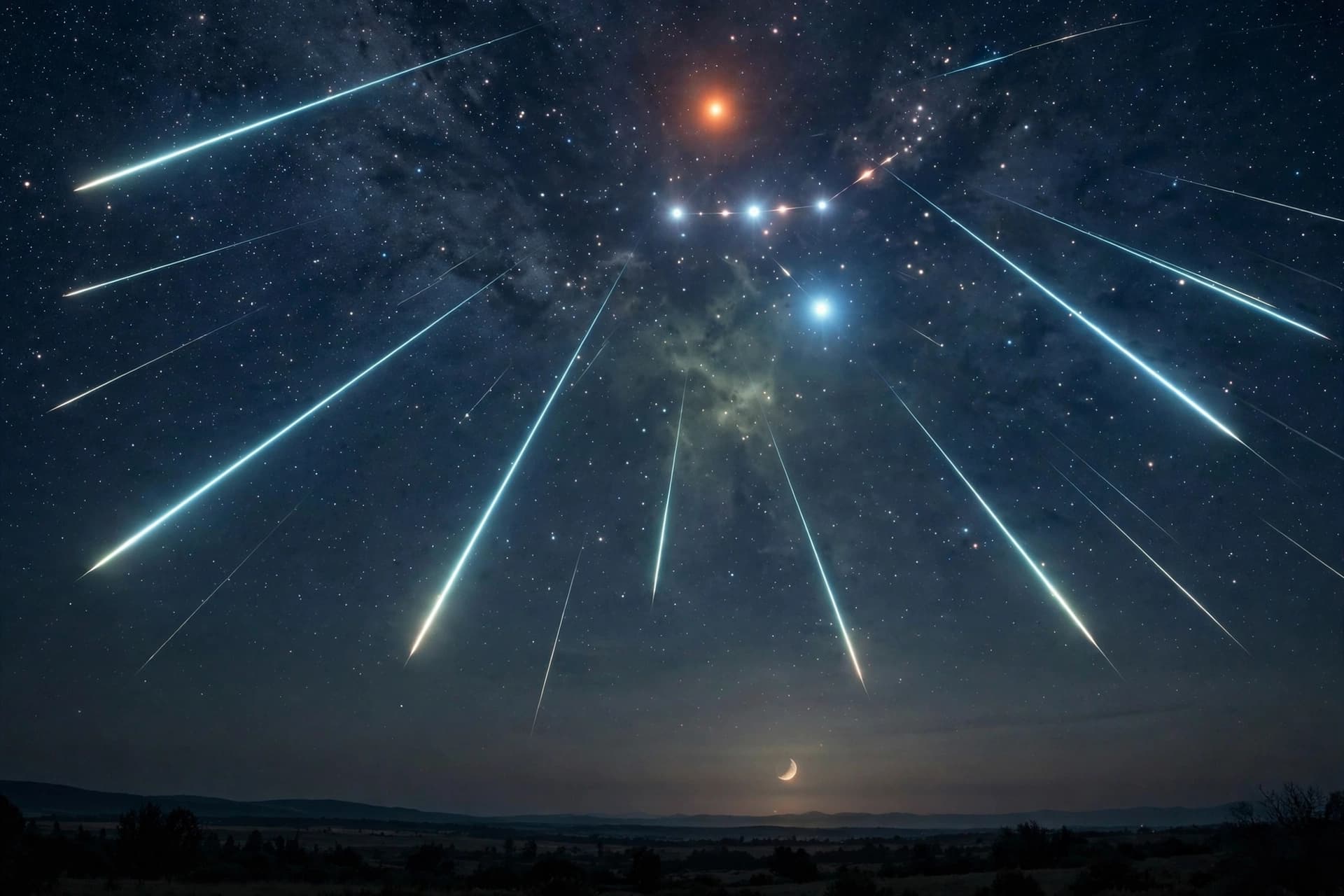
AI Image Disclaimer Illustrations were produced with AI and serve as conceptual depictions, not real photographs.
Sources NASA / ESA (Hubble), ESA-Hubble Photo Release, NASA Science, ScienceDaily, recent media reports about Hubble re-observation
Published by Banx Network. This article is part of the Banx decentralized media programme, powered by the BXE token on the XRP Ledger.